Zhangbaling Plastic Polymer Industrial Park, Zhangbaling Town, Mingguang City, Chuzhou, Anhui Provin

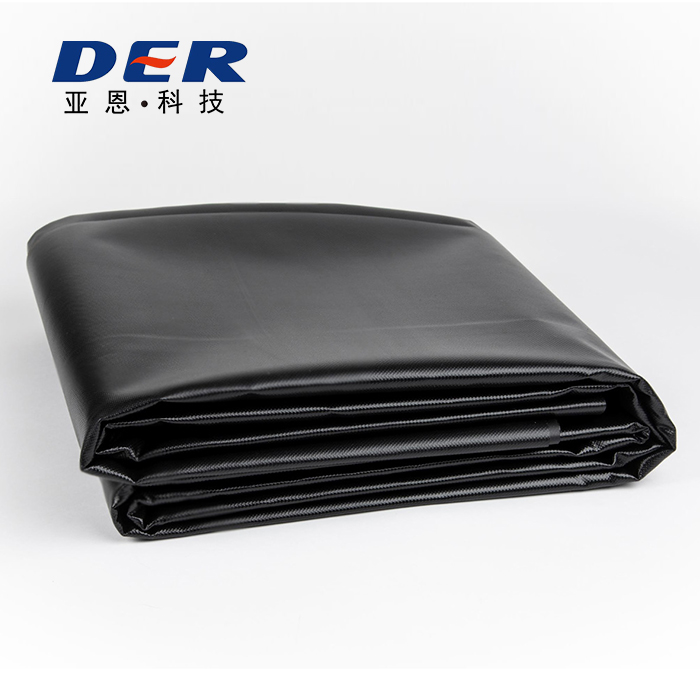
DER factory supplies vinyl tarps and PVC-coated tarp materials for trucking, construction, agriculture, equipment protection, warehousing and custom industrial cover programs. Buyers can specify material construction, fabric weight, dimensions, color, reinforcement, tie-down hardware and finished fabrication to match the actual operating environment.
The key sourcing question is not simply “How heavy is the tarp?” A practical specification should connect material construction → load and weather exposure → fabrication → anchoring → maintenance. That prevents buyers from choosing an unnecessarily heavy tarp for easy handling—or an under-built tarp for high wind, abrasion or repeated use.
Most industrial vinyl tarps are reinforced composites rather than a single sheet of plastic. Each layer has a different job, and the construction route should be selected around the application.
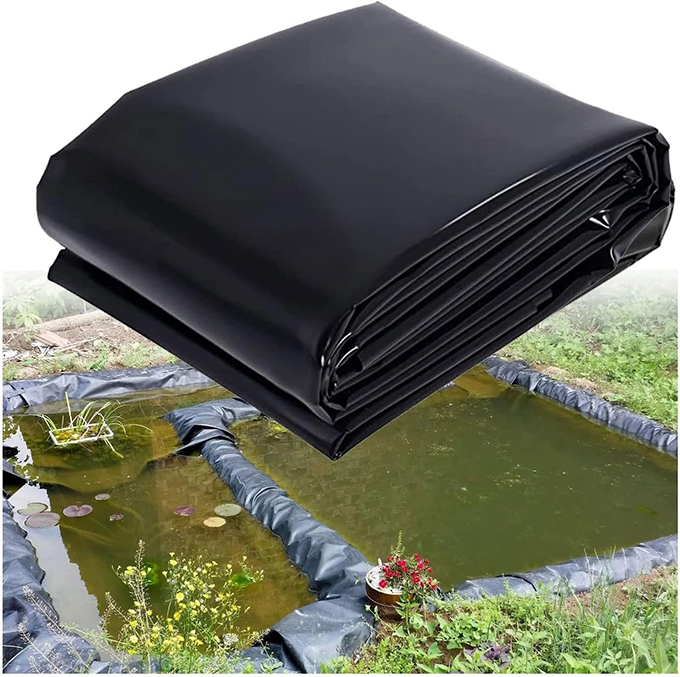
For buyers sourcing tarp fabric before in-house fabrication, compare the construction with DER factory’s PVC coated polyester fabric options rather than selecting only by GSM.
The existing DER factory vinyl tarp range publishes broad weight and thickness options. Final construction should always be confirmed against use conditions, fabrication method and testing requirements before production.
| Specification | Available direction | Why it matters |
|---|---|---|
| Material | Polyester reinforcement + PVC surface system | Defines the basic strength, waterproof barrier and weldability of the tarp. |
| Construction | Coated or laminated construction depending on project | Changes adhesion, surface durability, flexibility and economics. |
| Published weight range | 300–1200 gsm; confirm final grade before production | Higher mass can support more robust constructions, but weight alone does not define strength. |
| Published thickness range | 0.25–1.2 mm; project dependent | Thickness affects handling, stiffness, wear allowance and fabrication. |
| Color | Standard colors or custom matching subject to review | Affects visibility, heat absorption, branding and project appearance. |
| Surface | Gloss / matte / project-specific finish | Changes cleanability, friction, appearance and print requirements. |
| UV requirement | Specify outdoor exposure and target service conditions | Long-duration sun exposure requires a more appropriate formulation than short-term indoor use. |
| Flame-retardant requirement | Available when specified and technically reviewed | Fire performance must be tied to the actual project standard and test requirement. |
| Edges | Folded hem, rope hem, webbing-reinforced hem | Edge design distributes tie-down loads and reduces local failure. |
| Hardware | Eyelets / grommets, D-rings and custom fastening details | Hardware type and spacing should be designed for actual load paths. |
| Fabrication | Heat welding, sewing or combined construction | Seam method affects water resistance, flexibility and structural detailing. |
| Supply format | Roll material, panels or finished tarp | Lets fabricators, distributors and end users buy at the right production stage. |
Published ranges above are based on the existing DER factory vinyl tarp page indexed in search. Exact weight, thickness, width, performance and test requirements should be confirmed in the quotation and approved specification.
GSM and oz/yd² measure fabric mass per area; mil measures thickness. For reference, 18 oz/yd² is approximately 610 gsm and 22 oz/yd² is approximately 746 gsm. A mil value cannot be reliably converted to GSM without knowing the exact composite density and construction. Ask suppliers for both weight and thickness when comparison matters.
Heavy duty is a system-level description. A higher fabric weight helps, but the tarp must also survive the stress concentrations created by wind, corners, seams, tie-down points and contact with the covered object.
Strong polyester reinforcement carries tensile load and helps control tearing when the tarp is tensioned.
The PVC surface creates the waterproof barrier and protects the textile core from weather and abrasion.
Webbing, rope hems and corner reinforcement reduce the risk of concentrating all force at one eyelet.
Grommet and D-ring position should follow the fastening method, wind exposure and how often the tarp is installed.
A specification should become more robust as wind load, abrasion, repeated handling, temperature stress and tie-down force increase. Use the table below as a sourcing framework rather than a fixed product guarantee.
| Application | Recommended specification direction | Buyer should pay special attention to |
|---|---|---|
| Truck & trailer cargo | Heavy-duty PVC-coated polyester with reinforced perimeter and repairable welded construction | Wind flap, abrasion points, D-rings / grommets, strap loads, cold flexibility and fit. |
| Construction materials | Waterproof vinyl tarp with abrasion-resistant surface and strong tie-down layout | Sharp corners, debris contact, UV exposure, temporary roof loading and anchoring. |
| Industrial equipment cover | Custom-shaped finished cover with welded seams and local reinforcement | Machine geometry, ventilation needs, access flaps, hot surfaces and snag points. |
| Outdoor storage / pallet cover | Reusable waterproof PVC cover with handling-friendly weight | Repeated removal, forklift contact, condensation, labeling and fastening method. |
| Agriculture / hay / feed cover | UV-oriented vinyl construction with secure perimeter anchoring | Long sun exposure, wind uplift, drainage, contact with stalks and storage duration. |
| Industrial curtain / divider | Flexible PVC-coated fabric sized for hanging rather than ground tie-down | Suspension load, overlap, access openings, visibility and FR requirement where applicable. |
For site protection, see DER factory’s construction tarps. For shaped machinery protection, compare the design logic used for construction equipment covers.
Vinyl is often selected when a buyer needs a reusable waterproof cover with strong fabrication options. Poly and canvas remain useful when weight, temporary use, breathability or budget is more important.
Best fit: truck covers, equipment covers, industrial storage, repeated outdoor handling.
Strength: waterproof barrier, abrasion resistance, welding, reinforcement compatibility.
Trade-off: generally heavier and more expensive than light-duty poly.
Best fit: temporary covers, emergency protection and cost-sensitive large-area coverage.
Strength: low weight and economical handling.
Trade-off: repeated abrasion and long-term stress performance depend strongly on grade.
Best fit: situations where breathability, textile hand and moisture release matter.
Strength: fabric feel and ventilation.
Trade-off: water resistance is not the same as a continuous waterproof PVC barrier.
Many tarp failures begin at stress concentrators rather than in the center of the sheet. A stronger specification therefore considers the entire load path from the tarp body to the attachment point.
For reusable logistics protection, review the same fastening principles used in DER factory’s pallet protective covers.
Tell the supplier what usually damages the cover: wind flap, edge pull-out, abrasion, puncture, UV aging, cold cracking, standing water or repeated folding. This is more useful than asking for “the strongest tarp.”
A heavier tarp can improve robustness but becomes harder to install, remove and fold. Large manual covers often need a balanced weight rather than the maximum available weight.
Specify where force enters the tarp. Perimeter webbing, corner reinforcement and D-rings can be more important than adding thickness everywhere.
Outdoor duration, sunlight, low-temperature use, chemicals and flame-retardant requirements should be listed before material confirmation. If FR is required, review DER factory’s flame retardant fabric options and specify the required test route.
A UV-oriented material cannot compensate for poor drainage or uncontrolled wind uplift. For farm storage, hay, feed and equipment applications, compare DER factory’s agriculture tarps cover guidance and include the installation method in the RFQ.
A repeatable vinyl tarp program depends on controlling both the fabric and the finished fabrication. Project-specific test requirements should be agreed during quotation rather than assumed from generic marketing claims.
Confirm base cloth construction, coating / lamination consistency, weight, thickness, color and surface condition against the approved sample or specification.
Check welded seams, dimensions, hem construction, reinforcement locations, grommet setting and D-ring attachment before packing.
If a standard, flame test, tensile target, tear target or other performance requirement applies, state it in the purchase specification and confirm the test plan before production.
A complete RFQ reduces back-and-forth and helps the supplier recommend a construction instead of guessing from the words “heavy duty.”
The images below use existing DER factory website image files rather than external stock photography or AI-generated product pictures. They show reinforced PVC material, coated tarpaulin rolls and waterproof PVC applications that are technically relevant to vinyl tarp sourcing.
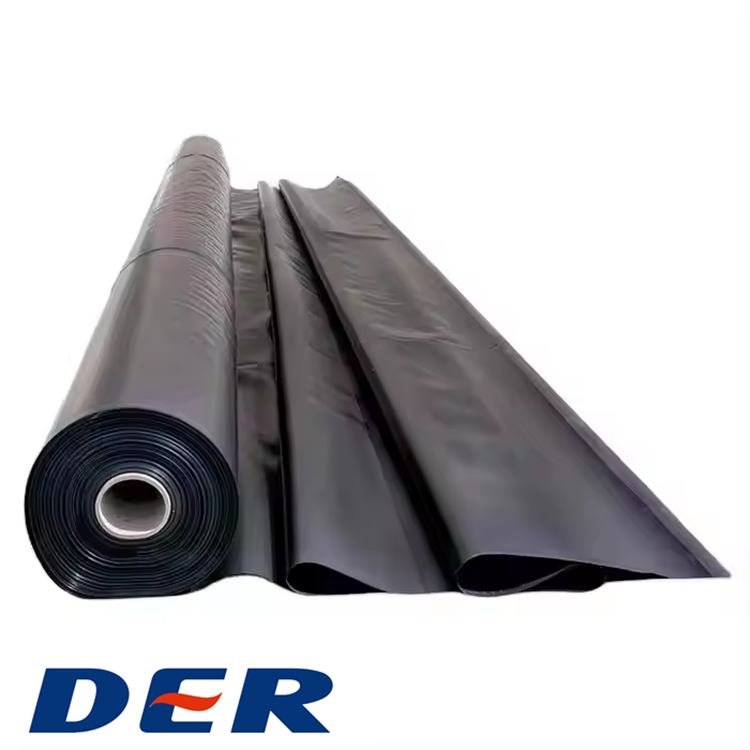
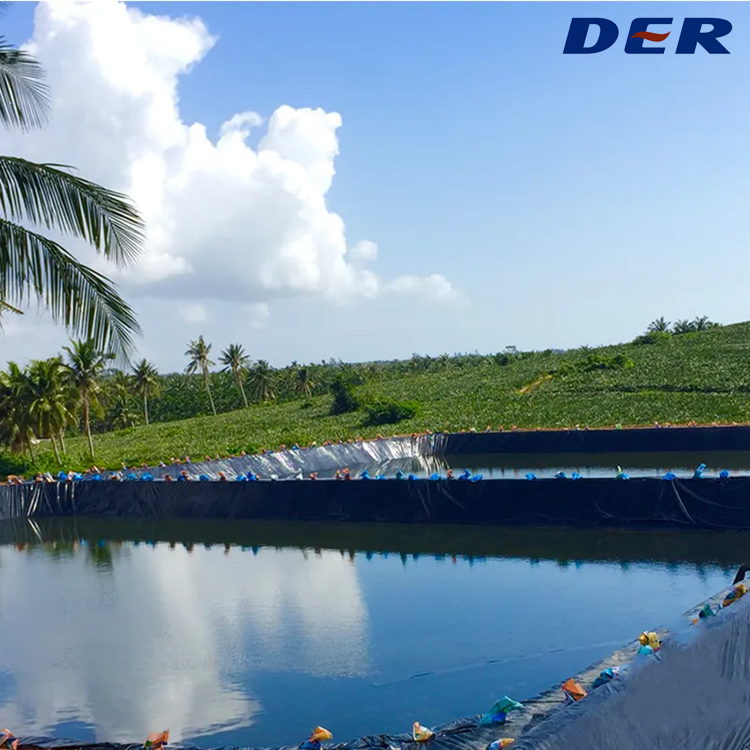
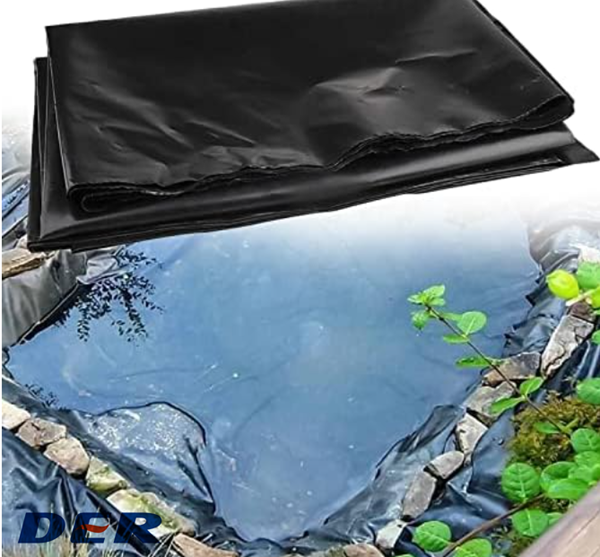
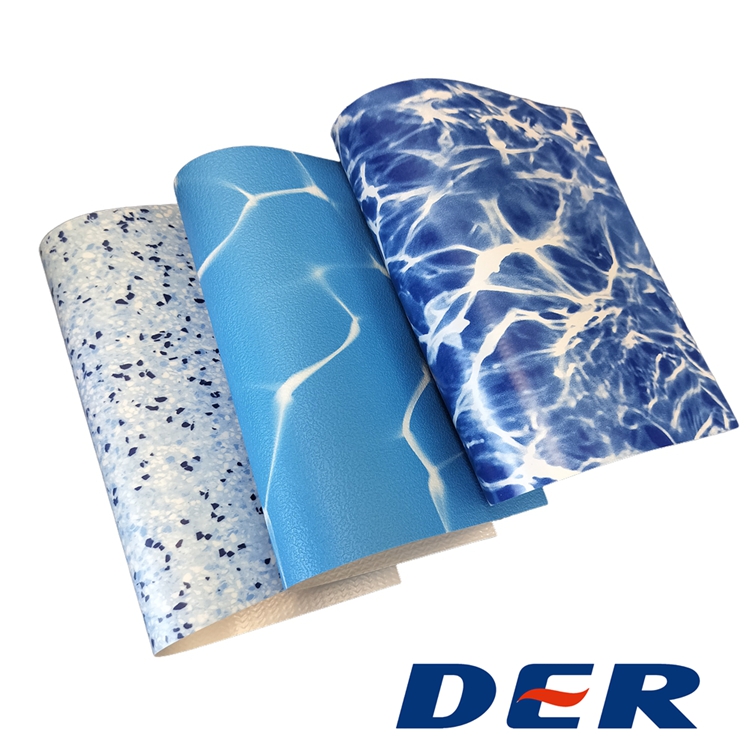
Vinyl tarps made from PVC-coated or PVC-laminated reinforced fabric are commonly selected for waterproof covers because the PVC surface forms a continuous water barrier. Final waterproof performance also depends on seams, penetrations, edge details and installation.
A common heavy-duty construction combines a woven polyester reinforcement with PVC on one or both sides. The polyester provides structural strength while the PVC layer provides the waterproof, weather-resistant and weldable surface.
Neither is automatically “better.” 22 oz/yd² is heavier than 18 oz/yd² and can support a more robust construction, but the correct choice depends on size, handling, wind, abrasion, reinforcement and expected service. As a mass conversion, 18 oz/yd² is about 610 gsm and 22 oz/yd² is about 746 gsm.
No. Mil measures thickness, while GSM measures mass per square meter. Two vinyl fabrics can have similar thickness but different weights because the textile reinforcement and PVC formulation differ. Compare both values when they matter to the application.
Vinyl is often preferred for reusable industrial covers, trucking and repeated outdoor handling because it can combine strong reinforcement, waterproof PVC surfaces and welded fabrication. Poly is often lighter and more economical for temporary or less demanding coverage.
Custom finished dimensions, material selection, colors, hems, webbing, eyelets / grommets, D-rings and other fabrication details can be discussed according to project requirements. Send a drawing or finished dimensions with the application and quantity for technical review.
Flame-retardant options may be available depending on the required material and test standard. Buyers should name the required standard and application before production so the correct material and test route can be reviewed.
Major cost drivers include fabric construction, weight, thickness, PVC formulation, color, UV or FR requirements, finished size, seam length, reinforcement, hardware quantity, printing, packaging and order volume. A quote is more accurate when these factors are provided together.
Send DER factory your application, finished size or roll requirement, quantity, material preference, exposure conditions, reinforcement plan and any required performance test. The technical discussion can then focus on the right construction rather than a generic “heavy duty” label.
Our products are widely used in our residential and industrial area, which can be used for producing tents, outdoor covering, flexible ventilation tube, water bladders, inflatable castles, architecture membrane structures, etc. Our main products: PVC coated fabrics, PU/TPU coated fabrics, Oxford fabric, PVC ceiling film, flexible banner material. Welcome to our site and order online.
Message