Waterproof Surface
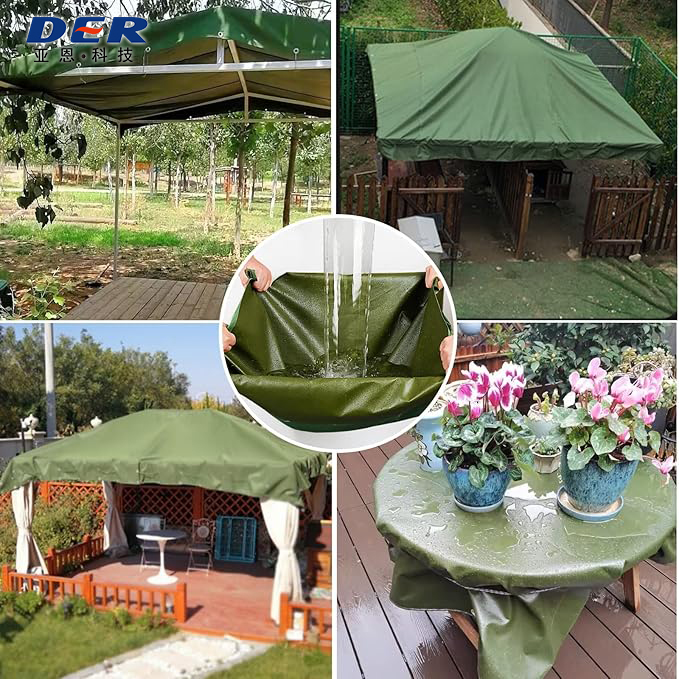
PVC coating creates a continuous weather barrier suitable for rain protection when the cover is correctly fabricated, tensioned and drained. Welded panel seams can reduce the number of stitched penetrations in large covers.

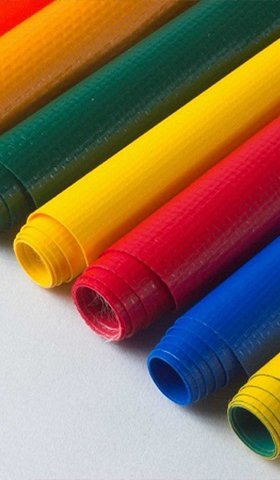
Der factory supplies temporary roof tarpaulin for roofing contractors, construction companies, restoration teams, distributors and project buyers who need more than a thin one-time cover. Our PVC coated polyester roof tarp direction is built around waterproof protection, reinforced load points, weldable panel construction and custom dimensions for real jobsite conditions.

When a roof is opened during renovation, damaged by severe weather, waiting for permanent repairs, or temporarily enclosed during construction, the cover has to do several jobs at once. It must shed rain, tolerate movement, survive handling, remain controllable under wind, and connect to the temporary structure without creating weak points around the edges.
That is why a professional temporary roof tarp should be specified by more than its finished dimensions. Material weight, polyester reinforcement, PVC coating, seam method, panel orientation, edge construction, fastening spacing, corner reinforcement and the expected exposure period all influence the finished cover.
Der factory approaches temporary roofing tarpaulin as a fabricated technical textile. Buyers can source roll material for local conversion or discuss finished covers with welding, hems, webbing, eyelets, D-rings, sleeves, straps and project-specific reinforcement.
For demanding commercial temporary roofing, a reinforced PVC construction offers a practical balance of waterproofing, tear control, weldability and custom fabrication.
A roof cover is exposed differently from a simple ground sheet. Wind can cycle the fabric, rain can pool if the installation geometry is poor, and fastening points can concentrate load around hems and eyelets. A reinforced PVC coated polyester construction helps spread those forces through the textile rather than relying on a thin film alone.
For oversized temporary roofing, roll width also affects production efficiency. Selected Der tarpaulin constructions are available in wide rolls, and even larger covers can be produced by hot-air, hot-wedge or high-frequency welded panel assembly according to the chosen material and fabrication route.
Surface finish can be selected for the job: a smooth lacquered finish can support easier cleaning, while color and opacity can be chosen for site visibility, daylight control or branding requirements.
Useful roof-tarp performance is created by the material and the finished fabrication working together.
PVC coating creates a continuous weather barrier suitable for rain protection when the cover is correctly fabricated, tensioned and drained. Welded panel seams can reduce the number of stitched penetrations in large covers.
High-tenacity polyester reinforcement improves load distribution and helps the tarp tolerate pulling, fastening and repeated site handling. Heavier yarn and denser constructions can be discussed for more demanding exposure.
Wind performance is not solved by GSM alone. Webbing, reinforced hems, corner patches, sleeves and appropriate attachment spacing help move local force away from a single eyelet or edge.
For projects exposed beyond a brief emergency period, UV-stabilized and outdoor-oriented formulations can be considered to reduce early embrittlement, fading and coating degradation.
PVC coated polyester can be processed with common thermoplastic welding routes, allowing large panels, reinforced seams, pockets and custom roof-cover geometries to be fabricated from roll goods.
Cold-resistant, anti-mildew and flame-retardant material directions can be discussed for climate or project requirements. Target standards should be defined before samples because formulations and test methods differ.
Competitive roof-cover pages often stop at “waterproof.” A more useful purchasing decision starts with how long the cover will be exposed, how often it will be handled and how it must be secured.
Typically selected for construction, restoration, repeated contractor use, larger custom sizes and projects that need stronger fabricated load points.
Lightweight polyethylene tarps can be practical for fast short-duration protection, disaster stock and situations where portability and purchase cost are the main priorities.
The following range is a practical procurement guide for Der factory PVC tarpaulin production. Final values should be confirmed against application, sample and order specification.
| Product | Temporary Roof Tarpaulin / Waterproof PVC Roof Tarp / Construction Temporary Roofing Cover |
|---|---|
| Material Structure | High-tenacity polyester base cloth with PVC coating or laminated PVC structure, selected by duty level and fabrication requirement |
| Common Yarn Directions | 500D × 500D, 1000D × 1000D and heavier custom polyester constructions where required |
| Common PVC Weight Directions | Approx. 480gsm, 610gsm, 650gsm, 720–750gsm, 900gsm or project-specific weight |
| Selected Roll Width | Up to approximately 5.1m on applicable constructions; oversized finished roof covers can be assembled by welded panels |
| Surface | Matte, glossy or lacquered; smooth or selected texture; one-side/two-side color and opacity options can be discussed |
| Weather Options | Waterproof, UV-stabilized, anti-mildew, cold-resistant and other outdoor formulations depending on project specification |
| Flame-Retardant Direction | Project-specific FR routes such as B1/B2, M2 or NFPA 701 can be discussed; exact standard, sample and test documentation must be confirmed before order |
| Finished Size | Custom length and width according to roof dimensions, panel plan, transport/handling limits and installation method |
| Edge & Load-Point Options | Folded hems, rope hems, webbing reinforcement, corner patches, eyelets, D-rings, sleeves/pockets, straps, loops and custom attachment details |
| Fabrication | Hot-air welding, hot-wedge welding, high-frequency welding where material/process allow, sewing, cutting, punching and hardware installation |
| Supply Form | Roll goods, cut panels, welded panels, finished roof tarps, project kits or OEM/private-label packaged products |
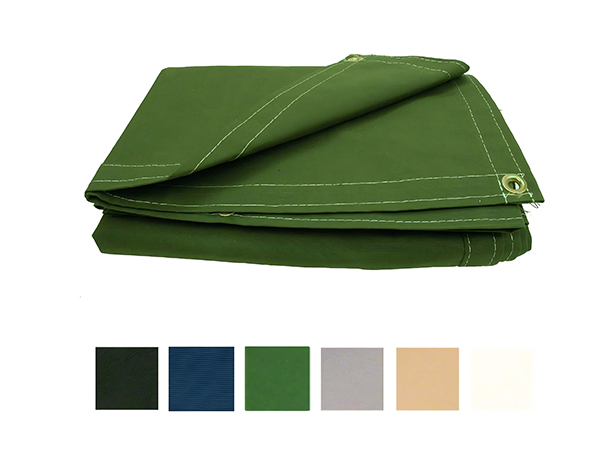
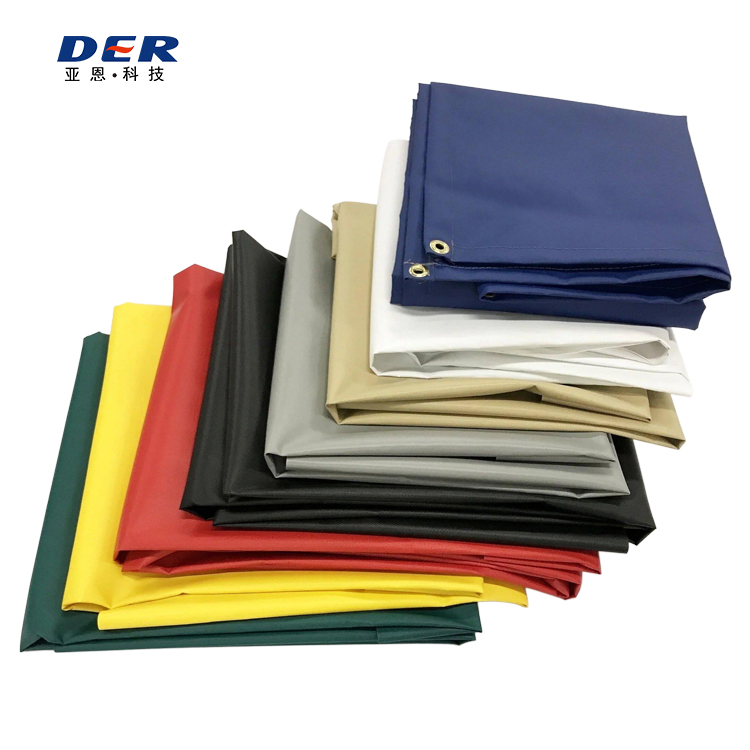
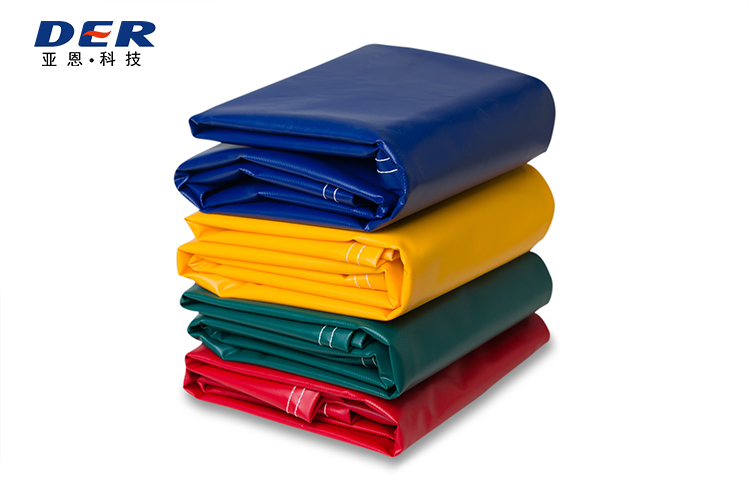
| Color | Common industrial colors including blue, white, grey, green, black, orange and custom RAL/Pantone direction subject to production confirmation |
Important: a higher GSM does not automatically create a safer roof installation. Wind exposure, span, drainage geometry, reinforcement layout and fastening design should be considered together.
For contractors and importers, custom fabrication should reduce site improvisation. A clearer requirement before production makes the finished tarp easier to deploy and reorder.
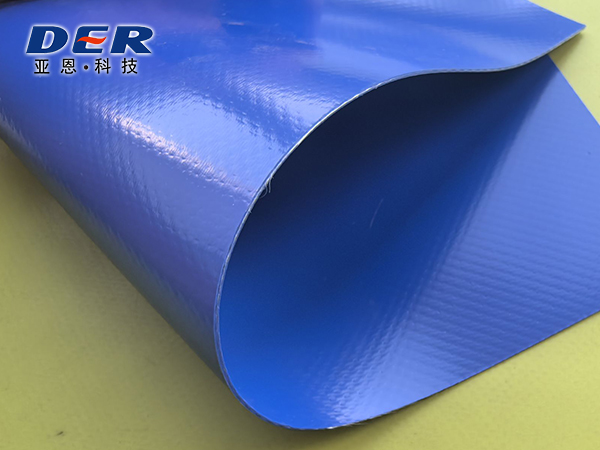
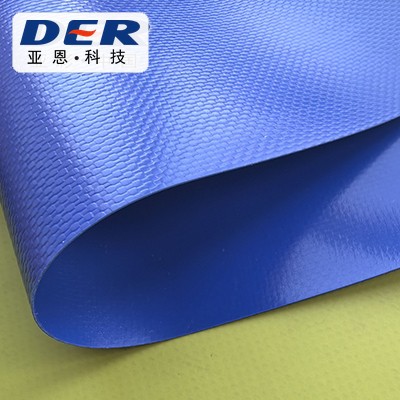
The same core weatherproof cover can be engineered differently depending on whether the buyer needs emergency deployment, construction protection or repeat contractor use.
Temporary weather cover for buildings with exposed roof sections after wind, hail or other damage while professional repair work is being scheduled.
Cover open roof zones during planned replacement, refurbishment or phased renovation where rain protection must remain available between work stages.
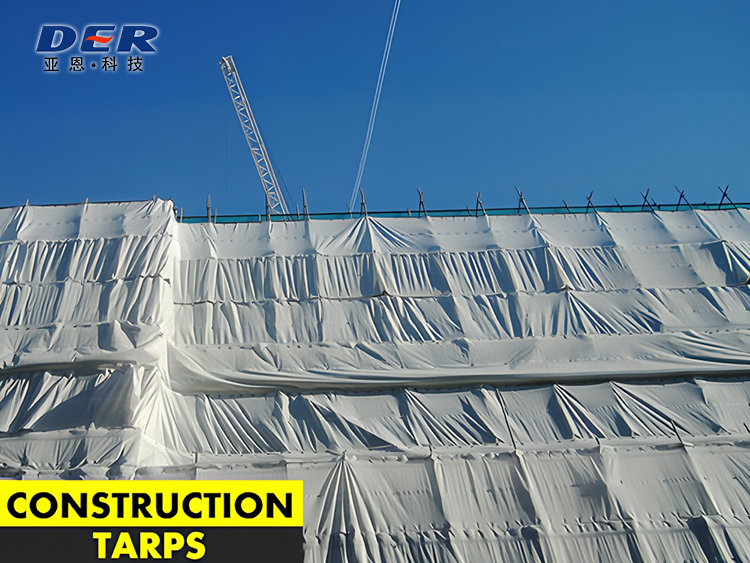
Heavy duty construction roof tarp for unfinished structures, roof openings, stored materials and temporary weather protection around active building work.
Custom tarpaulin or PVC sheet panels for temporary scaffold roof frameworks, ridge systems and weather enclosures that require controlled panel dimensions.
Temporary roof and top-cover solutions for factories, warehouses and maintenance shutdowns where machinery, stock or process areas need short-term weather isolation.
Bulk roof tarps for restoration companies, disaster-response suppliers, wholesalers and contractors that need repeatable specifications ready for rapid deployment.
Most avoidable tarp failures start before the cover reaches the roof: the material is too light for the exposure, the fastening pattern is undefined, or the finished dimensions do not account for overlap and attachment.
A B2B temporary roof tarp program needs consistency from roll material through welding, reinforcement, hardware and packing.
These six internal resources are closely related to temporary roofing, construction covers and heavy-duty PVC material selection.
Answers for contractors, restoration companies, importers and project buyers comparing roof tarp materials and custom manufacturing options.
For demanding construction, renovation and repeated contractor use, PVC coated polyester is often selected because it combines waterproofing, tear resistance, weldability and custom reinforcement. Lightweight PE can be considered for shorter, cost-sensitive protection where exposure and fastening demands are lower. The final choice should be based on duration, wind, handling frequency and installation design rather than material name alone.
PE tarps are generally lighter and economical for short-duration covering. PVC coated polyester tarps are usually heavier, more abrasion resistant and more adaptable to welded seams, reinforced edges, custom hardware and repeated commercial handling. For contractors who want a controlled reusable specification, PVC often provides more fabrication options.
Yes. Custom roof covers can be developed from roll material and welded panels with project-specific dimensions, perimeter construction, reinforcement, eyelet spacing, webbing, sleeves, D-rings, straps and labels. For unusual roof shapes, a dimensioned drawing is preferable to a simple length × width request.
There is no universal GSM. Common PVC project directions may include approximately 610gsm, 650gsm, 720–750gsm and 900gsm, but the correct choice depends on span, wind exposure, expected duration, handling, fastening and reuse target. A better quotation compares the complete construction—yarn, density, coating, reinforcement and finishing—not only grams per square meter.
UV-stabilized, flame-retardant, anti-mildew and cold-resistant material directions can be discussed. If a tender specifies B1/B2, M2, NFPA 701 or another test route, provide the exact standard before sampling so the appropriate formulation, test method and documentation scope can be confirmed for the order.
The tarp should be designed with adequate overlap, reinforced load points and an attachment system suitable for the actual roof or temporary frame. Wind can create large uplift and cyclic forces, so a site professional should determine fastening, tensioning and fall-protection measures. Ordinary eyelets at a generic spacing should not be treated as an engineered wind-load solution.
No. A temporary roof tarpaulin is intended to limit weather exposure while permanent repair, replacement or construction work is arranged. A separately engineered architectural membrane or permanent roofing system has different structural, drainage, code and durability requirements.
Send the roof or frame dimensions, application, expected exposure period, climate/wind conditions, preferred material or GSM, color, fastening concept, finished quantity, packaging, destination and any required test standard. Photos and drawings help when the tarp has ridges, penetrations, sleeves, unusual corners or specific reinforced pull points.
Tell Der factory how the roof cover will be used. We can review the requirement around material structure, weight, dimensions, panel layout, reinforcement and fabrication instead of quoting a generic tarp that may not match the job.
Use the inquiry page to send your project details. A more complete specification usually leads to a more useful price comparison and fewer changes after sampling.
Request A Quote
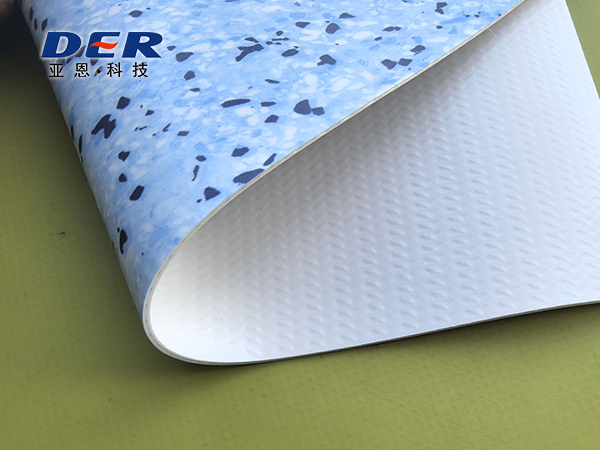
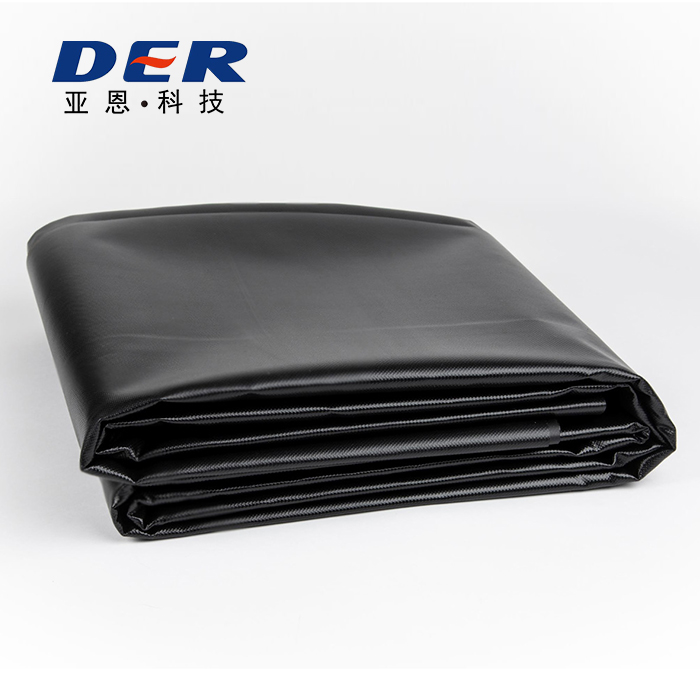
Our products are widely used in our residential and industrial area, which can be used for producing tents, outdoor covering, flexible ventilation tube, water bladders, inflatable castles, architecture membrane structures, etc. Our main products: PVC coated fabrics, PU/TPU coated fabrics, Oxford fabric, PVC ceiling film, flexible banner material. Welcome to our site and order online.