Premium Tarps & Tarpaulin Manufacturer

+86 15601786499 (steven)

info@der-factory.com

#>

Custom Tarps Manufacturer | Made-to-Measure Tarpaulin Covers | DER factory

Looking for high-quality custom tarps? DER New Material supplies bespoke PVC and PE tarpaulins, custom sizes, printing, reinforcements and finishing options for trucks, tents, covers and industrial applications. Learn specifications, features, applications, certifications, installation tips and global supply.

Made-to-Measure Tarpaulin · Industrial Covers · OEM Fabrication

Custom Tarps Manufacturer for Made-to-Measure Industrial & OEM Covers

DER factory develops custom tarps and custom tarpaulin covers around the job: dimensions, material construction, weather exposure, tie-down method, reinforcement, seams, hardware, branding and packing. Supply can be reviewed as roll goods, cut panels or finished covers according to the project.

  • Custom size, shape and panel layout
  • PVC or PE material direction by application
  • Reinforced hems, webbing and stress zones
  • Grommets, D-rings and project fastening details
  • Welded or sewn fabrication after technical review
  • OEM logo and repeat-order specification support
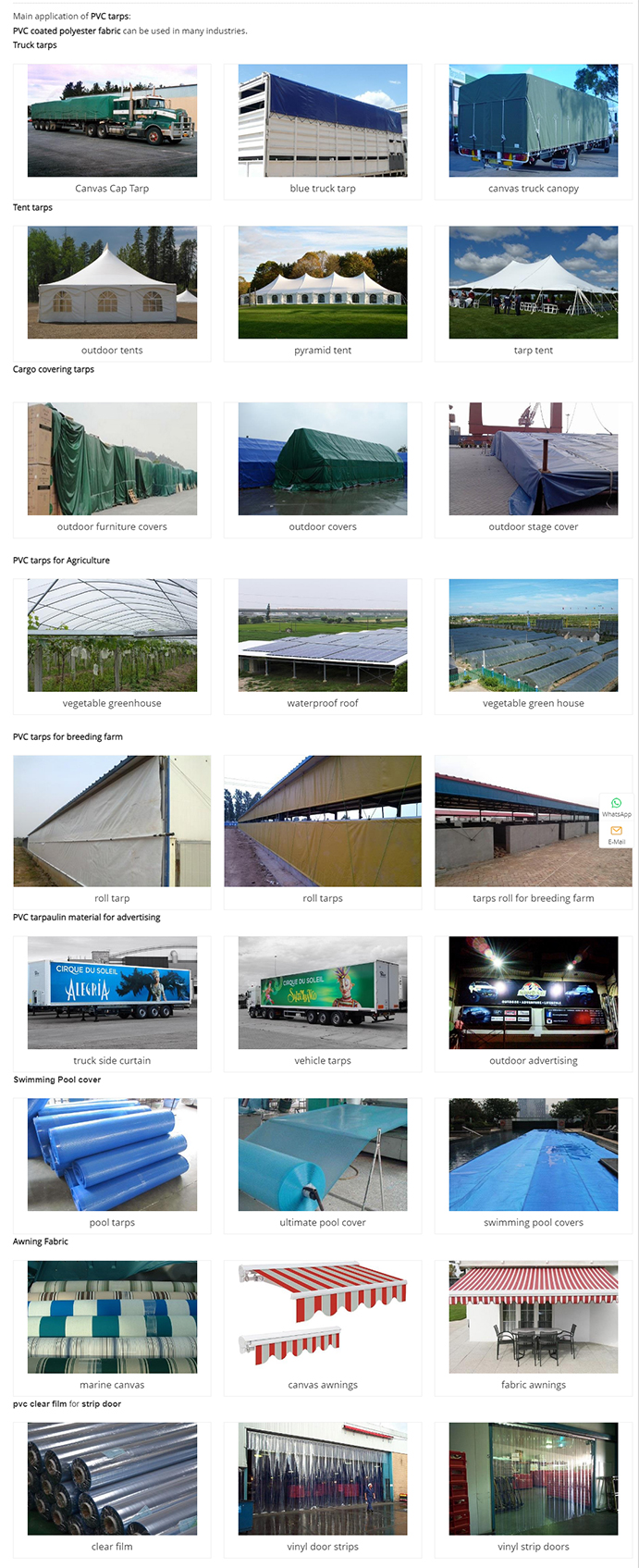
DER factory tarpaulin applications for transport, industrial covers, tents and outdoor protection
DER factory tarpaulin application reference. A finished custom cover should be specified from the actual object, exposure and fastening method—not from image appearance alone.
FitSize, drops, shape, openings and clearances
MaterialCoated, laminated, PE woven or project-reviewed structure
FabricationSeams, hems, reinforcement and attachment details
OEMColor, logo, labels, packing and repeat-order controls
Direct Answer

What Are Custom Tarps?

Custom tarps are made-to-measure protective covers produced around a defined size, shape, material, fastening method and exposure condition instead of a fixed retail dimension. A B2B custom tarpaulin specification may include PVC-coated polyester or PE woven material, fabric weight, surface construction, color, panel layout, welded or sewn seams, reinforced hems, webbing, grommets, D-rings, printing and packaging. DER factory can review applications such as truck cargo, machinery, construction, pallet storage and agriculture, then align the material and fabrication direction with the buyer’s actual service conditions. Final details should be confirmed during technical review before production.

Specification Logic

A Custom Tarp Specification Starts With the Load Path—Not Just Length × Width

The same finished dimensions can require very different tarp constructions. A cover stretched tightly over a moving truck, a loose machinery dust cover and a pallet hood may all be “3 m × 4 m,” but their edge loads, abrasion, handling cycles and water-shedding needs are different.

1. What is covered?Object geometry, cargo type, sharp edges, heat and contamination risks.
2. How is it secured?Grommets, D-rings, straps, rope, frame attachment or loose drape.
3. What moves?Road vibration, wind, repeated folding, opening cycles or static storage.
4. What exposure?Rain, sunlight, dust, temperature, abrasion and project-specific compliance.
5. How is it handled?Manual lifting, rolling, stacking, transport packing and cleaning frequency.

Information gain: reinforcement should follow stress concentration

Adding weight everywhere is not always the most efficient way to improve a custom tarp. Many field failures begin at corners, grommet rows, fold lines, seam intersections or contact points with sharp edges. A stronger result can come from combining an appropriate base fabric with targeted webbing, patches, hem construction and attachment-zone reinforcement.

Material Selection

Which Material Should a Custom Tarpaulin Use?

Material choice should match service life, handling, waterproofing, weight, fabrication and budget. For many demanding covers, PVC-coated polyester is selected because it combines a reinforced textile core with a weldable weather-resistant surface; lighter or temporary projects may use different constructions.

PVC-Coated Polyester

Often suited to reusable industrial covers, truck tarps, equipment protection and fabricated panels where waterproofing, reinforcement and weldability matter.

ReusableWeldableReinforcement-friendly

For a broad PVC/vinyl tarp material overview, see DER factory vinyl tarps.
PVC-Laminated Fabric

Can be considered where a laminated construction meets the target handling, appearance and cost requirements. Actual strength and service performance depend on the complete substrate and lamination structure.

Project-dependentFlexible specification

PE Woven Tarpaulin

Often considered for lighter, economical or temporary coverage. It can be practical for broad protection needs, but it should not automatically be treated as equivalent to a heavy reusable PVC cover.

Lightweight directionEconomical coverage
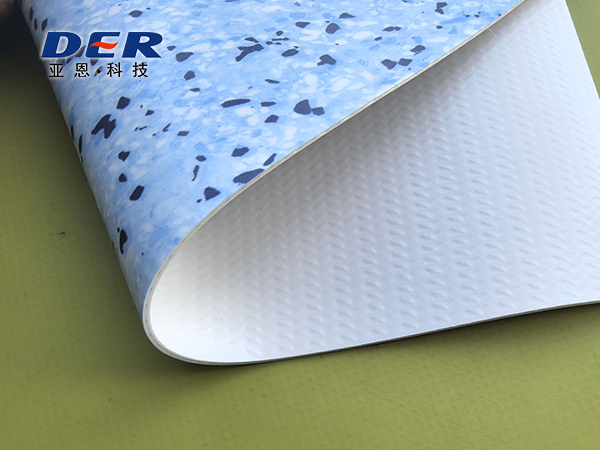
DER factory reinforced PVC coated textile showing flexible waterproof material construction

Reinforced PVC Material Reference

This DER factory image shows a reinforced PVC material structure. The final custom tarp grade should be selected for the actual load, exposure, bending and seam requirements rather than from surface appearance alone.

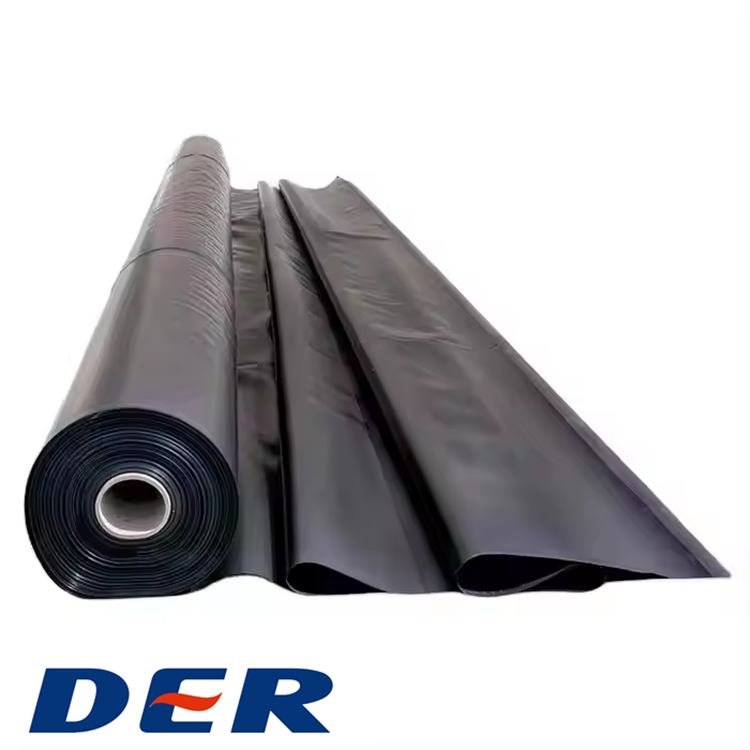
DER factory PVC tarpaulin and liner roll material reference for custom fabrication

Roll Material Before Conversion

Custom production starts with the material format. Roll width, panel direction and seam planning influence waste, finished dimensions, packing size and the number of fabricated joins in the cover.

Performance Priorities

What Performance Matters in a Made-to-Measure Tarp?

A custom tarp manufacturer should translate the job conditions into a material-and-fabrication specification. The useful question is not “Which tarp is strongest?” but “Which combination of fabric, seams, edges and fastening survives this specific use without unnecessary weight or cost?”

Water Barrier

Material and seams should be selected together when rain protection or liquid exclusion is critical.

Tear & Tensile Support

Base textile, coating construction and reinforcement influence how the tarp carries tension and localized loads.

Abrasion Management

Contact with cargo corners, machinery edges and repeated folding can drive coating wear even when the fabric is otherwise strong.

Outdoor Exposure

UV, temperature cycles, rain and wind should be stated during quotation so an appropriate material direction can be reviewed.

Project Specification Table

Custom Tarp Specification Options

Instead of publishing one generic “standard custom tarp,” DER factory can review each field below against the actual application. Where exact values are not confirmed, they should remain project-dependent until quotation and sample approval.

Specification FieldAvailable DirectionWhat the Buyer Should Specify
MaterialPVC-coated polyester, PVC-laminated fabric, PE woven tarpaulin or other reviewed optionsApplication, expected use cycle, waterproofing and handling requirement
ConstructionCoated / laminated / woven construction, project dependentReference sample, target performance or current specification
Weight & ThicknessCustomizable after technical reviewTarget GSM/thickness if known, or describe service severity
Finished Size & ShapeRectangular, multi-panel or drawing-based shapes where feasibleLength, width, drops, overlap, openings, clearances and tolerances
Color & SurfaceProject colors and selected surface directionsColor reference and appearance requirement
Seam MethodHeat welding, HF welding or sewn construction as suitableWaterproof requirement, material type, load direction and appearance
Edge ReinforcementFolded hems, webbing, corner patches and stress-zone reinforcementWind, tie-down load, attachment spacing and handling method
HardwareEyelets/grommets, D-rings and selected fastening accessoriesPosition, spacing, load direction and mating hardware
Special PerformanceUV or flame-retardant direction subject to material availability and project reviewRequired standard, test expectation and end-use environment
Branding & PackingLogo, labels, OEM marks and project packing can be reviewedArtwork, label content, folding/rolling preference and carton/marking needs
TestingTesting can be arranged according to agreed project requirementsRequired test item, method, acceptance criteria and document format
Measurement & Fit

How to Measure for a Custom Tarp

For a simple flat cover, length and width may be enough to begin a quotation. For fitted or high-load covers, the drawing should capture the object and the way the tarp attaches to it.

1

Define the Coverage Footprint

Measure the actual surface or object envelope—not just the floor footprint. Include height, slopes, protrusions and zones that must remain uncovered.

2

Add Drops, Overlaps & Clearances

State how far the tarp should extend on each side, where it overlaps, and any clearance required for handles, wheels, exhausts, hinges or access doors.

3

Map Fastening Coordinates

Show where grommets, D-rings, straps or frame attachments must align with the equipment, vehicle or structure. Do not assume equal spacing if the load is uneven.

4

Mark Stress & Abrasion Zones

Identify corners, sharp edges, contact rails, fold lines and areas where the cover is repeatedly pulled. These zones may need targeted reinforcement.

5

Show Openings & Orientation

Include access flaps, vents, windows, cut-outs, doors and the orientation of logos or labels. A simple annotated drawing can prevent reversed or misplaced features.

6

Approve a Sample for Complex Shapes

For irregular covers, a prototype, template or first-article review can reduce risk before repeat production. Sample scope and timing should be confirmed during quotation.

Fabrication & Customization

From Tarpaulin Roll to Finished Custom Cover

Finished performance depends on the conversion details as much as the fabric itself. DER factory can review the appropriate cutting, panel layout, joining, reinforcement and hardware sequence for the selected material and application.

Cutting & Panel Planning

Panel direction, usable roll width and finished geometry are reviewed to reduce unnecessary seams while keeping the product practical to fabricate and pack.

Welding or Sewing

Heat welding, high-frequency welding or sewing can be selected according to material compatibility, waterproofing need and structural detail.

Edges & Stress Zones

Hems, webbing, patches and corner construction can be concentrated where pull loads and repeated handling are highest.

Hardware & OEM Finish

Selected grommets, D-rings, straps, rope, labels, logos and packing can be integrated into an approved repeat-order specification.

Have a drawing, photo or existing cover?

Send the reference together with application, quantity and required performance. It is usually more useful than asking for “a heavy tarp” without the fastening and service details.

Send Project Details
Application-to-Spec Mapping

Where Custom Tarps Are Used

Each application below creates a different specification priority. This is why a custom tarp should be selected by use case rather than by one headline GSM or thickness.

Truck & Cargo Covers

Road movement, wind and repeated tie-down cycles make edge reinforcement, attachment layout, abrasion and foldability especially important.

See PVC truck cover tarp fabric Specify: cargo type, vehicle dimensions, drops, attachment points and road exposure.

Construction Tarps

Site covers may protect materials, work zones or temporary structures. Buyers should consider wind exposure, weather, handling and required fastening density.

See construction tarps Specify: installation method, duration, weather exposure and edge anchoring.

Equipment & Machinery Covers

Fitted machinery covers often need clearance for protrusions, access points and hot or sharp zones, plus a fastening layout that will not rub sensitive surfaces.

See construction equipment covers Specify: equipment drawing, access doors, sharp edges, storage environment and lifting method.

Pallet & Storage Covers

Warehouse or outdoor pallet hoods benefit from repeatable dimensions, easy handling and a balance between abrasion, water resistance and daily removal.

See pallet protective covers Specify: pallet footprint, stack height, access frequency and indoor/outdoor exposure.

Agricultural Covers

Farm covers may be large, frequently exposed to sunlight and wind, or used around irregular stacks. Edge anchoring and field handling often drive the design.

See agriculture tarp covers Specify: crop/material covered, season, wind, UV exposure and anchoring method.

Industrial Project Covers

OEM converters, distributors and industrial buyers can define repeat programs around approved drawings, colors, labels, packaging and project-specific performance requirements.

Specify: drawing revision, approved material, tolerances, accessories, test requirements and repeat-order controls.
Buyer Decision Guide

How to Choose the Right Custom Tarp Construction

Use these comparisons to define the trade-off you actually need. A higher-cost or heavier option is not automatically better if it adds weight without solving the project’s failure mode.

DecisionChoose This Direction When…Watch For
Custom vs. Stock SizeFit, hardware position, overlaps or access openings affect performance or usability.Do not submit only the object footprint; include drops and fastening geometry.
PVC vs. PEPVC is often chosen for reusable, weldable, reinforced covers; PE can suit lighter and more economical protection.Compare total construction—not material name alone.
Lighter vs. Heavier FabricHeavier constructions may help demanding applications; lighter materials improve handling and can reduce unnecessary mass.GSM alone does not describe yarn, coating, seam or reinforcement strength.
Roll Goods vs. Finished TarpConverters may prefer rolls; end users and OEM programs may need cut panels or finished covers.Finished conversion adds seams, hardware, tolerances, reinforcement and packing requirements.
Standard vs. Reinforced EdgeWind, repeated tie-down, transport vibration or high local tension creates concentrated edge loading.Reinforcement should match actual stress zones, not just be added uniformly.
Standard vs. Special PerformanceThe project explicitly requires UV, flame-retardant or another controlled performance.State the required standard or test expectation before material selection.
Quality Control

What Should Be Checked Before a Custom Tarp Ships?

Quality control should follow the approved specification. The inspection plan can be adapted to the project rather than treating every custom cover as the same commodity.

Material Verification

Confirm selected material construction, color, surface direction and project-specific weight or thickness requirement.

Cut & Dimension Check

Review finished length, width, drops, openings, orientation and agreed dimensional tolerances.

Seam & Weld Review

Inspect seam continuity, overlap, appearance and relevant order-specific joining requirements.

Reinforcement Check

Verify hems, webbing, corner patches and other stress-zone details against the approved drawing.

Hardware Position

Check grommets, D-rings or straps for quantity, orientation and coordinate consistency where applicable.

Packing & Identification

Confirm folding/rolling method, labels, marks and packaging against the approved production instruction.

When a project requires a specific ASTM, EN, ISO or other test method, the exact test expectation should be stated during quotation. Testing can then be discussed against the agreed requirement rather than assumed from a generic product description.

Avoid These RFQ Mistakes

Common Custom Tarp Specification Mistakes

Most quotation delays and fit problems are caused by missing geometry or fastening information—not by a lack of product names.

Buying by GSM Alone

GSM describes mass per area, not the complete tensile, tear, abrasion, seam or reinforcement performance of a finished cover.

Sending Only Object Dimensions

A fitted cover usually also needs drops, overlaps, clearances, protrusions and access requirements.

Ignoring Tie-Down Geometry

Equal grommet spacing may look neat but can be wrong if anchor points or load directions are uneven.

Missing Sharp-Edge Protection

High abrasion at one contact point can damage a strong tarp. Mark known edges so targeted reinforcement or protective design can be reviewed.

Assuming “Seamless” at Any Size

Large finished dimensions may require multiple panels depending on usable roll width, fabric direction and fabrication method.

Skipping First-Article Approval

For irregular geometry or new OEM designs, reviewing a prototype or first piece can reduce repeat-order risk before full production.

Cost Drivers

What Changes the Cost of Custom Tarps?

There is no single price for a custom tarpaulin because the quotation depends on both material area and conversion complexity. The most useful comparison is between two covers with the same approved specification.

  • Material type, coating or lamination construction
  • Fabric weight, thickness and target performance
  • Finished dimensions and total material area
  • Number of panels, seams and complex cut shapes
  • Webbing, reinforced hems and corner patches
  • Grommets, D-rings, straps and special accessories
  • Logo printing, labels and OEM identification
  • Testing or compliance documentation requirements
  • Folding, roll packing, cartons and export marks
  • Order quantity and repeat-program consistency
RFQ Checklist

What to Send a Custom Tarp Manufacturer

A good RFQ allows material and fabrication to be reviewed together. Send as many of the following items as possible:

  • Application and object being covered
  • Finished dimensions or annotated drawing
  • Required drops, overlap and openings
  • Material preference or reference sample
  • GSM/thickness if already specified
  • Indoor/outdoor environment and service cycle
  • Waterproof, UV, FR or other performance needs
  • Reinforced zones and tie-down positions
  • Grommets, D-rings, straps or other hardware
  • Color, logo, labels and packaging
  • Quantity and repeat-order plan
  • Required testing and destination market
People Also Ask

Custom Tarps & Custom Tarpaulin FAQs

Short answers to common sourcing, measuring and fabrication questions from industrial and B2B buyers.

What makes a tarp custom?

A custom tarp is made to a defined application, finished size or shape, material, reinforcement pattern, seam method and fastening layout rather than only a standard stock dimension. The goal is to match the cover to the object and the way it will be used.

Can DER factory make custom size and irregular-shape tarps?

DER factory can review drawings, dimensions, photographs, templates or reference samples for made-to-measure tarpaulin projects. Feasibility, panel layout, seams, openings and finishing details should be confirmed before production.

Should I choose PVC or PE for a custom tarpaulin?

PVC-coated polyester is often chosen when buyers need weldability, repeated handling, weather resistance and reinforced fabrication. PE woven tarpaulin is often considered when lower weight and economical coverage are more important. The correct choice depends on the application and service conditions.

How should I measure for a custom tarp?

Measure the actual object or coverage footprint, required drops and overlaps, protrusions and clearances, tie-down or fastening points, and any areas that need openings or access. For complex shapes, an annotated drawing or template is preferable to a single length-by-width measurement.

Can custom tarps include grommets, D-rings and webbing?

Yes. These details can be reviewed as part of the finished construction. Their size, spacing and reinforcement should be selected according to how the cover will be tensioned, handled and exposed to wind or movement.

Are custom tarps waterproof?

Waterproof performance depends on the selected material and seam construction. PVC-coated or laminated waterproof fabrics can be fabricated with compatible welded seams when the project requires a continuous weather barrier. Openings and attachment penetrations should also be considered in the overall design.

Can UV-resistant or flame-retardant options be specified?

Project-specific UV or flame-retardant performance can be reviewed where an appropriate material is available. State the required standard or test expectation during quotation so feasibility can be confirmed before production.

What are the MOQ and lead time for custom tarps?

MOQ and lead time depend on material, finished size, fabrication complexity, accessories, printing, quantity and required testing. They should be confirmed against the final approved specification during quotation rather than assumed from a generic product page.

Turn the Application Into a Production Specification

Request a Custom Tarp Quote from DER factory

Send your application, dimensions or drawing, material preference, quantity, tie-down details and any waterproof, UV, flame-retardant, branding or testing requirements. DER factory can review the project and confirm a practical custom tarpaulin construction before production.

Material availability, exact construction, MOQ, lead time, testing and commercial terms are confirmed per project.

Message

Contact Us (You are welcome to consult at any time!)

Zhangbaling Plastic Polymer Industrial Park, Zhangbaling Town, Mingguang City, Chuzhou, Anhui Provin

info@der-factory.com

+86 15601786499 (steven)

Product recommendation

Our product applications

Our products are widely used in our residential and industrial area, which can be used for producing tents, outdoor covering, flexible ventilation tube, water bladders, inflatable castles, architecture membrane structures, etc. Our main products: PVC coated fabrics, PU/TPU coated fabrics, Oxford fabric, PVC ceiling film, flexible banner material. Welcome to our site and order online.