Defines the outdoor exposure to consider, but not necessarily the temperature during tarp folding.

truck tarps
- 2026-10-26

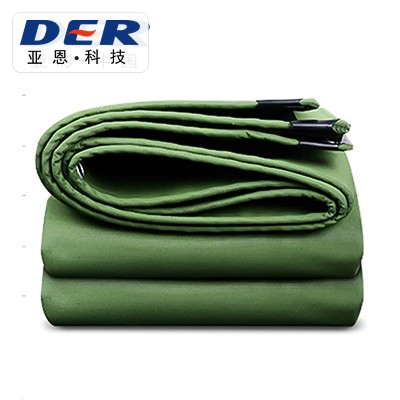
A low temperature tarpaulin should be selected for the temperature at which it actually bends, not just the coldest number on a weather forecast. Specify PVC formulation, movement duty, reinforcement and testing together for dependable OEM supply.
A cold resistant tarp is a protective sheet made from a fabric or film formulation selected to resist cracking or damage when bent at an agreed low temperature. For reusable industrial covers, a common construction is high-tenacity polyester scrim with flexible polyvinyl chloride (PVC) coating. The polyester contributes strength; the coating provides a weather barrier and supports welded fabrication. The required low-temperature grade must be specified and tested—it cannot be inferred from thickness or GSM alone.
DER factory can discuss cold-weather fabric rolls, cut panels and customized tarp conversion for importers, industrial distributors, truck-cover fabricators and project buyers. Specify the lowest handling temperature and how often the cover is folded, rolled or tensioned before choosing a grade.
For a broader choice of coated textiles, see our PVC-coated polyester fabric range. This page addresses the narrower problem of cold-weather material qualification and winter-ready cover design.
The matrix below is a specification route, not a published DER factory temperature rating. Temperature values for a specific supplied grade require an agreed test result.
| Winter use condition | What usually creates risk | Specification direction | How to verify |
|---|---|---|---|
| Static outdoor stock cover Installed, then left in place | Wind flap, abrasion, snow or ice loading, stress around tie-downs | Coated polyester weight and tear strength matched to cover size; stabilized edges and fastening plan | Cold-bend evidence for selected grade; tensile/tear and attachment checks where needed |
| Occasionally folded winter construction cover | Sharp creases while stiff, site dragging, repeated set-up | Cold-flex coating option, manageable weight, generous fold radius, robust hem construction | Material bend test at agreed handling temperature; representative fold trial after conditioning |
| Daily truck tarp / rolling cargo cover | Repeated roll cycles, narrow bend radius, rubbing at rails, webbing and metal hardware | Prioritize proven flex behavior plus weld compatibility, tear strength and well-placed reinforcement | Cold-bend test plus assembled roll, seam and tie-down trials at realistic temperatures |
| Cold warehouse curtain or enclosure | Repeated pull, door-track friction, fasteners and welded pockets | Grade selected for movement, stiffness and curtain geometry; confirm need for opaque or clear panels | Cold-handling sample, curtain-track movement test and seam review |
| Severe cold or specialist project | Material and hardware behavior may change substantially under deep-freeze conditions | Request project-specific compound, grade data and trial program; do not assume all standard PVC tarps qualify | Agree method, target temperature, pass/fail limits and finished-cover prototype before bulk order |
Important: a quoted test value of −20°C, −30°C, −40°C or lower is meaningful only when it refers to the exact construction, test method and acceptance condition. It is not a universal maximum service limit.
Defines the outdoor exposure to consider, but not necessarily the temperature during tarp folding.
Often the decisive input for truck tarps, retractable covers and movable curtains.
Useful laboratory evidence, provided its standard and grade match the procurement requirement.
Cold performance is a material-system property. It cannot be assigned to the PVC coating, base fabric or finished hardware in isolation.

Low-temperature suitability depends strongly on PVC resin and plasticizer selection, coating build and formulation balance. Increased flexibility should be checked against abrasion, heat aging, surface finish and potential material migration.
Yarn strength, weave density and coating adhesion affect tear propagation, dimensional behavior and load transfer. See the PVC coated fabric category when comparing base constructions.
Weld overlaps, narrow folds, reinforced corner stacks and metal eyelets can be stiffer than single-layer fabric. Approval of flat fabric should be followed by evaluation of representative assemblies.
Use these fields to request comparable quotations. DER factory should confirm available grades and measurable values before sample approval.
| Parameter | Buying specification to define | Technical note |
|---|---|---|
| Product / material | Cold-resistant PVC-coated polyester tarpaulin | Roll fabric or finished tarp; coating route subject to grade |
| Base fabric | High-tenacity polyester yarn; denier and weave to be agreed | Select from tear/tensile requirements and application load |
| Mass per area (GSM) | Project dependent; supplier to propose options | Confirm by method such as ISO 2286-2 |
| Thickness & width | State minimum, target and tolerance; roll width to be confirmed | Panel yield and seam layout can change material needs |
| Temperature qualification | Minimum bending/handling temperature + test method + acceptance | Request specific grade evidence; no blanket temperature claim |
| Tensile & tear | Required warp/weft result and test method | Critical for tensioned truck and outdoor covers |
| Coating adhesion | Target value or documented grade data | Relevant to welding and repeated bending; method may include ISO 2411 |
| Surface & color | Gloss/matte/finish, color standard, optional UV treatment | Cold flexibility and lacquer compatibility should be assessed together |
| Waterproofing | Specify intended water exposure and seam requirement | A waterproof sheet does not prove seam watertightness |
| Fire performance | Only if required: target market, test standard and documentation | Fire-retardant performance is a separate product qualification |
| Fabrication | Hot-air / HF welding review, cut panels, hems, webbing, grommets, D-rings | Confirm accessory geometry and prototype before volume order |
| Supply format | Roll length, finished dimensions, quantities, packaging, destination | State if OEM labeling or repeat color matching is required |
Specify a test method, condition, specimen and acceptance criterion—not simply “cold resistant: yes.”
Defines a low-temperature bending method for rubber- or plastics-coated fabrics. Ask which edition and sample construction will be used, the conditioning period, exposure temperature and acceptance criterion.
Another recognized test method for coated-fabric low-temperature bending. A passed bend test is useful qualification data; it is not a complete prediction of field performance.
Depending on duty, request results for fabric mass (ISO 2286-2), tensile properties (ISO 1421) and coating adhesion (ISO 2411), with appropriate editions and agreed values.
“Tested at −40°C” identifies one laboratory condition only if the method and result are documented.
“Usable at −40°C” requires context for load, motion and period of exposure.
“Rolls every day at −40°C” requires application-specific assembly and repeated-movement validation.
Temperature examples are illustrative buyer requirements, not published DER factory ratings.
Technical references: ISO 4675 low-temperature bend test and ASTM D2136 coated-fabric low-temperature bend test. Reference to a method is not a claim that a specific DER factory grade has passed it.
The same PVC material is not automatically suitable for every winter application. Start from the movement and load profile.
Repeated folding, highway vibration and concentrated tie-down loads call for tested cold flexibility, weld integrity and reinforced corners. Compare construction routes on our truck tarp page.
Site work combines cold morning handling with strong winds, rough contact and wet or snowy conditions. Prioritize manageable fabric weight, tear strength and safe anchoring.
For static winter storage, focus on water protection, contact abrasion and cover geometry; for covers removed daily, make low-temperature handling a separate acceptance point.
Long exposure brings UV, wind and condensation considerations alongside cold. Secure drainage and avoid sharp edges under the cover.
Temperature gradients and repeated opening may require a more flexible construction and a review of tracks, pockets and sewn or welded edges.
Cold-weather programs often need reliable roll supply, repeatable color and coating behavior. Related vinyl tarp constructions provide a baseline for material comparison.
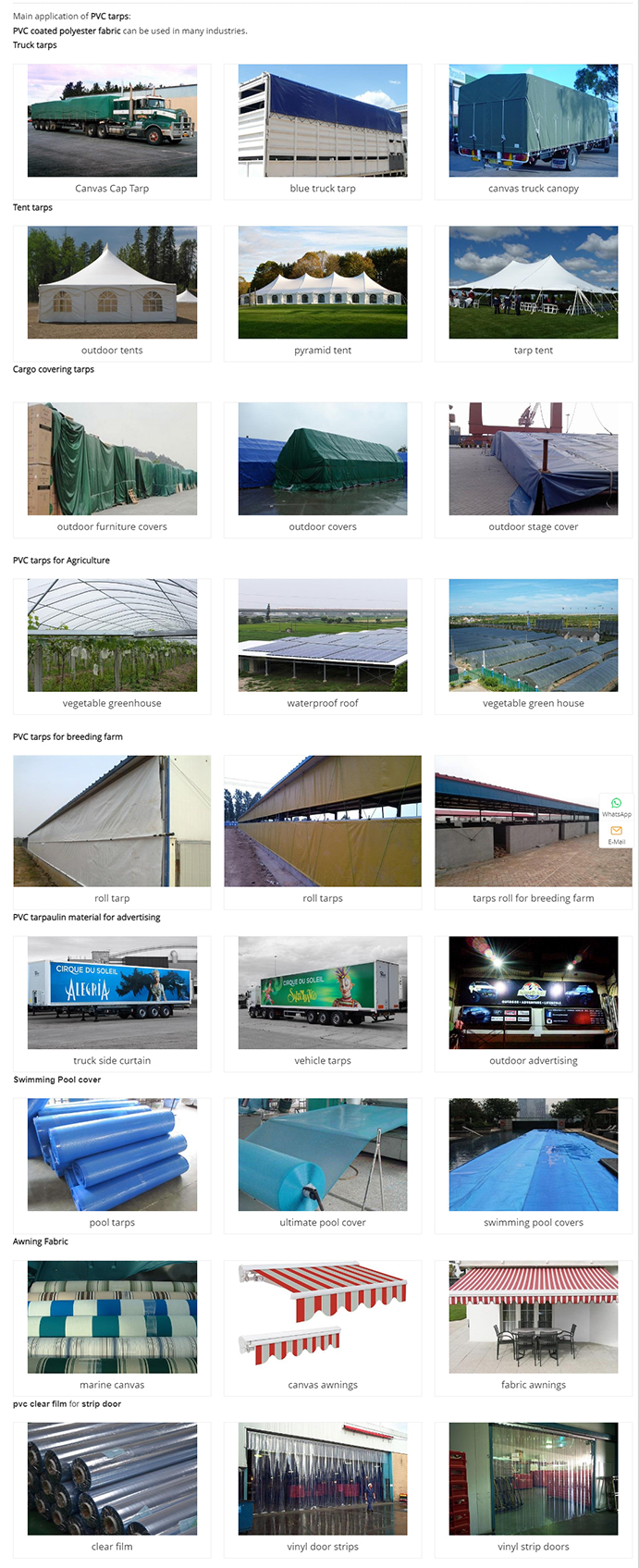
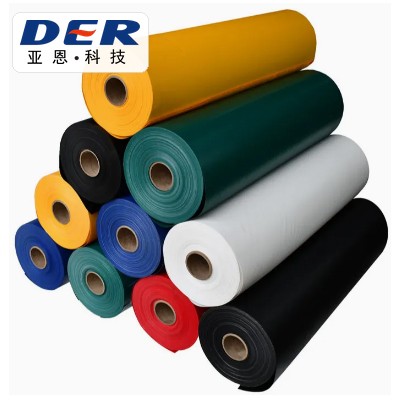
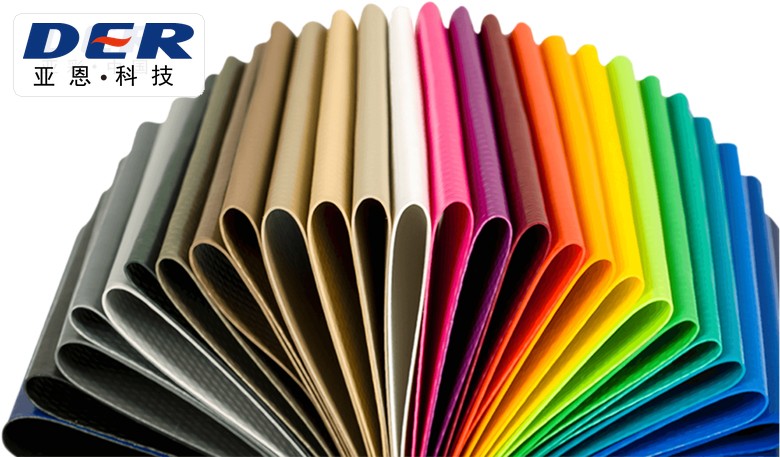
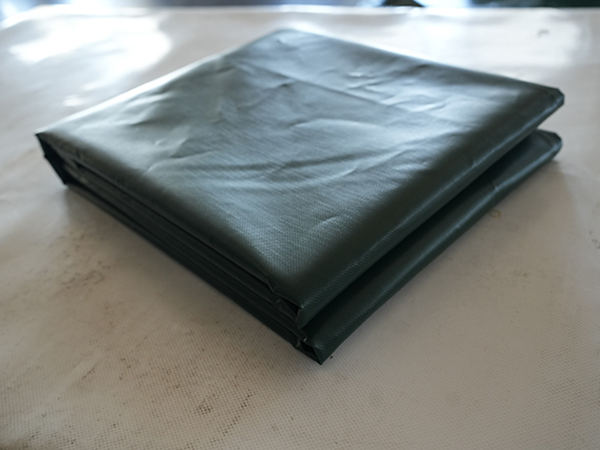
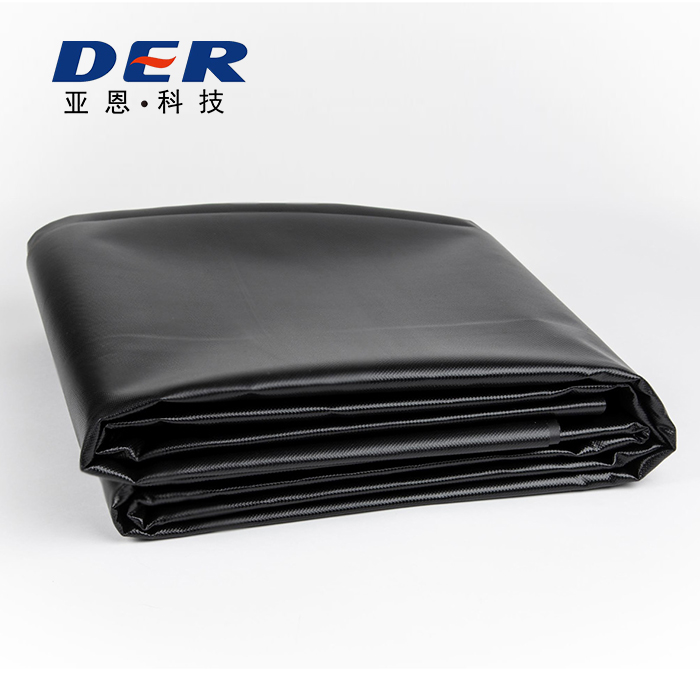
Existing DER factory image paths illustrate material families and common uses. They are general material references—not photographic proof of a particular cold-bend result.


Hot-air or high-frequency (HF) welding may be suitable for an approved coating grade. Compare weld strength at room temperature and after cold exposure as required. Weld settings must be established for each construction, not copied between grades.
Keep load transfer smooth around seams and corners. Extremely thick reinforcement stacks can become stiff at low temperature; use a representative folded detail to catch cracking and peel risks.
Plan attachment spacing around the actual load path and fastening equipment. Grommet spacing alone does not determine allowable wind or snow loading. See heavy-duty truck-cover fabric for a related converter material direction.
Before repeating an approved winter-tarp SKU, retain the agreed grade identity, film/coating construction, roll width, weld method, panel drawing, reinforcement map and packaging conditions. This makes future orders comparable and reduces accidental material substitutions.
| Choice | Typical buying rationale | Cold-weather caution | Good fit when… |
|---|---|---|---|
| Cold-flex PVC-coated polyester | Weldable reinforced barrier, reusable OEM covers, custom seams | Confirm actual compound and bend-test performance; inspect finished construction | Repeated use and fabrication justify a specialized grade |
| Conventional PVC vinyl tarp | Waterproof covering, familiar conversion and accessory options | General-purpose grade may stiffen or crack below its qualified range | Specified service temperatures match the selected material |
| PE/poly tarp | Light weight and cost-sensitive temporary covering | Cold behavior depends on resin, construction and handling; limited welded-PVC conversion compatibility | Short-term or lighter duty matters more than repeatable industrial fabrication |
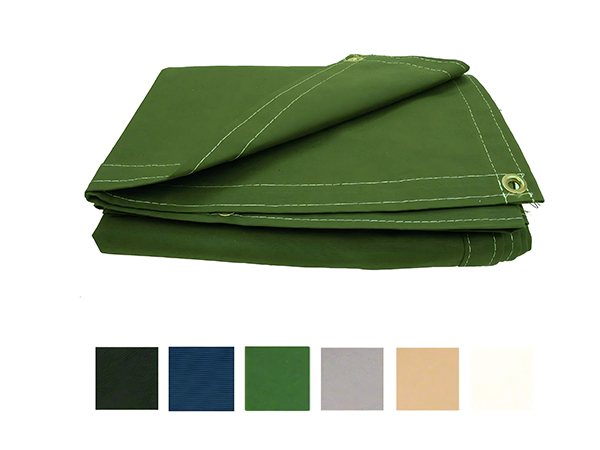
| Canvas cover | Breathability and traditional cover handling | Water protection depends on finish; moisture can freeze within or on the textile | Ventilation is prioritized and full waterproof PVC barrier is not necessary |
Material cost is only one part of the purchase: consider installation labor, expected folding cycles, seam design, repair strategy and frequency of replacement. Compare heavy-duty PVC tarpaulin options when abrasion and mechanical loads are also significant.
A complete RFQ helps technical teams choose a material, plan sample testing and quote the same product across repeat orders.
A cold resistant tarp is a tarpaulin made from a material formulation chosen to resist cracking when bent under specified low-temperature test conditions. Finished-tarp suitability also depends on seams, attachments and operating movement.
A cold crack rating is a result under a defined laboratory bend test. Service temperature involves the complete tarp, including repeated folding, seams, hardware, wind and abrasion. One does not automatically prove the other.
Ask for a grade-specific low-temperature bend test such as ISO 4675 or ASTM D2136, including test temperature, method edition, conditioning and pass/fail criterion. Add assembly trials for seams, reinforced hems and grommets when relevant.
No. Higher GSM can support some strength or abrasion requirements but does not itself establish cold flexibility. Coating formulation, substrate, fold radius and finishing details also matter.
Roll-goods supply and converted or finished-tarp options can be discussed. Share required roll width, length, target construction, cold-bend criteria and order quantity for technical review.
Reinforced hems, webbing, grommets and D-ring layouts can be evaluated against project drawings. The representative finished assembly should be checked for cold-weather movement and concentrated loads.
PVC-coated polyester constructions can provide a waterproof barrier and project-selected outdoor UV resistance, but cold flexibility, seam waterproofing and UV performance are separate requirements to confirm for each grade.
Provide use case, minimum handling temperature, fold or roll frequency, dimensions, quantity, material preference, seam and reinforcement details, test requirement, color, packaging and destination.
Tell DER factory how cold the cover becomes when it must move, how it is secured and whether you want fabric rolls or finished covers. We can review the material and fabrication direction before you approve the commercial specification.
01. Application, lowest handling temperature and movement frequency.
02. Target dimensions, GSM direction, reinforcement drawing or roll requirements.
03. Estimated quantity and required test method or acceptance conditions.
Specifications, sample availability, MOQ and lead time are confirmed during technical and commercial review.
Previous:period
Next:Eco-Friendly Transparent PVC Sheet Supplier | DER factory
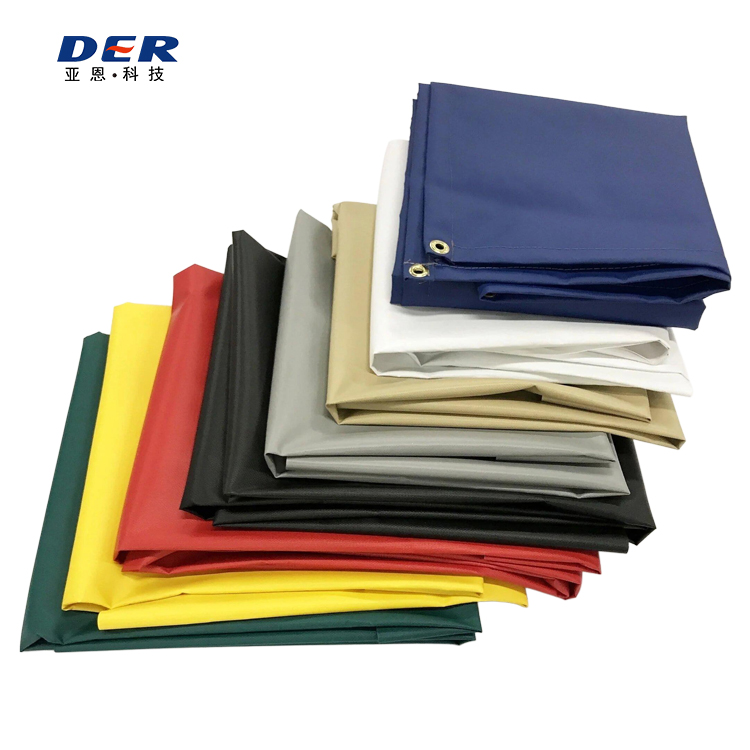
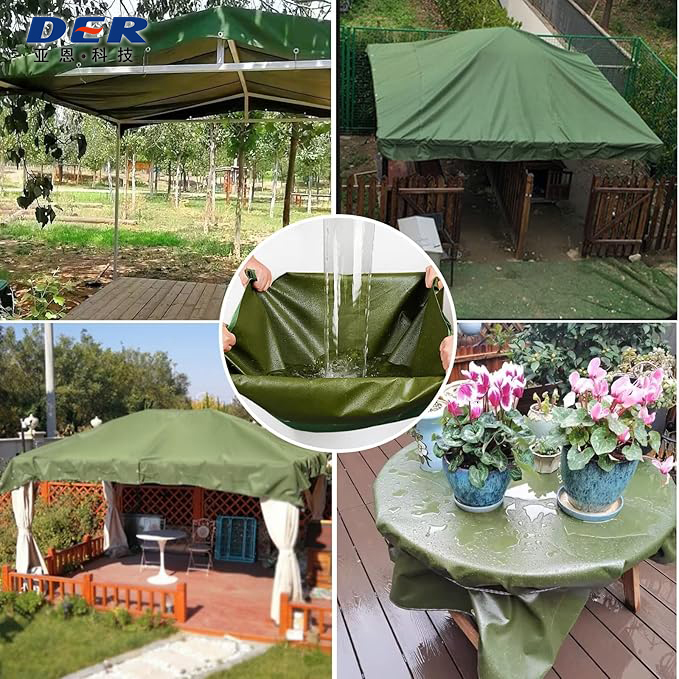
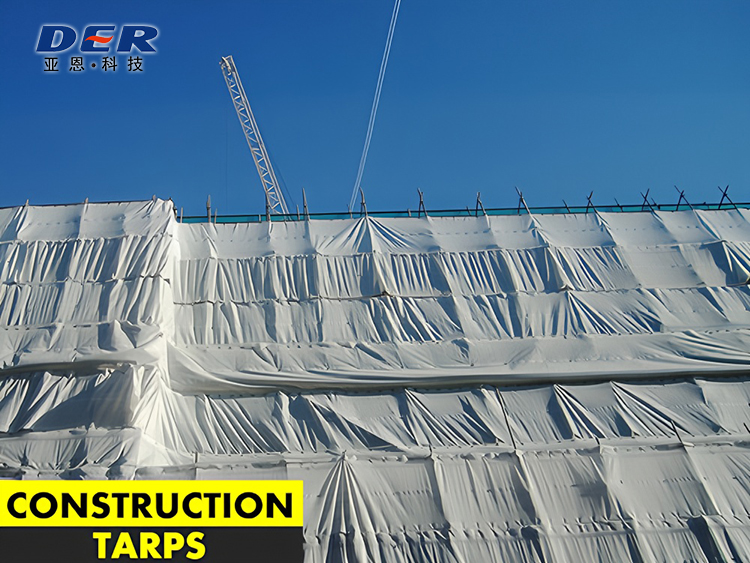
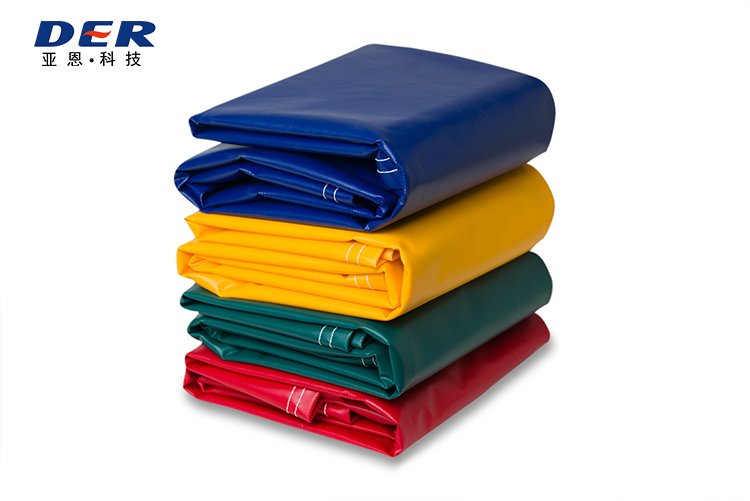
Our products are widely used in our residential and industrial area, which can be used for producing tents, outdoor covering, flexible ventilation tube, water bladders, inflatable castles, architecture membrane structures, etc. Our main products: PVC coated fabrics, PU/TPU coated fabrics, Oxford fabric, PVC ceiling film, flexible banner material. Welcome to our site and order online.