Bulk Material Protection
Ore, concentrate, coal, aggregates and process materials may need covers to reduce direct rain exposure, surface contamination and wind-driven dust.
Stockpile tarpOre cover
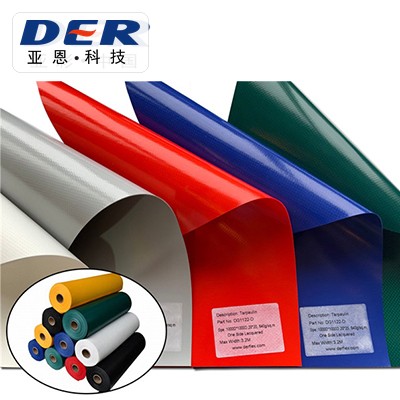
In mining, a tarp is not simply a waterproof sheet. It is a flexible industrial cover system used around ore and coal stockpiles, haul trucks, machinery, conveyors, temporary enclosures and outdoor storage where abrasion, wind, dust, rain, UV exposure and repeated handling can be severe.
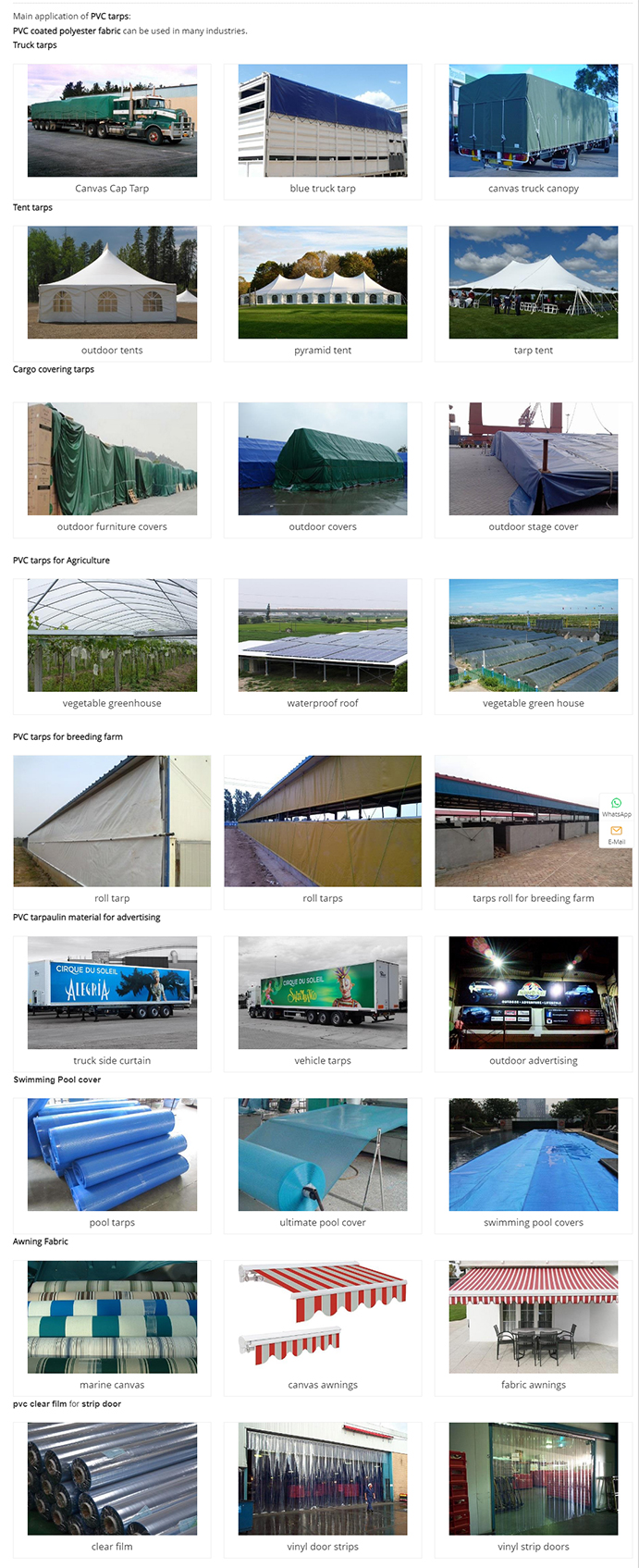
A mining tarp is a heavy-duty flexible cover or fabricated tarpaulin used to protect materials, equipment, vehicles and work areas in mining operations. Typical uses include covering ore or coal stockpiles, securing bulk material on haul trucks, shielding machinery during shutdowns, enclosing conveyors or transfer areas, and protecting stored parts from weather and dust. Mining tarps are commonly made from reinforced PVC-coated polyester when buyers need waterproofing, weldable seams and durable finished fabrication. The correct specification is determined by abrasion, wind, UV exposure, handling frequency, attachment method, temperature, required safety performance and whether the tarp is used above ground or underground.
Mining environments combine abrasive material, moving equipment, large exposed surfaces and demanding weather. A useful mining-tarpaulin specification therefore includes the fabric, panel layout, seams, reinforcement, attachment points and handling method as one system.
Ore, concentrate, coal, aggregates and process materials may need covers to reduce direct rain exposure, surface contamination and wind-driven dust.
Stockpile tarpOre coverHaul trucks, trailers and site transport systems can use tarps to cover loose bulk material. Repeated opening, closing and wind loading change the design compared with a static cover.
See PVC truck cover tarp fabricExcavators, drills, crushers, pumps, electrical assemblies and spare parts may require temporary protection from rain, dust and storage contamination.
See construction equipment coversFlexible panels can be used around conveyors, transfer points, maintenance bays and temporary work areas where containment, weather protection or separation is required.
Conveyor coverTemporary enclosureParts, palletized materials, consumables and maintenance supplies can be covered in open yards or temporary storage zones when permanent buildings are not available.
See industrial pallet protective coversProperly fitted covers can help limit direct rainfall on stored material and reduce wind contact with exposed surfaces. They should be treated as part of a broader site dust, drainage and operating plan.
Dust control supportRain managementThe difference is not a special product name. It is the service condition. A mining tarp must be specified around harsher abrasion, larger geometry, higher wind exposure, repeated handling and more demanding attachment details.
| Decision Area | Ordinary Cover | Mining / Heavy Industrial Tarp | Why It Matters |
|---|---|---|---|
| Material selection | Often chosen mainly by size and basic waterproofing | Selected by abrasion, tensile/tear direction, coating, UV exposure and fabrication | Mining failures often begin at wear zones, seams or attachment points rather than the flat fabric. |
| Panel geometry | Simple flat sheet | Large welded panels, fitted shapes, modular covers or equipment-specific geometry | Geometry affects drainage, handling, wind and the number of seams. |
| Reinforcement | Standard hem or basic grommets | Webbing, wear patches, reinforced corners and stress-zone construction | Local loads can be much higher than the average load on the sheet. |
| Fastening | Generic rope or equal grommet spacing | Attachment layout matched to anchors, truck system, pile perimeter or equipment frame | Poor fastening concentrates stress and allows destructive flapping. |
| Safety requirement | Usually basic outdoor use | May require project-specific flame, anti-static or other controlled performance | Mine-site standards can differ by location, material handled and underground/above-ground use. |
| Inspection cycle | Occasional | Regular inspection of seams, wear points, hardware and tensioning | A small abrasion point can grow quickly under repeated movement. |
PVC-coated polyester combines a woven textile reinforcement with a polymer coating. That structure can provide a waterproof surface, practical weldability and a strong base for reinforced hems, patches and fabricated industrial covers.
The woven base carries tensile and tear loads. Yarn construction and weave direction matter when the cover is repeatedly tensioned or pulled around equipment.
Load-bearing textile coreThe coating provides the outer weather barrier and affects waterproofing, cleanability, surface friction, flexibility and weldability.
Review PVC coated polyester fabricFinished performance also depends on welded or sewn joins, reinforced hems, webbing, wear patches, grommets, D-rings and the distribution of fastening loads.
See DER factory vinyl tarpsFor a large stockpile or equipment cover, a high fabric weight does not compensate for poor drainage, sharp-edge contact, weak seams, insufficient perimeter reinforcement or an attachment layout that concentrates load into a few grommets.
Start with the failure mode, not the GSM. Identify what is most likely to damage the cover—abrasion, wind, movement, UV, sharp edges, heat, chemicals or frequent cycling—then build the material and fabrication around that risk.
| Mining Application | Main Stress | Specification Focus | Buyer Should Provide |
|---|---|---|---|
| Ore / mineral stockpile cover | Wind, large area, abrasion, drainage | Panel layout, seam plan, reinforced perimeter, anchoring, wear zones | Pile dimensions, slope, cover method, wind exposure, access frequency |
| Coal pile cover | Wind, rain, dust, operating procedures | Waterproof fabric, large-panel fabrication, fixing concept, site-specific safety review | Pile geometry, storage duration, wind, access and mine/power-plant procedures |
| Haul truck tarp | Repeated cycling, flapping, abrasive load, hardware stress | Tear behavior, flexible handling, reinforced edges, strap/roller compatibility | Truck body dimensions, tarp system, cycle frequency, load type, attachment points |
| Machinery cover | Sharp edges, protrusions, dust, weather | Fitted geometry, abrasion patches, vents/openings, secure straps | Machine model/drawing, photos, hot/sharp zones, access points and storage position |
| Conveyor / crusher enclosure | Dust, vibration, maintenance access | Panel shape, access flaps, attachment detail, material safety requirement | Frame dimensions, operating environment, access frequency, required site standard |
| Underground temporary barrier | Safety, confined environment, handling | Required flame/anti-static/test standard, controlled attachment and installation | Mine-site specification, required tests, dimensions, airflow/ventilation context |
Send the equipment drawing, pile dimensions, truck body size or installation sketch together with the expected wind, abrasion and safety requirements.
Exact values should be confirmed for the project rather than copied from a generic tarp listing. The table below is designed to help procurement teams issue a complete RFQ without assuming an unverified DER factory specification.
| Parameter | Mining Tarp Direction | Selection Note |
|---|---|---|
| Base material | Reinforced textile, commonly polyester for PVC-coated industrial covers | Confirm required tensile/tear behavior and flexibility. |
| Coating / surface | PVC coating or other project-reviewed structure | Match waterproofing, abrasion, cleanability and welding needs. |
| Weight / thickness | Project dependent | Do not select only by GSM; review handling, abrasion, wind and reinforcement. |
| Width / panel layout | Roll goods, cut panels or welded large panels | Panel planning can reduce unnecessary seams and simplify installation. |
| Color | Project dependent / custom review | May relate to visibility, heat absorption, branding or site preference. |
| UV performance | Available depending on project requirements | Specify outdoor exposure duration and climate. |
| Flame-retardant option | Confirm required standard before production | Especially important where mine-site rules explicitly require controlled fire performance. |
| Anti-static requirement | Project-specific technical review | State the exact requirement or test method; do not assume a standard PVC tarp is suitable. |
| Joining method | Welded or sewn construction after material review | Waterproofness and seam strength depend on compatible fabrication. |
| Edge reinforcement | Webbing, hems, patches or local reinforcement | Place reinforcement where tie-down or wear loads actually occur. |
| Hardware | Grommets, D-rings, straps or other project fittings | Spacing should follow the load path and anchor coordinates. |
| Packaging | Folded, rolled or project-specific packing | Large panels may need special handling plans for site deployment. |
Finished construction controls real-world service life. For mining covers, reinforcement should be concentrated at known wear, pull and contact zones rather than added as a generic decorative feature.
Large stockpile and equipment covers are planned around usable roll width, seam direction, deployment method and drainage.
Heat welding, high-frequency welding or sewing can be reviewed according to the material, waterproof requirement and local load path.
Corners, rails, sharp edges, fold points and recurring contact surfaces can receive targeted protection.
Webbing, grommets, D-rings, straps or rope hems should align with real anchors rather than arbitrary equal spacing.
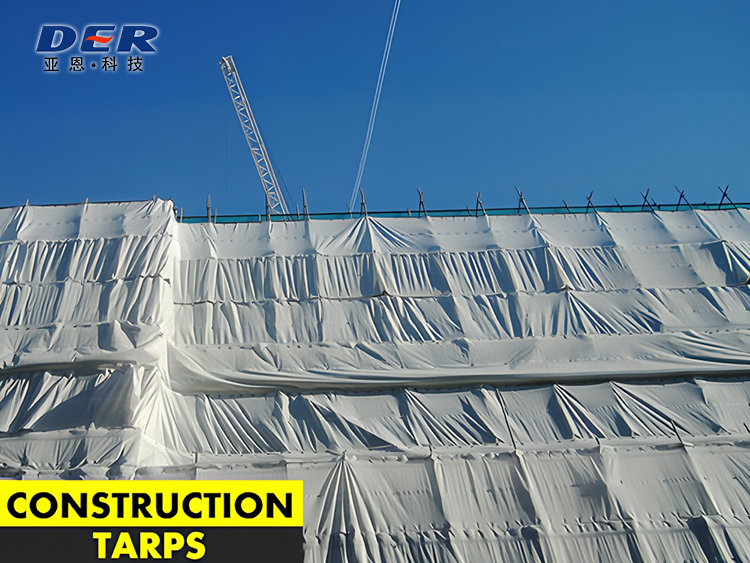
For jobs where the cover resembles construction-site protection more than a truck tarp, compare the application with DER factory construction tarps before fixing the final material and attachment method.
The same “mining tarp” label can hide very different risk profiles. Open-air projects are often dominated by UV, rain and wind, while underground projects can add site-specific flame, static, airflow and confined-space requirements.
Important: do not substitute a generic outdoor PVC tarp for a mine-site safety specification. If a project requires a particular ASTM, EN, ISO, local mining standard or customer test method, state that requirement during quotation and confirm it before production.
No tarp material is automatically best for every mine. The useful comparison is whether the material solves the actual problem without adding unnecessary weight, handling difficulty or cost.
| Material Direction | Often Considered When | Advantages | Trade-Offs / Questions |
|---|---|---|---|
| PVC-coated polyester | Reusable heavy-duty covers, stockpile panels, machinery covers, truck tarps | Waterproof surface, weldability, reinforcement-friendly fabrication | Heavier than light PE; final UV, FR, anti-static and chemical requirements need confirmation. |
| PE woven tarpaulin | Temporary or economical broad-area coverage | Light handling weight and lower-cost direction | May not offer the same repeated-use, abrasion or welded fabrication characteristics as industrial PVC. |
| Mesh tarp | Airflow, shade, debris containment or reduced wind pressure is more important than full waterproofing | Allows air passage and can reduce sail effect | Not a waterproof barrier; opening size and tensile structure must match the application. |
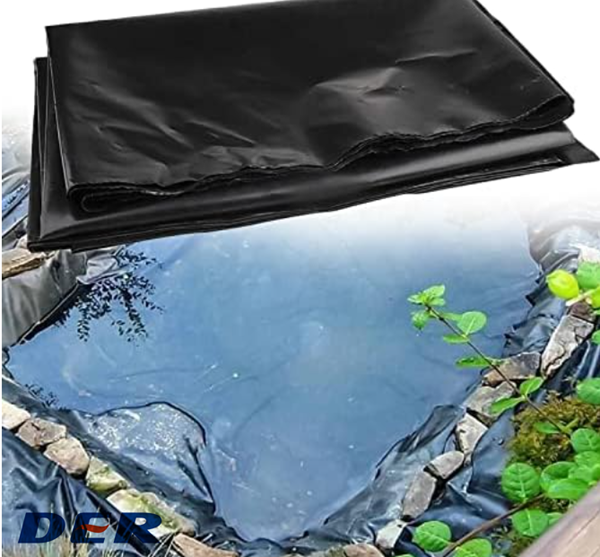
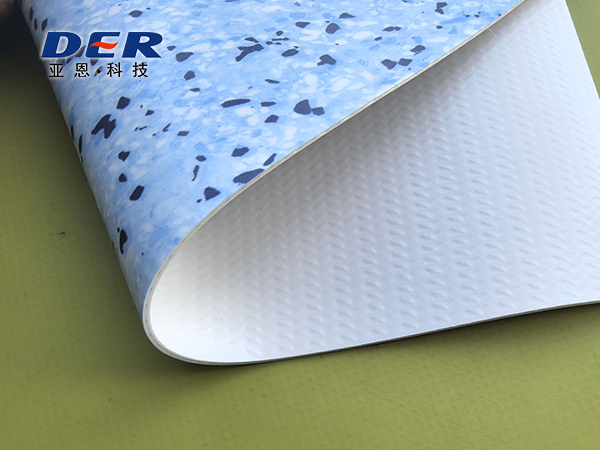
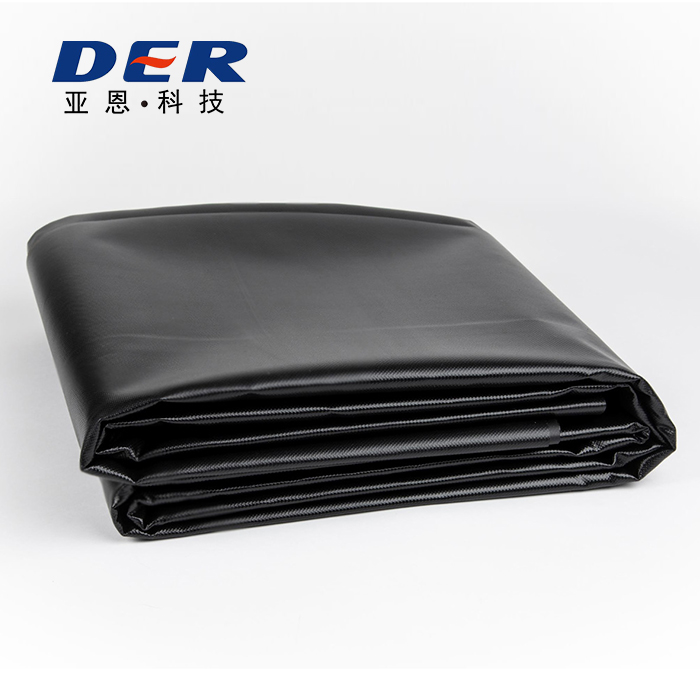
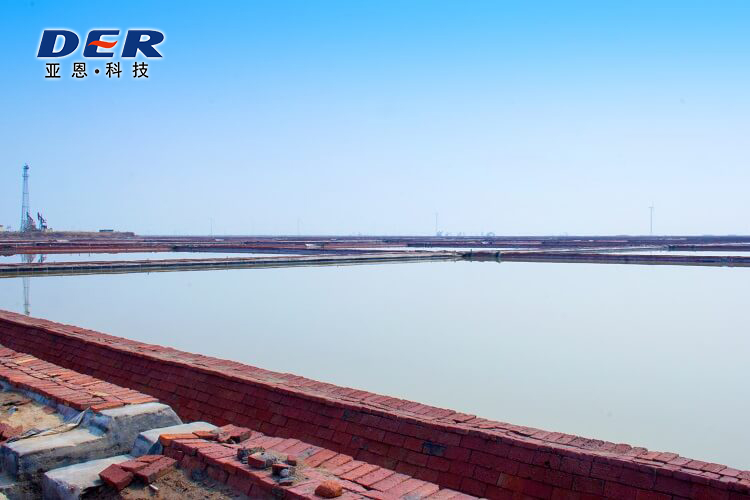
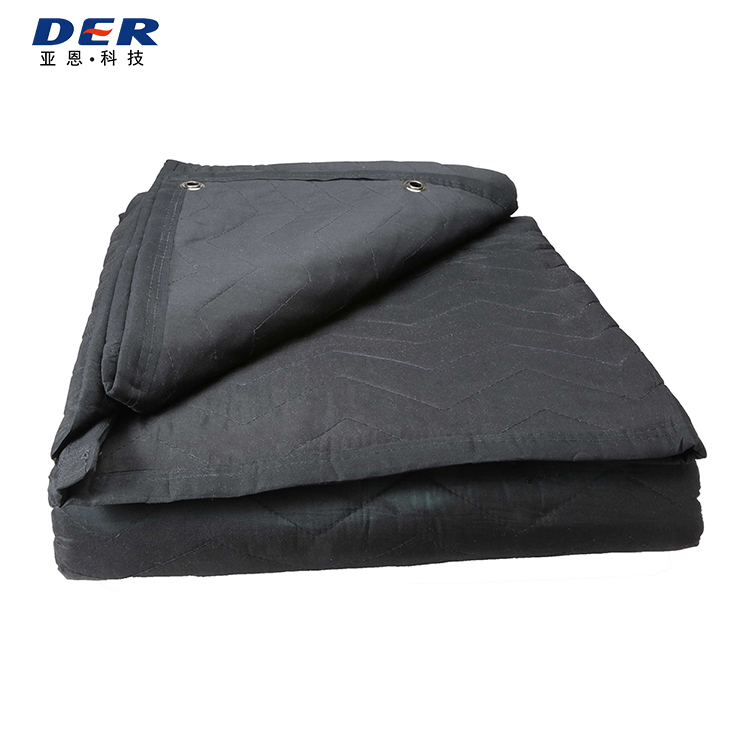
The images below use actual DER factory website assets. Where a photo is a material or general tarpaulin reference rather than a mine-site photo, the caption states that clearly.
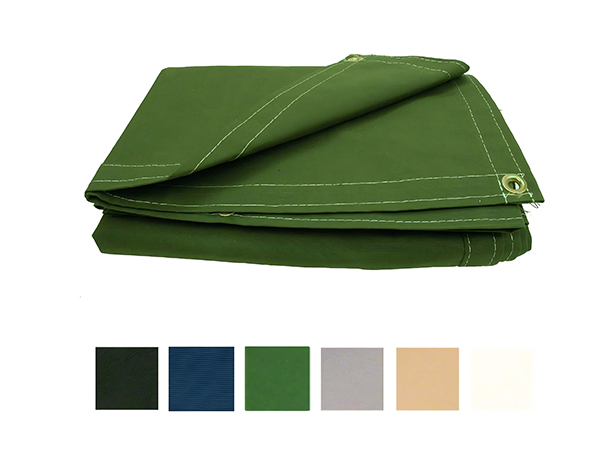
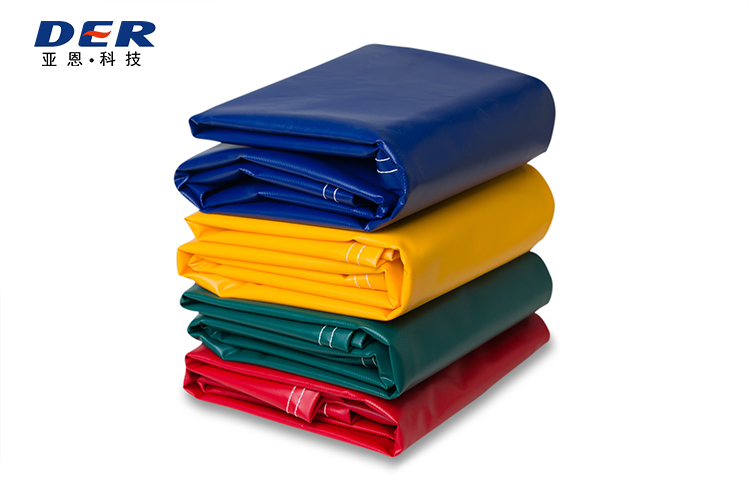
Useful for communicating the finished-cover concept. A mining version should be specified around the exact stockpile, vehicle, equipment or enclosure geometry.
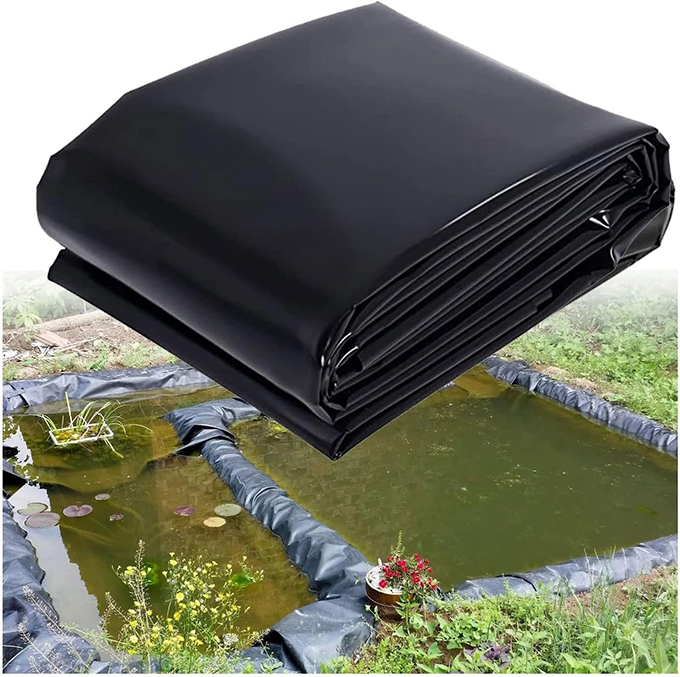
Material reference showing a flexible reinforced PVC construction relevant to waterproof industrial fabrication.
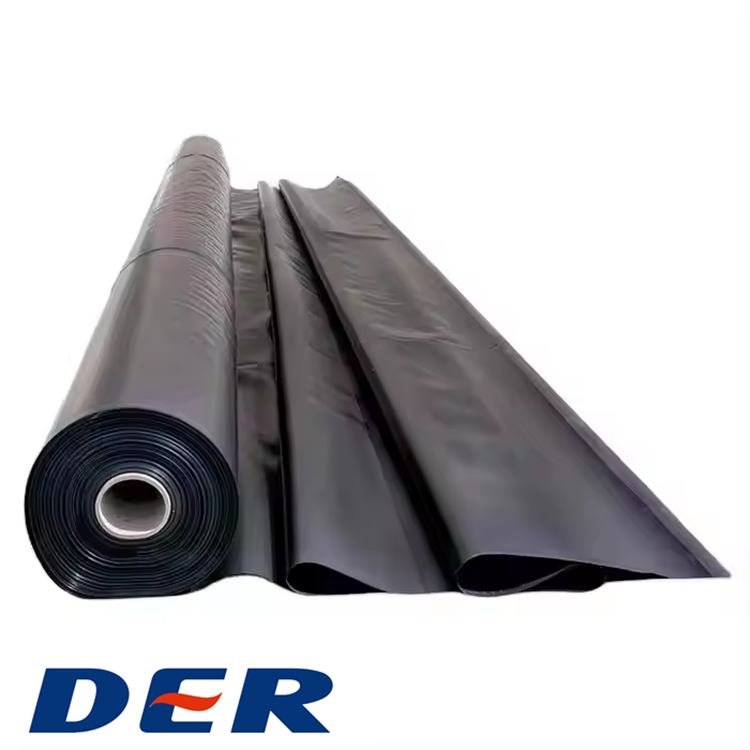
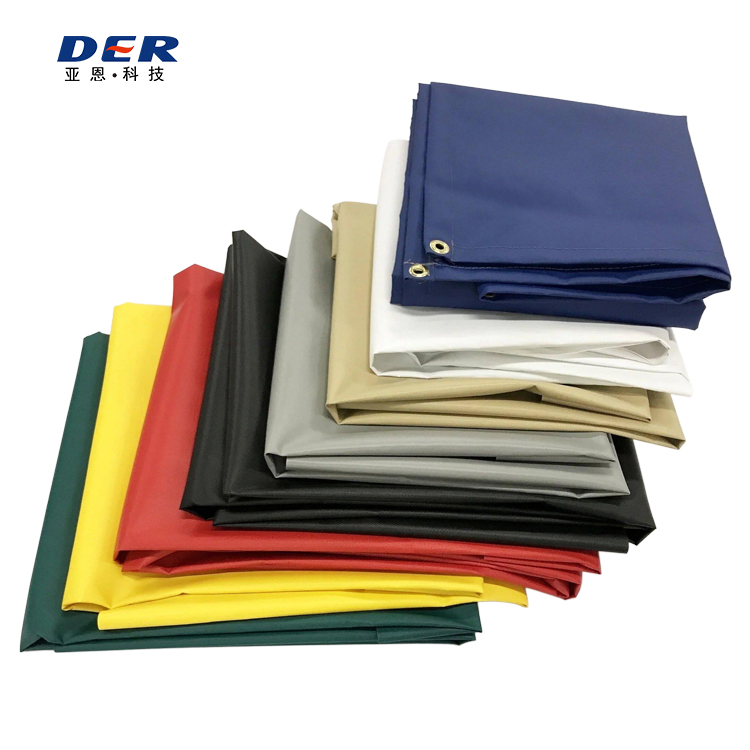
Roll width and panel planning affect seam count, finished geometry, packing and on-site handling.
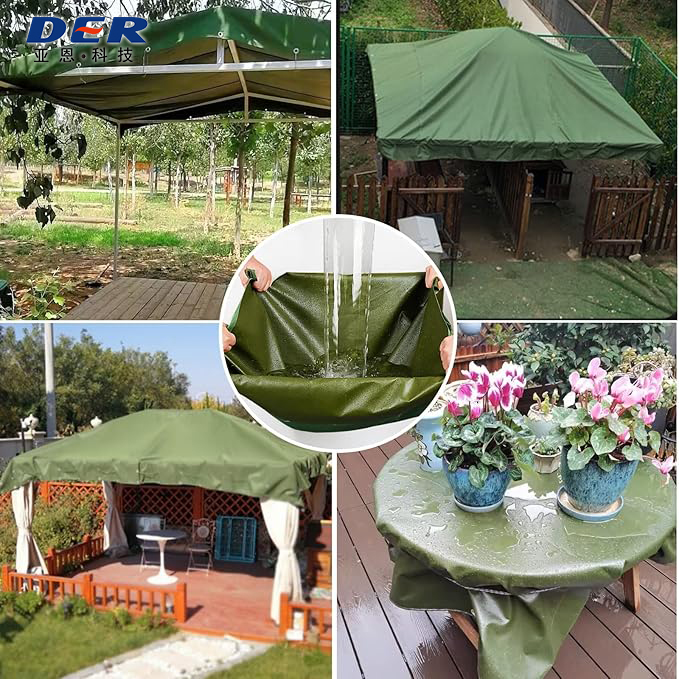
Shows the type of flexible coated textile construction that can be fabricated into large industrial panels.

Manufacturer reference for custom industrial coated fabrics and fabricated tarpaulin projects.
The fastest way to get a useful quotation is to describe the mine-site application, not simply ask for “a heavy-duty tarp.”
Send photos of the failure location, how the tarp is attached, the service cycle and the material being covered. A torn grommet, worn corner, split seam or abrasion line usually gives more useful engineering information than simply requesting a heavier fabric.
Short answers designed for mine operators, contractors, distributors and industrial buyers comparing mining tarpaulin options.
In mining, a tarp is a heavy-duty flexible cover or fabricated membrane used to protect ore, coal, machinery, haul-truck loads, conveyors, storage areas or temporary work zones from rain, wind, dust, UV exposure and contamination. The correct construction depends on the application and mine-site conditions.
There is no single best material for every mine. PVC-coated polyester is a common industrial direction for reusable waterproof covers because it is reinforced, weldable and suitable for custom fabrication. PE can suit lighter or more economical temporary coverage, while mesh is useful when airflow is required.
Yes. Large tarpaulin panels can be used to reduce direct rain exposure and wind contact with stockpiles. The design should account for pile geometry, seams, drainage, anchoring, access, wind exposure and site operating procedures.
A mining tarp describes the application environment, while a truck tarp describes the equipment or transport use. A haul truck at a mine may use a truck-style tarp, but its specification may require more attention to abrasive material, frequent cycling, harsh dust and mine-site operating conditions.
GSM should not be selected in isolation. The suitable weight depends on the base-fabric construction, coating, abrasion, wind, handling frequency, seam design, reinforcement and attachment method. Specify the application and required performance first, then confirm the final construction during quotation.
They may, depending on the mine, jurisdiction, location and use. Buyers should provide the exact mine-site standard, test method or customer specification during quotation. A generic outdoor tarp should not be assumed to satisfy underground safety requirements.
DER factory can review custom size, shape, panel layout, reinforced hems, webbing, wear zones, grommets, D-rings, straps, openings, logo and packing according to the project. Final material, fabrication method, tests, MOQ and lead time should be confirmed before production.
Send the application, dimensions or drawing, quantity, material preference, outdoor or underground environment, wind and abrasion exposure, fastening method, reinforcement zones, UV/FR/anti-static requirements, required tests, packing needs and destination.
Send your mine application, dimensions or drawing, material preference, quantity, wind and abrasion conditions, fastening layout and any UV, flame-retardant, anti-static, branding or testing requirements. DER factory can review the project and confirm a practical tarpaulin construction before production.
Exact material, performance, test method, MOQ, lead time and commercial terms are confirmed per project.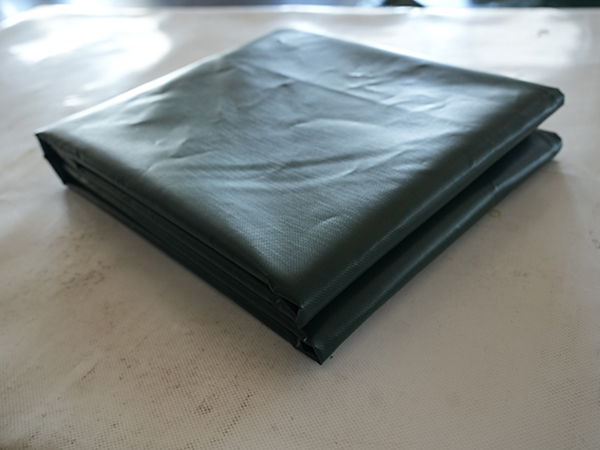
Our products are widely used in our residential and industrial area, which can be used for producing tents, outdoor covering, flexible ventilation tube, water bladders, inflatable castles, architecture membrane structures, etc. Our main products: PVC coated fabrics, PU/TPU coated fabrics, Oxford fabric, PVC ceiling film, flexible banner material. Welcome to our site and order online.