Premium Tarps & Tarpaulin Manufacturer

+86 15601786499 (steven)

info@der-factory.com

Update time:2026/9/3 17:36:58 Views:0

Home / Tarpaulin Materials / Tarp Fabric by the Roll
PVC Coated Roll Goods · Converters · Distributors · OEM Production

Tarp Fabric by the Roll for Tarpaulin Converters & OEM Production

DER factory supplies tarp fabric by the roll for buyers who cut, weld, sew or convert their own covers. Build a tarpaulin fabric roll specification around finished panel dimensions, required duty level, fabrication method, color, surface finish and operating environment instead of adapting production to a fixed retail fabric width.

PVC coated polyester roll goods Project-dependent GSM & width Welding / sewing process review Color, finish & functional options
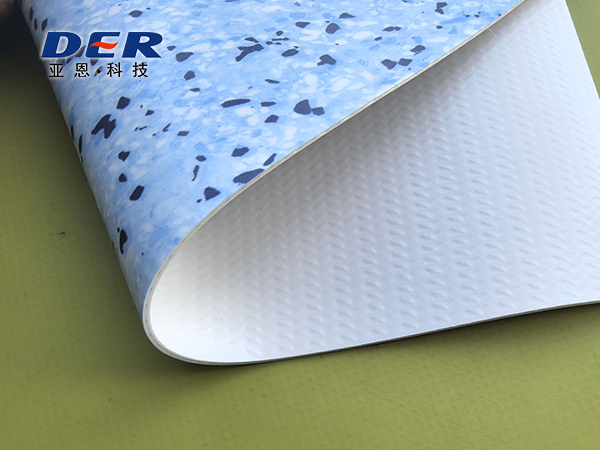
DER factory reinforced PVC coated tarp fabric roll material for industrial converting
Reinforced PVC Coated Material Real DER factory site image used as a material-construction reference for reinforced waterproof roll goods.
Supply FormatContinuous roll goods before finished-tarp conversion
Core MaterialPVC coated polyester structure for waterproof cover fabrication
Buyer FocusConverters, fabricators, distributors and OEM programs
Specification FocusGSM, width, finish, process, exposure and testing requirement
Direct Answer

What Is Tarp Fabric by the Roll?

Tarp fabric by the roll is continuous tarpaulin material supplied before it is converted into a finished cover. For industrial and heavy-duty programs, a common structure is PVC coated polyester fabric: woven polyester provides reinforcement, while the polyvinyl chloride (PVC) surface provides a waterproof barrier, color, cleanability and compatibility with selected thermal-welding processes. Roll goods are mainly purchased by tarp manufacturers, truck-cover fabricators, industrial converters, distributors and OEM brands that want control over cut layout, seam position, inventory and finished-product sizes.

DER factory can discuss weight, roll width, roll length, color, surface finish and application-specific requirements after the end use and fabrication method are defined. Buyers needing the underlying textile category can also review PVC coated polyester fabric.
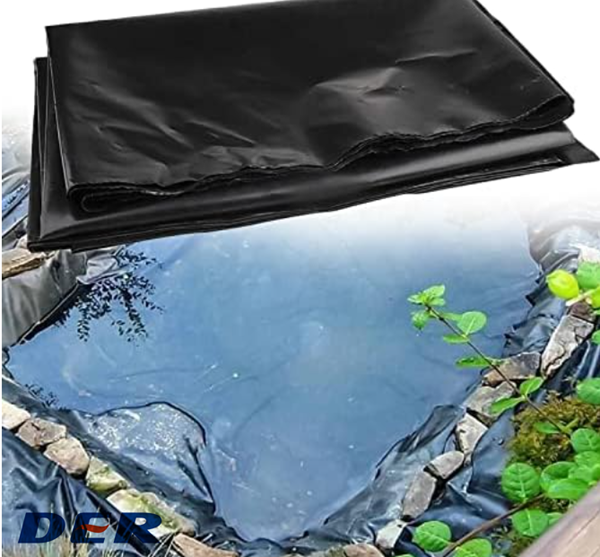
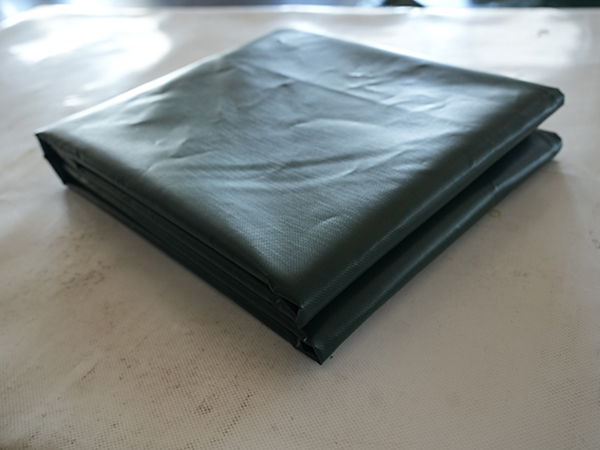
Information Gain: Roll Planning

Why Roll Width Can Matter as Much as Fabric Weight

Roll width changes conversion yield, seam count, roll mass and workshop handling. A cheaper roll can become the more expensive option if its width creates extra longitudinal seams or high off-cut waste across a recurring cutting pattern.

Finished panel widthPlan usable roll width around the actual cut pattern, not only the supplier's standard width.
Seam strategyFewer joins can simplify welding, inspection and leak-risk management on large covers.
Roll handlingHigher GSM and wider rolls increase mass; confirm lifting, storage and machine-feed limits.
Equipment widthCutters, welding tables and feeding systems may impose a practical width limit.
Repeat yieldFor recurring SKUs, calculate material utilization per roll before selecting the purchase format.

A simple converter calculation

Compare candidate roll widths by finished pieces per cross-width + seam count + off-cut area + roll-handling effort. The most useful PVC tarp fabric roll is the one that fits the production pattern with acceptable performance and handling—not necessarily the widest or heaviest grade.

Material Structure

How PVC Tarpaulin Roll Goods Are Built

A reinforced PVC tarpaulin fabric roll is a composite material. The textile core carries mechanical load, while the polymer layers create the functional surface. Exact yarn, weave, coating build and finish should be chosen by end use and required test values.

Top finish / lacquerOptional surface tuning for appearance, cleaning, blocking behavior or weather exposure.
PVC functional layerProvides the water barrier, color and surface used for selected welding processes.
Polyester reinforcementWoven base fabric supports tensile, tear and dimensional performance.
Reverse PVC layerCompletes the coated structure and supports balanced protection and conversion.
What to Specify

Do Not Order Only by “PVC Tarp Roll”

  • Fabric weight: target GSM or oz/yd², or a reference sample.
  • Base textile: yarn / weave requirements when they are performance-critical.
  • Usable width: the width your cutting plan can actually consume.
  • Surface: matte, glossy or other project-dependent finish.
  • Outdoor exposure: UV, rain, temperature and repeated folding conditions.
  • Special requirement: FR, anti-mildew, cold-flex or other needs subject to technical review.
  • Fabrication process: hot-air, HF, hot-wedge, sewing or combined construction.
  • Test method: specify required tensile, tear, adhesion, FR or other standard before production.

If flame behavior is part of the project specification, review DER factory's flame retardant fabric category and state the exact required standard during quotation rather than assuming every PVC grade uses the same FR package.

Specification Planning

Tarpaulin Fabric Roll Specification Table

The table below is intentionally written as a purchasing specification framework. Values that depend on a selected construction are marked for confirmation rather than presented as universal factory guarantees.

Specification Item DER factory Supply Direction Why It Matters to a Converter
MaterialPVC coated polyester fabric; alternative tarp constructions can be reviewed by applicationDefines reinforcement, waterproof surface and converting behavior.
ConstructionCoated / laminated direction subject to selected product and performance targetAffects coating adhesion, hand feel, durability, process route and cost.
Fabric Weight (GSM)Project dependent; select after duty-cycle reviewInfluences roll mass, strength potential, abrasion resistance, flexibility and finished-cover weight.
ThicknessAvailable according to construction; confirm before productionShould be evaluated with GSM, coating build and fabric structure—not as a stand-alone quality measure.
Roll WidthStandard and custom directions subject to material constructionControls cutting yield, seam count and compatibility with workshop equipment.
Roll LengthOrder-specific; confirm based on weight, core and handling planChanges roll mass, machine feeding, storage density and packing.
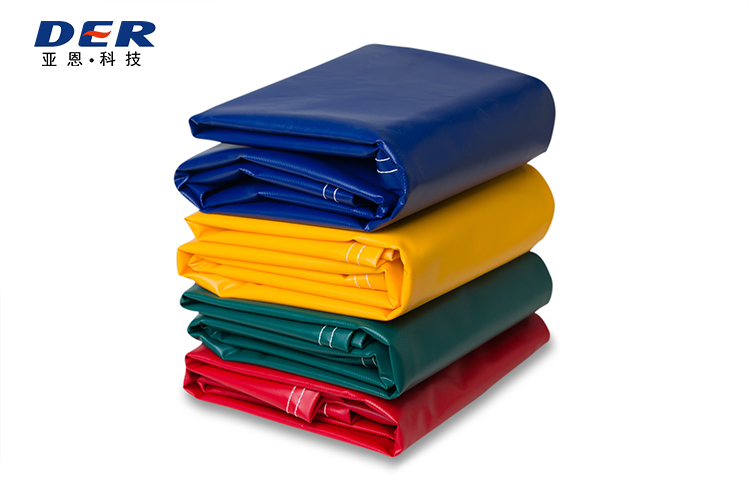
ColorStandard and custom color discussion depending on the order programImportant for fleets, distributor stock, safety visibility, branding and repeat orders.
Surface FinishApplication-specific finish available for technical reviewAffects appearance, cleanability, friction, blocking and handling.
Tensile / TearSpecify target value and test method; values depend on constructionCritical for wind load, tie-down stress, large panels and repeated handling.
UV / Weather DirectionOutdoor formulation can be discussed according to exposureLong-term outdoor use requires different formulation priorities than indoor temporary covers.
FR RequirementAvailable for selected constructions; required standard must be statedFire performance is application- and standard-specific and should never be assumed.
FabricationWelding and/or sewing compatibility reviewed by selected gradeMaterial choice must fit the converter's real joining equipment and seam design.
PackagingRoll/core/label/pallet direction can be discussed with the orderProtects edges and surfaces and affects warehouse and export handling.
How to Choose GSM

Choose Weight by Duty Cycle—Not by “Heavier Is Always Better”

Higher GSM can support a more robust construction, but it also increases roll mass, handling effort and finished-product weight. The efficient selection is the lightest construction that comfortably meets the real tensile, tear, abrasion, weathering and service requirements.

Lighter-Duty Direction

Prioritize easy handling, folding and lower finished mass for temporary or less abrasive protection.

General Industrial Direction

Balance strength, weldability, outdoor exposure and repeated handling for common tarp and cover programs.

Heavy-Duty Direction

Increase reinforcement and coating build where abrasion, wind, repeated use or point loads justify the added mass.

Specialized Direction

Start from required test values, environment and fabrication constraints when a standard weight category is not enough.

Application-to-Spec Mapping

Match the PVC Tarp Fabric Roll to the Finished Product

The same generic name can describe materials used in very different service conditions. Start with the finished product, then define weight, base cloth, surface, environmental treatment and seam method.

Transport

Truck & Trailer Covers

Prioritize tear/tensile support, weldability, outdoor weathering, repeated folding and abrasion at contact points.

For a ready-made cover direction, compare the material route with DER factory vinyl tarps.

Construction

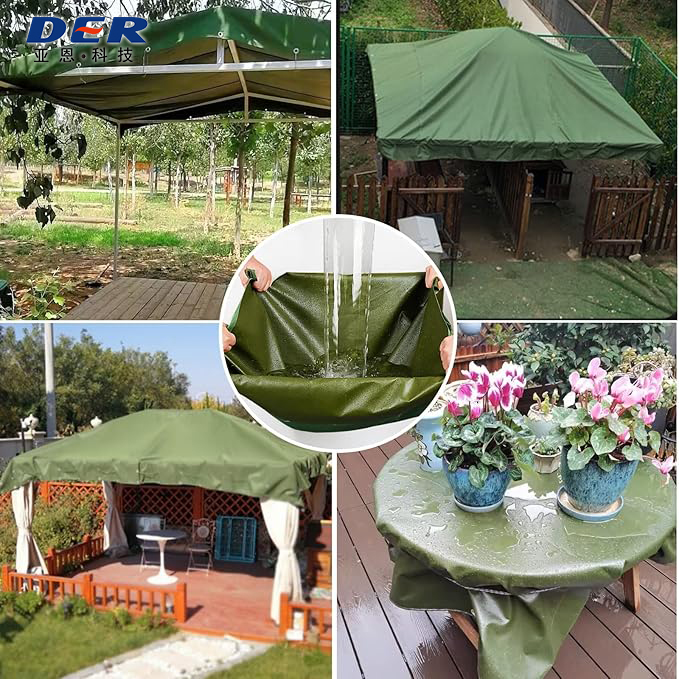
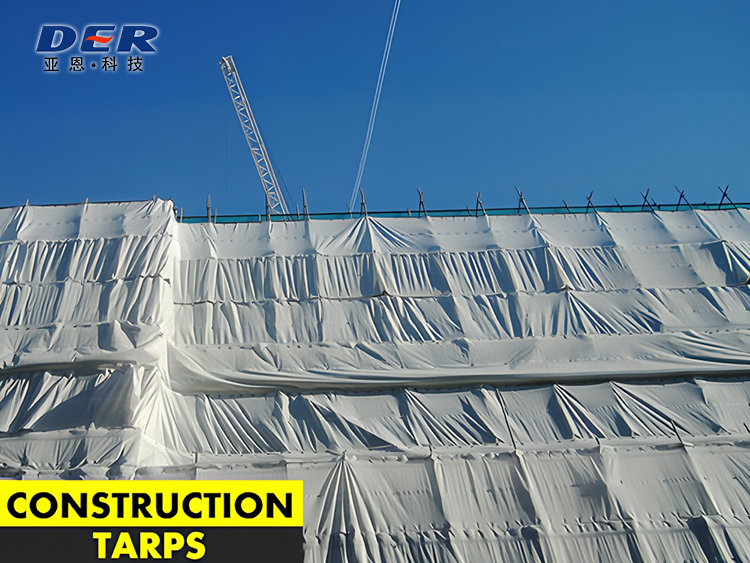
Site Covers & Enclosures

Prioritize weather protection, wind-load design, reinforcement strategy and any project-specific flame requirement.

See the application context on construction tarps.

Machinery

Equipment Protection

Prioritize abrasion resistance, cleanability, fit, attachment points and exposure to dust, rain and sunlight.

Related finished-cover use: construction equipment covers.

Agriculture

Farm & Storage Covers

Prioritize UV exposure, moisture management, seasonal handling, anchoring and the real reuse cycle.

Explore related agriculture tarp covers.

Tents & Shelters

Temporary Structures

Balance appearance, folding flexibility, seam layout, wind exposure, waterproofing and any code-driven fire performance.

OEM

Private-Label Tarp Programs

Prioritize repeatable color, usable width, finish, test method, labeling and packing so downstream fabrication remains predictable.

Fabrication & Customization

Specify the Roll for the Way Your Workshop Actually Builds Tarps

A technically strong material can still cause production problems if width, surface, coating behavior or roll handling does not match the converting line. Share the intended fabrication route before sampling.

1

Application Review

Define finished cover, working environment, service cycle and important failure risks.

2

Roll Specification

Set target GSM, width, length, color, finish and any required functional direction.

3

Conversion Check

Confirm cutting layout and whether the material will be hot-air, HF, wedge welded, sewn or combined.

4

Sample Evaluation

Evaluate material and seam behavior using the actual equipment and finished-product geometry where possible.

5

Repeat-Order Control

Define the agreed color, finish, dimensions, test method and packing information for future purchasing.

Roll-goods customization can include

  • material construction and fabric-weight direction;
  • roll width and roll length;
  • color and surface finish;
  • UV / FR / anti-mildew / cold-flex direction when relevant;
  • printing or logo requirements where compatible;
  • roll labels, cores and project packing;
  • sample evaluation and repeat-order specification control.

If you need finished tarps instead of roll goods

Roll supply is best for converters with their own cutting and joining capability. If you need a ready-to-install product, request a separate finished-cover scope with dimensions, hems, webbing, grommets, D-rings, straps or other hardware as required.

This distinction prevents a common RFQ problem: comparing the price of raw tarpaulin fabric roll with a quote that already includes fabrication and hardware.

Buyer Decision Guide

Roll Goods vs Fabric by the Yard vs Finished Tarps

These formats solve different purchasing problems. Matching supply form to your internal production capability is often more important than comparing headline material prices.

Best for repeat production

Tarp Fabric by the Roll

Choose when: you fabricate multiple sizes, want control of seam placement, or stock material for recurring production.

Watch: roll handling, minimum usable width, conversion equipment and warehouse space.

Best for prototyping

Fabric by the Yard / Short Length

Choose when: you need repairs, samples, prototypes or short one-off jobs without carrying a full roll.

Watch: fixed width and potentially higher unit material cost.

Best for direct use

Finished Tarp

Choose when: you do not have in-house cutting, welding, sewing or hardware-installation capability.

Watch: dimensions, reinforcement plan, fastening details and finished-product packing.

Coated vs Laminated

Which PVC Tarpaulin Fabric Construction Should You Choose?

“PVC tarp fabric” is not one universal construction. Coated and laminated routes can both produce useful waterproof tarp materials, but they can differ in coating adhesion, surface feel, performance ceiling, production route and cost.

Decision FactorPVC Coated DirectionPVC Laminated DirectionBuyer Action
Typical priorityDurability and robust industrial conversionCost-efficient or application-specific laminated constructionDescribe duty cycle instead of requesting a construction name only.
Adhesion / structureCoating is integrated through the coating processFilm layers are bonded to reinforcing textileSpecify required adhesion or durability test if critical.
SurfaceCan be tuned through coating and lacquerDepends on film and lamination designApprove a physical sample for appearance and handling.
WeldingSuitable grades can support thermal weldingSuitable laminated grades can also be weldableAlways test the exact construction on your equipment.
Best choiceThe construction that meets end-use, test, converting and commercial requirements with the least unnecessary material.Compare technical requirement and total conversion cost.
Quality & Repeat Orders

What Should Be Controlled on a Repeat PVC Tarp Fabric Roll Program?

Repeatability is a different purchasing goal from simply receiving one acceptable roll. For ongoing OEM production, the agreed specification should identify the material and the inspection method clearly enough that future lots can be compared consistently.

Incoming & Visual Review

Check material identification, roll surface, edge condition, color direction and visible defects against the agreed reference.

Weight / Width / Length

Use agreed tolerance and measurement methods rather than informal assumptions about nominal roll size.

Coating & Surface

Review finish consistency, adhesion requirement and any application-specific surface behavior that affects conversion.

Mechanical Tests

Where required, define tensile, tear or other values together with the test method before production.

Welding Evaluation

Run seam trials when joining performance is critical, especially when material construction or machine settings change.

Roll Packing

Protect the surface and edges and define core, label, wrapping and pallet direction around warehouse and export handling.

DER factory Image Pack

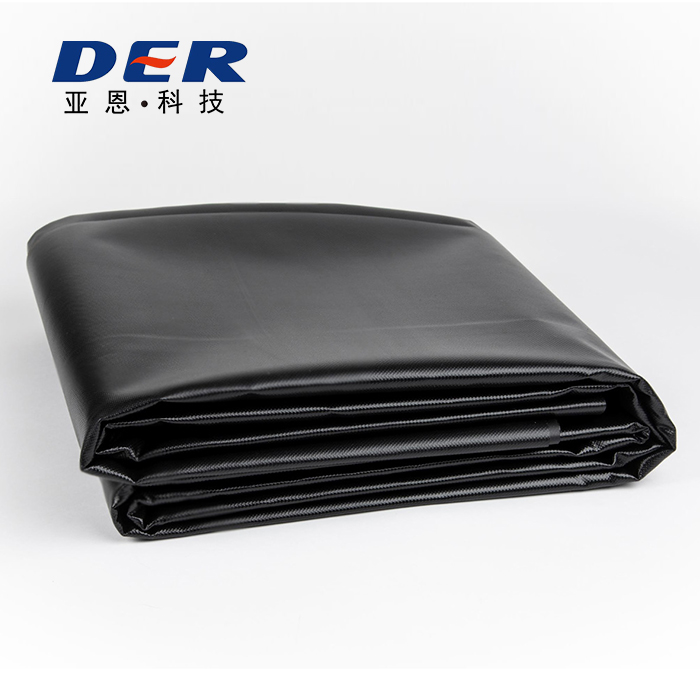
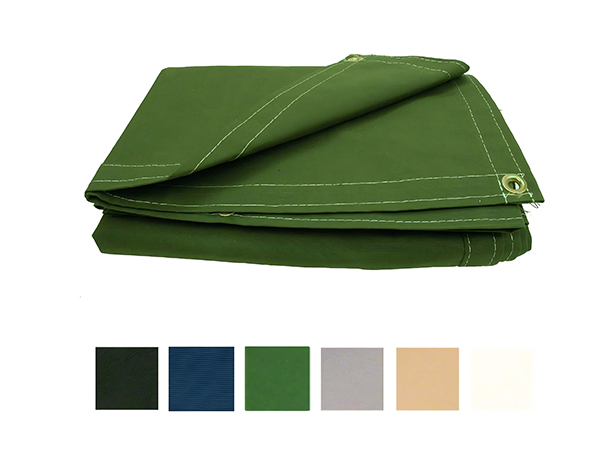
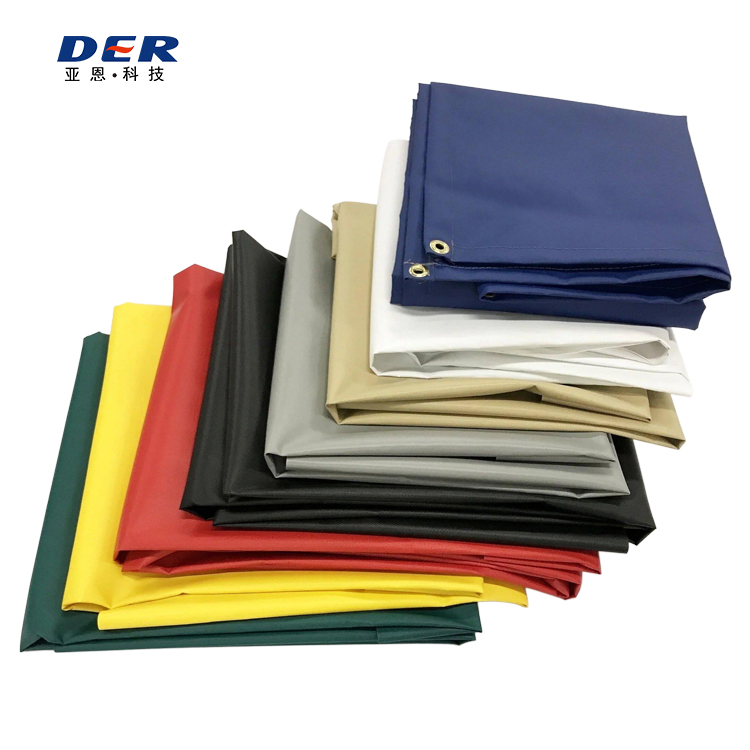
Real DER factory PVC Tarpaulin Material Images

The following visuals use DER factory-hosted files that are relevant to reinforced PVC material and roll/sheet conversion. No external stock photography is used.

RFQ Checklist

What Should You Send for a Useful Tarp Fabric Roll Quote?

“Please quote one roll of PVC tarp” leaves too many variables open. A concise production brief helps match the material to your converting line and reduces avoidable sample rounds.

  • finished product and application;
  • target GSM / oz or an existing reference sample;
  • required usable roll width and preferred roll length;
  • color and surface finish;
  • cutting plan or finished panel size if width optimization matters;
  • hot-air / HF / wedge welding or sewing method;
  • outdoor UV, temperature, mildew or chemical exposure;
  • flame-retardant or other required test standard, if applicable;
  • estimated quantity and repeat-order plan;
  • roll core, label, packaging and destination requirements.

Ask the supplier to confirm

  • finished and usable width;
  • weight / dimensional tolerances;
  • selected base cloth and coating construction;
  • sample or trial-roll route where available;
  • recommended process validation for welding;
  • color approval method for repeat programs;
  • agreed test method and documentation;
  • packing format and roll identification.
Related Questions

Tarp Fabric by the Roll FAQ

Concise answers for converters, distributors, sourcing teams and buyers comparing PVC tarp roll material.

What is tarp fabric by the roll?

Tarp fabric by the roll is continuous, unconverted tarpaulin material supplied before cutting, welding, sewing, hemming or hardware installation. It is mainly used by fabricators and OEM manufacturers that make finished tarps in their own production process.

What is a PVC tarp fabric roll made from?

A common heavy-duty structure uses woven polyester reinforcement with PVC applied to one or both faces. The polyester supports tensile and tear performance, while the PVC surface supports waterproofing, color, cleaning and selected thermal-welding processes.

How do I choose the right GSM for a tarpaulin fabric roll?

Choose GSM from the duty cycle, abrasion, wind exposure, folding frequency, finished cover size and handling limits. Higher weight can support a stronger construction but also increases roll mass and handling effort, so heavier is not automatically better.

Is PVC tarpaulin fabric roll waterproof?

PVC coated tarpaulin fabric is used for waterproof cover applications, but finished-system performance also depends on seam welding, edge construction, penetrations, hardware and installation. State the required water-resistance condition or test method when requesting a quote.

Can PVC tarp fabric rolls be heat welded or sewn?

Suitable PVC coated grades can be joined by hot-air, high-frequency or hot-wedge welding, while some cover designs also use sewing. Tell DER factory the intended process before sampling because coating construction, thickness and machine settings influence seam behavior.

What is the difference between PVC coated and PVC laminated tarp fabric?

Both combine PVC with a reinforcing textile, but the production route and layer bonding are different. The choice should be based on required adhesion, durability, surface, weight, welding behavior and commercial target—not only the word “PVC.”

Can roll width, roll length and color be customized?

These parameters can be discussed according to the selected construction and order plan. Final available combinations, tolerances and color-approval method should be confirmed during technical review and quotation.

What information should I send for a tarp fabric roll quote?

Send the end application, target GSM or reference material, usable width, preferred roll length, color, surface finish, welding or sewing method, exposure conditions, special testing requirements, quantity, packaging needs and destination.

Build the Roll Around Your Production

Request a PVC Tarp Fabric Roll Specification

Send DER factory your finished application, target material weight, usable width, preferred roll length, color, surface finish, fabrication method, quantity and any special performance or testing requirements. The goal is to define a roll that fits your cutting and joining process before bulk production.

Contact Us (You are welcome to consult at any time!)

Zhangbaling Plastic Polymer Industrial Park, Zhangbaling Town, Mingguang City, Chuzhou, Anhui Provin

info@der-factory.com

+86 15601786499 (steven)

Product recommendation

#
#
#
vinyl tarps
  • 2026-09-13
#
Waterproof Tarps
  • 2026-08-27
#
#
#
#
Vinyl Coated Tarps
  • 2026-05-24
#
#
Cargo Dust Cover
  • 2026-05-19

Application Fields Of Our Products

Our products are widely used in our residential and industrial area, which can be used for producing tents, outdoor covering, flexible ventilation tube, water bladders, inflatable castles, architecture membrane structures, etc. Our main products: PVC coated fabrics, PU/TPU coated fabrics, Oxford fabric, PVC ceiling film, flexible banner material. Welcome to our site and order online.