Heavy Duty Tarps Manufacturer | Industri..
- 2026-09-13

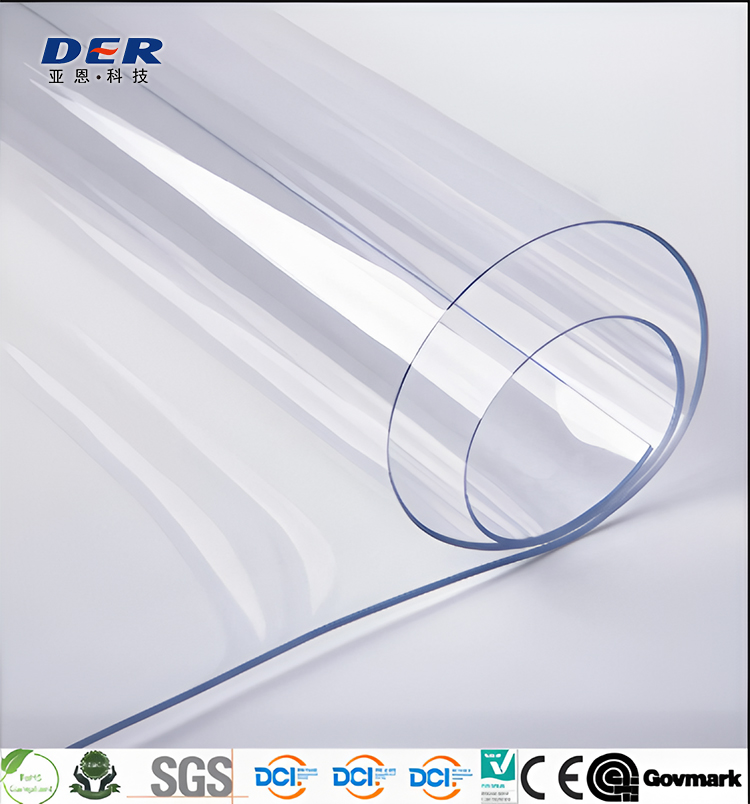
High-clarity flexible PVC film should be selected as a processing substrate, not only as a transparent sheet. DER factory helps buyers define film thickness, optical appearance, surface direction, softness, roll format, printing method and lamination stack so the material can be evaluated on the actual converting line before bulk production.

Super clear PVC film for printing and lamination is a high-transparency flexible polyvinyl chloride film supplied for graphic conversion, overlay lamination, transparent packaging, decorative layers and other processes where both optical quality and process compatibility matter. The correct grade is not chosen by clarity alone. A buyer must also consider the printing chemistry, surface condition, film softness, gauge consistency, drying or curing temperature, adhesive system, laminate stack and final product flexibility.
DER factory already has broader super clear PVC film and transparent-film product content. This page therefore focuses specifically on the printing-and-lamination buying decision: what to specify, which trade-offs to check, how to validate a sample, and how to reduce surface, bonding and conversion problems before a production order.
For converters, the useful specification is the complete interface: film formulation + surface + ink or adhesive + process conditions + final laminate construction.
The transparent PVC base determines optical appearance, softness, memory, dimensional response and general converting behavior. Thickness and softness should be selected around the finished product, not copied from an unrelated application.
Smoothness and gloss affect appearance, while surface wetting and cleanliness influence print adhesion. A surface that looks excellent visually is not automatically ideal for every ink system.
Ink chemistry, primer, adhesive, curing and process temperature create a new interface. Compatibility should be checked using the exact production materials whenever possible.
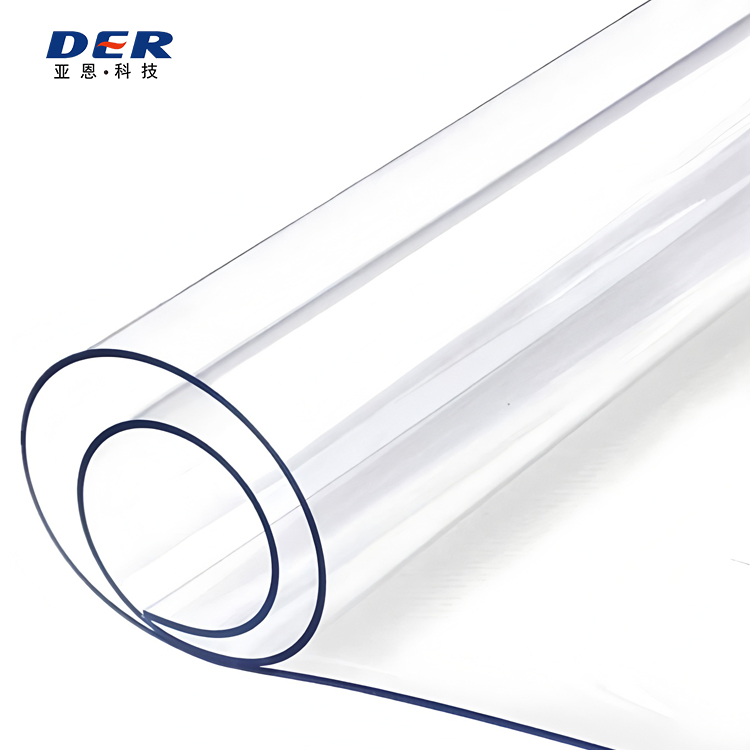
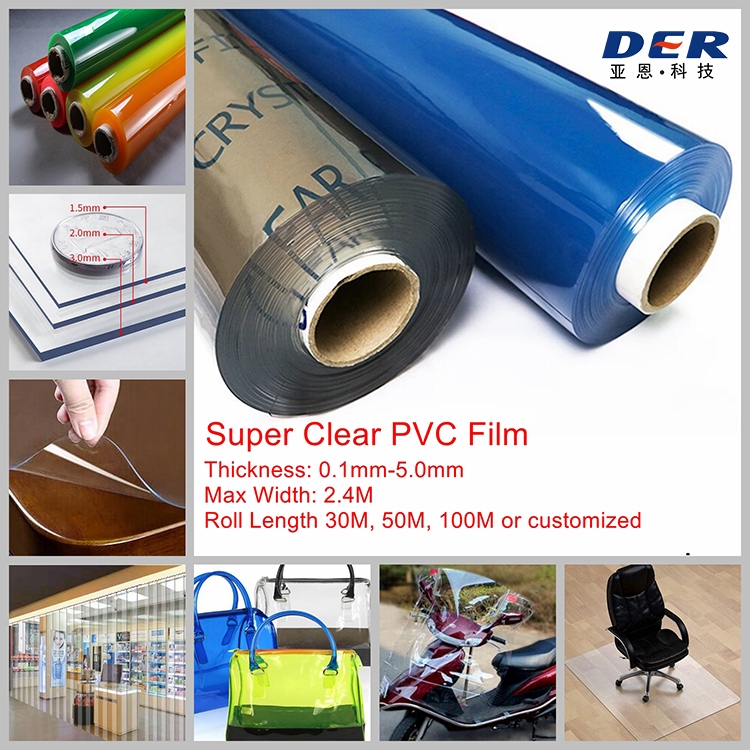
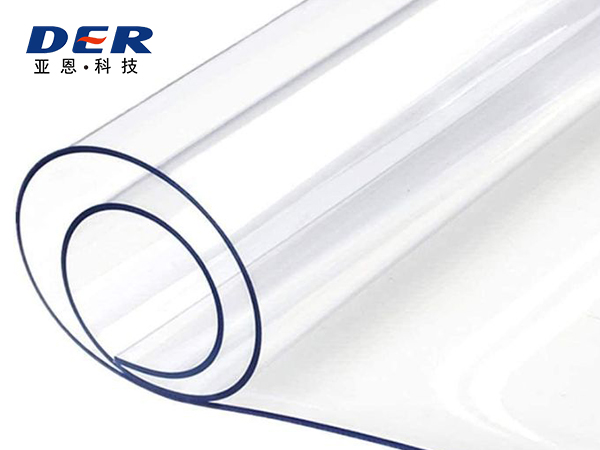
Very smooth, high-gloss flexible film can improve visual clarity, but some constructions may have more surface tack or blocking sensitivity than an anti-blocking grade. Industry suppliers therefore separate optical-grade and process-oriented clear films rather than assuming one finish is ideal for every job. The practical choice depends on whether your priority is maximum visual clarity, high-speed unwinding, print adhesion, lamination handling or a balance of all four.
Evaluate the finished print or laminate, not only the raw film. Adhesive coat, ink density, heat and trapped air can change haze, gloss and visual uniformity.
Print adhesion depends on surface energy, ink chemistry, cure condition and contamination control. The intended print process should be disclosed before grade selection.
A clear initial bond does not guarantee stable long-term appearance. Adhesive compatibility, plasticizer interaction and conditioning behavior should be assessed.
Dryers, UV lamps, heated rollers and web tension can cause stretch, shrinkage or registration change. Film gauge and softness should match the thermal and mechanical load.
Flexible glossy PVC surfaces can stick to themselves under pressure, heat or storage. Roll winding, interleaving direction, surface choice and warehouse conditions may matter.
Scratches, gels, dust, fish-eye defects and pressure marks become much more visible in premium transparent graphics. Define the visual acceptance level during sample approval.
Final production values should be confirmed after application and process review. The table deliberately avoids unverified fixed figures.
| Parameter | DER factory Supply / Review Direction | Why It Matters for Printing & Lamination |
|---|---|---|
| Material | Flexible polyvinyl chloride (PVC) film | Provides transparent flexible substrate for graphics, overlays and converted products. |
| Supply Form | Roll goods; cut or converted format can be discussed where applicable | Roll OD, core, winding direction and packaging can affect converter handling. |
| Thickness | Project dependent; specify target gauge or reference sample | Changes stiffness, web tension, heat response, drape and finished product feel. |
| Width / Roll Length | Project dependent; confirm converting-machine requirements | Correct width reduces trim waste and helps maintain repeatable web alignment. |
| Clarity / Clear Tone | High-transparency / super-clear direction; target appearance to be agreed | Transparent graphics and overlays expose haze, tint and surface defects. |
| Surface | Smooth / glossy / process-oriented surface direction after technical review | Influences wetting, ink anchorage, adhesive bond, blocking and visual gloss. |
| Softness / Hardness | Matched to finished product and converting process | Affects feeding, dimensional response, flex cracking, handling and lamination feel. |
| Printing | Print-compatible direction after ink/process review and sample test | Solvent, eco-solvent, UV, screen, gravure and other systems can have different surface requirements. |
| Lamination | Adhesive/overlay compatibility to be confirmed on the actual system | Bond strength and clarity depend on adhesive chemistry, coat weight, cure and laminate construction. |
| Surface Treatment | Project dependent; define required treatment or target surface-energy test if applicable | Surface treatment can improve wetting but must be matched to storage and downstream process. |
| Color | Clear / transparent-tone direction subject to project review | Even a slight tint can influence neutral graphics, backlighting and layered appearance. |
| Functional Requirements | Specify UV, cold, flame-retardant, anti-static, compliance or other requirements during quotation | Functional additives can affect clarity, surface, migration, cost and process behavior. |
| Packaging | Roll protection and export packing according to specification | Surface protection and winding pressure help reduce marks and blocking during transport. |
Need a broader clear-film reference before defining the print grade? Compare the existing DER factory transparent PVC film product family.
“Printable PVC” is not one universal specification. The printer, ink, cure system and finished use should be declared during sample development.
| Printing Direction | What the Buyer Should Confirm | Primary Risk to Validate |
|---|---|---|
| Screen Printing | Ink family, print side, mesh/deposit, drying or cure system, required flexibility. | Adhesion, pinholes, blocking after stacking and cracking after flexing. |
| UV Printing | Printer/ink model, lamp or LED cure conditions, whether the film will flex after print. | Ink anchorage, cure brittleness, heat exposure and edge lift during conversion. |
| Solvent / Eco-solvent | Ink chemistry, ink load, drying time, ventilation, winding timing and final laminate plan. | Surface attack, residual solvent, blocking, dimensional change and delayed adhesion problems. |
| Gravure / Roll-to-Roll | Web speed, tension, cylinder process, solvent system, dryer temperature and registration tolerance. | Web stability, surface uniformity, curl, heat distortion and repeatability. |
| Offset / Lithographic Direction | Confirm whether the selected PVC grade and ink system are specifically compatible before production. | Ink drying and adhesion can differ substantially from paper or rigid plastic substrates. |
| Second-Surface Printing | Whether graphics are viewed through the film and whether a backing/laminate is added later. | Color appearance through the clear layer, scratch protection and adhesive interaction. |
A print can look good immediately and still fail later because of incomplete cure, plasticizer migration, blocking, flex cracking or adhesive interaction. The production sample should be evaluated after the normal curing/conditioning period specified by the ink or adhesive supplier and, where relevant, after the film has been bent, laminated, rewound or converted into the final shape.
The same clear PVC film can behave differently with different adhesives, primers, backing films, temperatures and pressure settings.
State every layer in order: clear PVC, printed layer if any, adhesive, backing film or substrate, release liner and protective overlay. Layer order changes the visual and bonding requirement.
Water-based, solvent-based, pressure-sensitive and other adhesive systems do not interact identically with flexible PVC. Name the chemistry or provide a technical data sheet when possible.
Nip pressure, dryer temperature, dwell time and web tension can alter the film dimension or trap visual defects. Use the actual production setting during sampling.
Flexible PVC contains formulation components that may interact with inks, adhesives or neighboring plastics. Compatibility must be judged on the complete converted structure.
After lamination, inspect haze, bubbles, silvering, streaks, edge whitening and color shift. Premium transparent applications make minor defects more visible.
Allow the laminate to complete the adhesive supplier’s recommended cure/conditioning cycle before final bond and appearance assessment.
DER factory also has a dedicated PVC protection / cold lamination film page. Use that route when the commercial intent is an adhesive protective laminate rather than a plain super-clear PVC substrate.
A converting-grade film should be approved on the buyer’s real process whenever possible.
Film gauge, width, surface, clear tone, softness, ink, adhesive and substrate.
Use intended print side, ink load, speed and curing conditions.
Follow the normal cure/conditioning cycle required by the process materials.
Use intended adhesive coat, backing, nip pressure, temperature and tension.
Check adhesion, clarity, wrinkles, curl, edge behavior, blocking and flexibility.
Keep the approved construction and process notes as the repeat-order reference.
For repeat manufacturing, ask whether the sample only works at one narrow setting or remains acceptable within a practical range of web tension, cure condition and lamination pressure. A process with a wider workable window is usually easier to scale and repeat than one that passes only under a single ideal laboratory condition.
Each application places a different priority on clarity, printability, adhesion, flexibility and surface handling.
For see-through or second-surface graphics, specify neutral clear tone, low visible defects, ink compatibility and whether an adhesive or protective laminate will be added.
For adhesive window-media intent, compare DER factory PVC one-way vision film rather than forcing a plain clear film into a self-adhesive application.
Prioritize unwind behavior, surface cleanliness, print adhesion, fold response and laminate bonding. Anti-blocking needs may be more important here than maximum glass-like gloss.
Used as a clear printed or protective layer over another substrate. Buyers should specify layer order, adhesive, required gloss and acceptable haze after the complete laminate is assembled.
When the film protects printed graphics, confirm scratch expectations, clarity retention, adhesive compatibility and whether the film is handled indoors or outdoors.
For die-cut windows, inserts and transparent flexible parts, thickness stability and dimensional behavior may matter as much as print quality.
If the project needs structural strength rather than a non-reinforced clear film, review PVC coated polyester fabric and other printable reinforced materials instead.
Do not pay for optical performance your application cannot preserve after printing or laminating. Start from the finished product.
A lower-priced roll can be more expensive if it creates print rejects, trapped bubbles, laminate haze, blocking, trimming waste or slower line speed. For B2B sourcing, the useful comparison is cost per acceptable converted unit, not raw film price alone.
Custom options should support the converter’s process rather than add unnecessary variants.
Use the DER factory PVC film factory / manufacturer page when your project is still comparing multiple PVC film constructions rather than a fixed super-clear printing grade.
For this product, quality control is most useful when the agreed inspection items reflect what can actually create print or lamination waste.
Agree the acceptance approach for scratches, gels, bubbles, contamination, pressure marks and other defects that may remain visible after printing.
Thickness and width consistency influence web tension, feeding and repeatable converting. Required tolerances should be confirmed for the project rather than assumed.
Check winding, edge condition, roll protection and packaging because telescoping, pressure marks or dirt can become line problems before printing starts.
If the project uses a defined surface-energy or treatment requirement, state the test method and acceptance criterion during quotation.
Where possible, retain a printed and/or laminated approval sample. It provides a more useful repeat-order reference than an unprocessed film swatch alone.
Testing can be discussed according to agreed project requirements. Do not assume a standard, certification or compliance claim unless it is specifically confirmed for the selected grade.
A short process description is more valuable than sending only “clear PVC film, 1 roll.”
If you already produce the item, a reference piece can communicate clarity, surface, softness and laminate feel more effectively than a generic description. If no reference exists, provide a cross-section sketch showing film, ink, adhesive and backing order.
All images below use actual files from der-factory.com/en/up/pic/. They are selected to support the visual intent of super-clear film, transparent roll goods and converting-grade PVC material.

It can be specified for printing applications, but printability depends on film surface, ink chemistry, curing method and printer process. Provide the intended ink or printing system and validate a production sample before bulk conversion.
Suitable constructions can be evaluated for adhesive lamination, protective overlays and composite converting. Adhesive chemistry, plasticizer interaction, curing temperature, nip pressure and final clarity should be validated on the actual film and adhesive system.
Specify the end product, thickness, width, clear tone, surface direction, softness, printing method, ink family, drying or curing conditions, whether printing is first- or second-surface, and the required roll format.
Very smooth high-gloss flexible films can have more surface tack or blocking risk depending on formulation, winding pressure, temperature and storage. Printing and lamination programs should balance optical appearance with unwind behavior and line handling.
Run the intended adhesive, coating weight, curing condition, nip pressure and laminate stack on a representative sample. Then evaluate bond, clarity, edge behavior, blocking and visual change after the conditioning period required by the adhesive supplier.
No. Thickness should match the final product and converting process. A thicker film can be stiffer and may react differently to web tension or heat, while a thinner film may be easier to laminate but less dimensionally forgiving. Choose by process and end-use requirements.
MOQ and lead time should be confirmed during quotation because they depend on thickness, width, surface direction, formulation, roll format, packaging and production scheduling.
Send the application, target thickness and width, roll length, clear tone, softness, print process and ink, lamination adhesive and structure, quantity, packaging, required tests or compliance documents and destination.
Send DER factory the process you actually run. A useful inquiry includes your end product, film thickness and width, printing method, ink system, lamination adhesive, layer structure, roll requirements, quantity and any special performance or testing requirement.
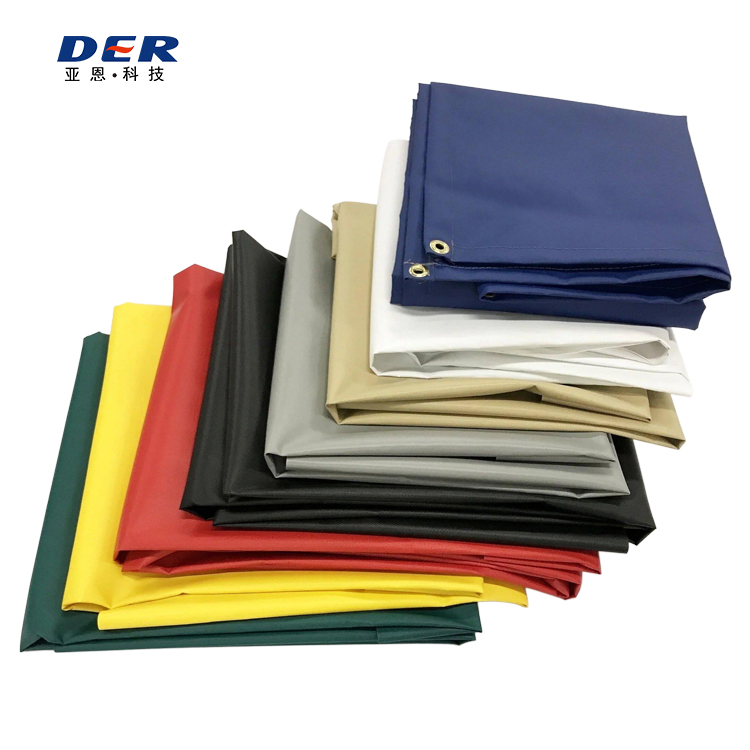
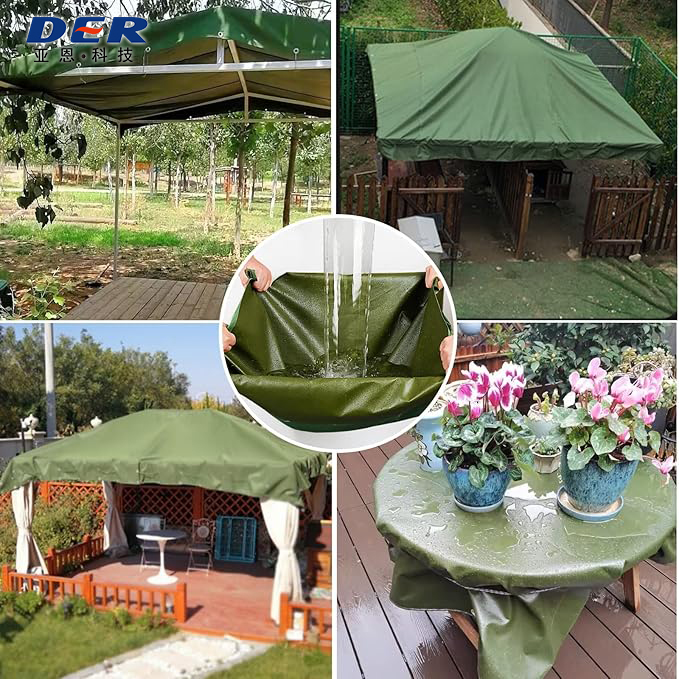
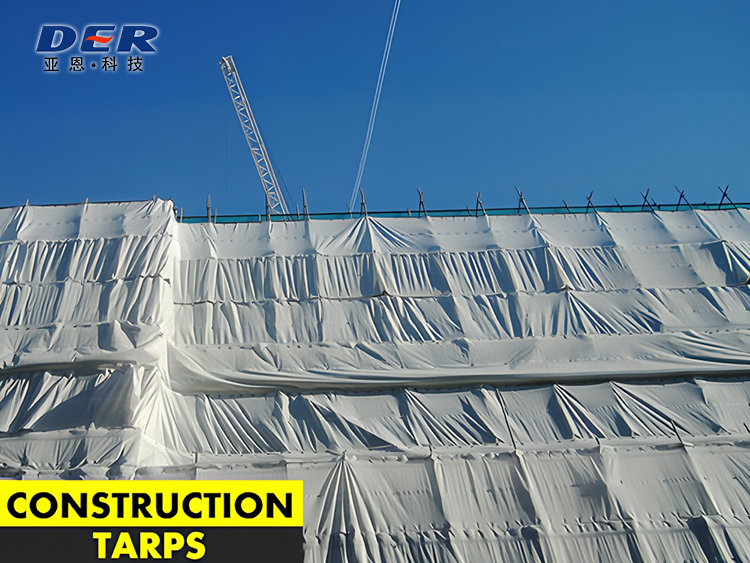
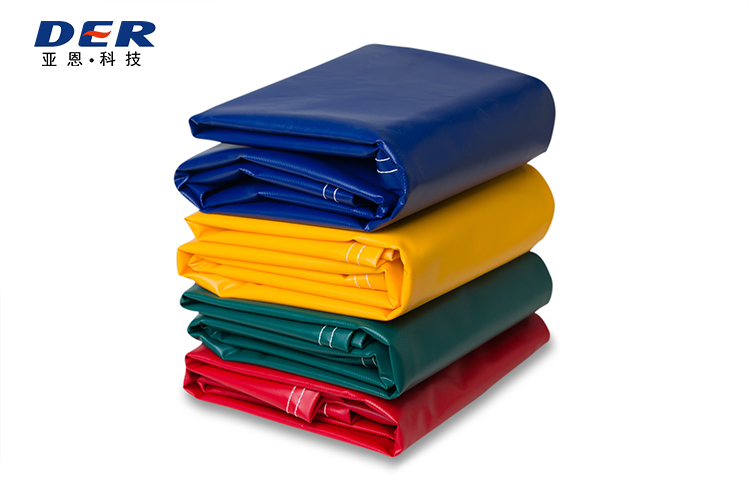
Our products are widely used in our residential and industrial area, which can be used for producing tents, outdoor covering, flexible ventilation tube, water bladders, inflatable castles, architecture membrane structures, etc. Our main products: PVC coated fabrics, PU/TPU coated fabrics, Oxford fabric, PVC ceiling film, flexible banner material. Welcome to our site and order online.