Visual quality
Choose the transparency level around what users must see through the panel: product display, safety observation, daylight, operator visibility or architectural openness.

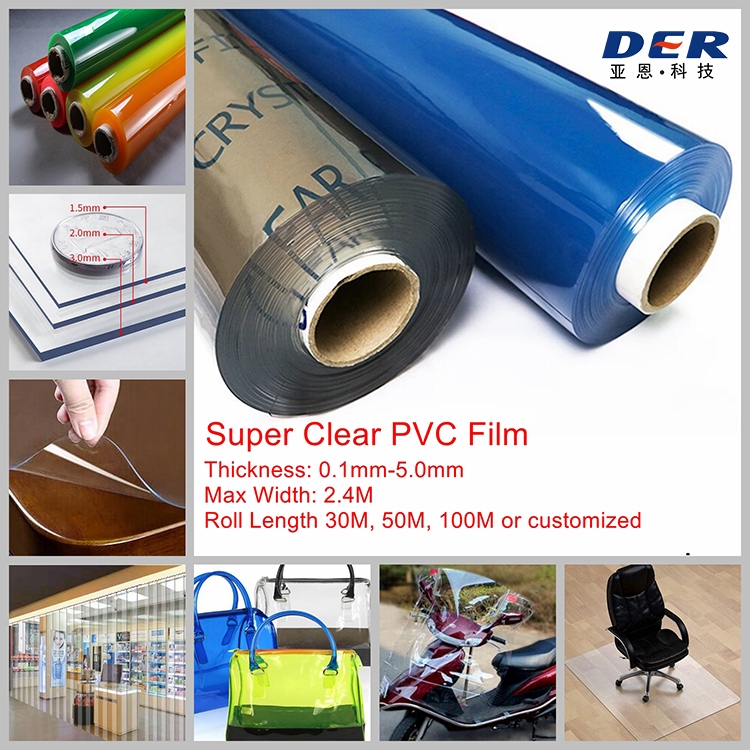
Der factory supplies high clarity PVC sheet for buyers who need a clean transparent view without giving up the flexibility, waterproof protection and fabrication advantages of soft vinyl. Specify the clarity, thickness and functional package around the finished product—not just a generic “clear PVC” label.

For an industrial buyer, clarity is only useful when the material still performs after rolling, welding, hanging, cleaning and repeated handling. The right high clarity PVC sheet balances optical appearance with flexibility, gauge consistency, surface quality and the conditions of the final installation.
Choose the transparency level around what users must see through the panel: product display, safety observation, daylight, operator visibility or architectural openness.
Thickness, softness and surface finish affect cutting, HF welding, heat welding, sewing, rolling, folding and the flatness of the finished window or curtain.
Indoor partitions, freezer curtains, tent windows and outdoor enclosures do not need the same formula. UV, cold, flame and cleaning requirements should be specified before sampling.
High clarity flexible PVC starts with a transparent PVC compound, then depends heavily on formulation stability, calendaring control and surface finishing. For B2B conversion, the goal is not simply “transparent plastic”; it is a sheet that arrives with usable roll geometry, repeatable thickness and an optical surface suitable for the final product.
A high clarity PVC sheet should support both appearance and production yield. These are the performance areas procurement and production teams should validate during sample approval.
Suitable for applications where users must see objects, equipment, people or daylight through the flexible panel.
Surface consistency helps reduce distracting visual distortion and supports a professional finished appearance.
Flexible PVC can be cut, welded or sewn into windows, strip doors, curtains, protective panels and custom assemblies.
Projects can be evaluated for UV exposure, cold environments, flame-retardant requirements and other special conditions.
The table below is a practical sourcing framework. Exact tolerances, test values and certification status should be locked to the approved sample and purchase specification.
| Item | Typical supply direction | Buyer selection note |
|---|---|---|
| Product | High clarity flexible PVC sheet / clear vinyl sheet | Use “super clear” only where the application requires the highest visual quality. |
| Material | Flexible transparent PVC | Formulation should match indoor/outdoor exposure and downstream process. |
| Common thickness direction | 0.5–3.0 mm | Other gauges can be evaluated; thicker sheet gives more body while thinner sheet folds more easily. |
| Width | Roll widths matched to project and line capability | Send your finished panel width to reduce trim loss and welding labor. |
| Appearance | Clear / high clarity / selected tint | Approve against an actual sample in the target gauge. |
| Surface | Smooth glossy / double-polished direction | Surface treatment affects appearance, handling and blocking behavior. |
| Supply format | Roll, cut sheet or converted panel | Confirm core size, roll length, packing and cut-size tolerance before order. |
| Processing | Cutting, HF welding, heat welding, sewing | Run process trials on the selected formulation before mass conversion. |
| Functional options | UV, cold-resistant, flame-retardant, anti-static and selected environmental formulations | State the target standard, market and test method instead of requesting a generic “certified” grade. |
| Color / branding | Clear, light tint or project-specific option | Custom requirements may affect MOQ and lead time. |
Values shown are sourcing guidance, not a universal certificate of conformity. Final specification is confirmed against the selected grade, sample and purchase order.
Paying for more transparency only creates value when the end use actually benefits from it. Match the optical grade to viewing distance, product positioning and service conditions.
Suitable where waterproof protection and basic visibility are more important than premium optical appearance, such as general covers, liners and utility partitions.
Designed for applications where the panel is intentionally seen through: windows, industrial curtains, enclosures, protective screens and clear flexible doors.
For display-sensitive and close-view applications where surface appearance and transparency are prioritized and the material must look cleaner at short viewing distance.
This reduces the most common sourcing mistake: approving a visually clear sample that later behaves poorly during welding, hanging or cold-weather use.
Window, strip curtain, tent sidewall, equipment enclosure, table cover, protective screen or another converted product.
Balance flexibility, hanging stability, panel size, folding frequency and expected mechanical handling.
Indoor/outdoor, UV exposure, low temperature, FR target, anti-static requirement, cleaning environment and expected life.
Check clarity, tint, thickness, weldability, flatness, blocking, packing and the appearance of the actual converted part.
High clarity flexible PVC is strongest where a transparent barrier must remain soft, waterproof and easy to fabricate. For rigid self-supporting machine guards, a rigid PVC, PETG or polycarbonate sheet may be a more appropriate material category.
Create visible work zones while retaining light and line-of-sight across warehouses, workshops and production areas.
Transparent flexible doors help separate spaces without completely blocking operator visibility or traffic awareness.
Use for event tents, shelters, soft-sided enclosures and transparent side panels where daylight and outside views matter.
Add a transparent zone to industrial covers so operators can visually check protected components without removing the cover.
Flexible clear sheet protects surfaces and creates cleanable transparent barriers for commercial and service environments.
Suitable for fabricators producing welded or sewn transparent components, custom vinyl products and mixed-material assemblies.
These six closely related pages help buyers compare transparent PVC grades, functional variants and converted-use directions.
Der factory supports industrial PVC and functional material projects with customization and quality-control capability. For regulated or performance-critical projects, the target test method and document package should be written into the inquiry and confirmed for the exact grade.
Depending on formulation and end market, buyers may request relevant quality, environmental or flame-performance documentation. Examples often discussed for PVC projects include ISO-managed production, RoHS / REACH-oriented formulations, non-phthalate requirements and flame-retardant targets such as B1 or NFPA 701.
Important: do not assume every clear PVC grade automatically carries every certification. Ask Der factory to quote the exact compliance target and test method required by your customer or market.
Answers are written for importers, distributors, curtain fabricators, tent manufacturers and industrial converters preparing a real specification.
It is a transparent flexible PVC material produced for a cleaner line of sight and smoother optical appearance than ordinary clear vinyl. It is commonly supplied in rolls or cut panels for curtains, windows, covers, tents and other flexible fabricated products.
Choose thickness according to panel size, handling frequency, hanging method, wind or movement, folding requirements and the desired stiffness. Thin grades are easier to roll and fold; thicker grades provide more body for reusable curtains and transparent windows. Sending a finished-product sample is often the fastest way to match the gauge.
Yes. Project discussions can cover thickness, roll width, roll length, transparency level, tint, softness and functional formulation. MOQ and production feasibility depend on how far the requirement moves from a standard grade.
Flexible PVC is widely used in HF welding, heat welding, cutting and sewing. However, welding temperature, dwell time, electrode settings and seam design should be validated on the exact formulation and thickness before mass production.
Yes, when the formulation is matched to outdoor conditions. Tell Der factory the UV exposure, expected service temperature, installation type and target lifetime so an outdoor-oriented grade can be evaluated instead of a general indoor clear sheet.
Send thickness, width, roll length or cut size, estimated quantity, end use, indoor/outdoor environment, required clarity, operating temperature, welding or sewing process, flame/environmental requirements, packing preference and destination country. Photos or an existing sample are highly useful.
Tell Der factory what you are making, the gauge and width you currently use, your clarity expectation, environment, converting method and order volume. That gives the factory enough information to recommend a sample that is closer to production from the first round.
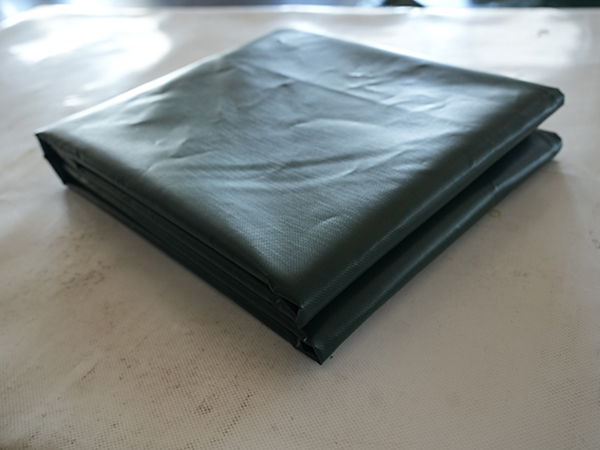
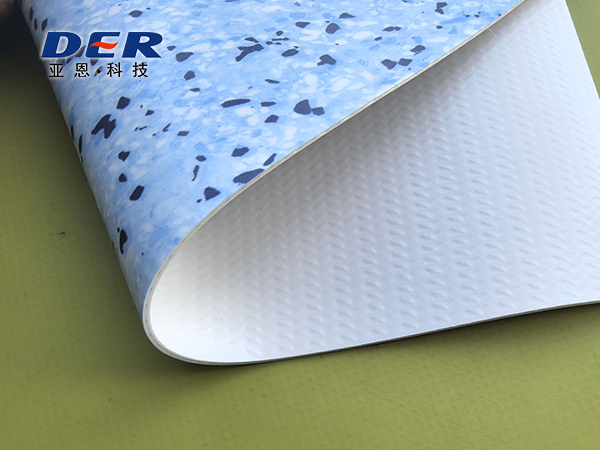
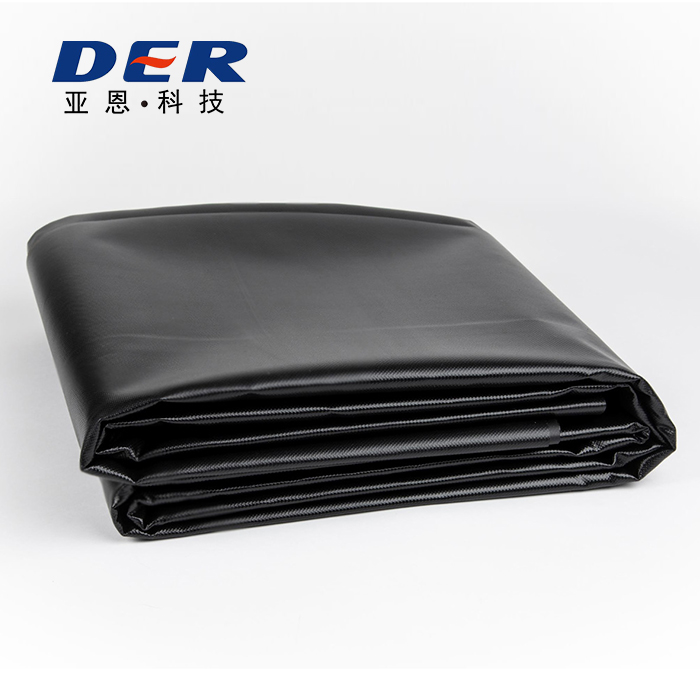
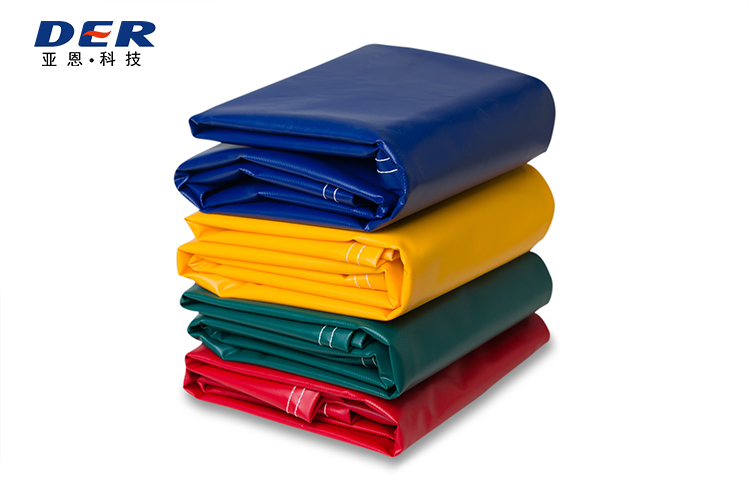
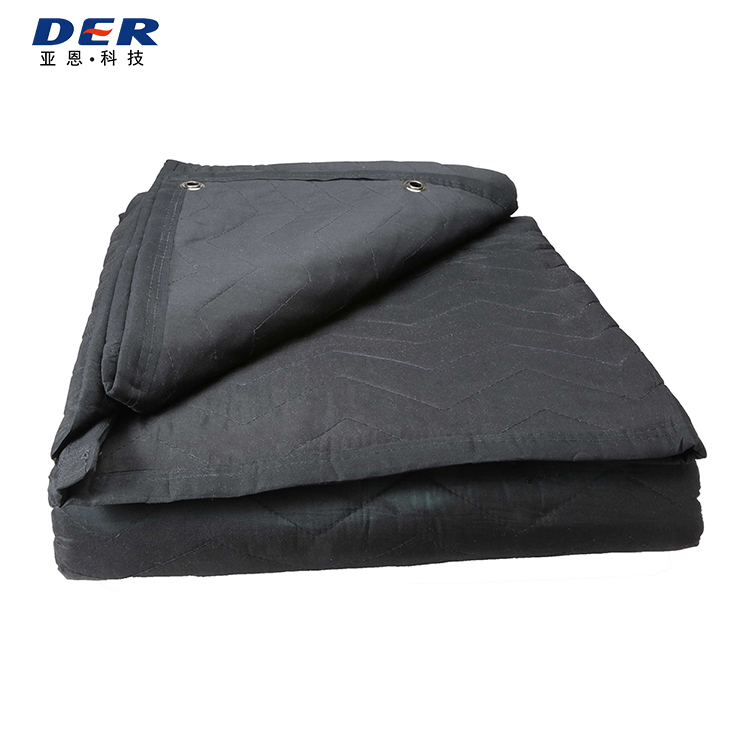
Our products are widely used in our residential and industrial area, which can be used for producing tents, outdoor covering, flexible ventilation tube, water bladders, inflatable castles, architecture membrane structures, etc. Our main products: PVC coated fabrics, PU/TPU coated fabrics, Oxford fabric, PVC ceiling film, flexible banner material. Welcome to our site and order online.