 DER factory
Grommet pull-out
Load concentrates around holes. Review edge tape, patch dimensions, webbing, eyelet type and spacing with the actual tie-down forces.


The right tarp is the one that survives your application without becoming too heavy, too stiff, or too expensive to handle. Compare material construction, GSM, mil thickness, finished weight and the details that actually fail in service.
Start with the job and how the tarp is most likely to fail. Choose a material family—PE, PVC-coated polyester, canvas or mesh—then check exposure, handling frequency and attachment loads. Compare GSM or oz/yd² for weight, mil or mm for thickness, and ask for tensile strength, tear strength, seams and reinforced-edge specifications separately. Calculate the complete panel's weight before moving to a heavier grade. For repeat orders, approve a sample and a written construction.
Rain, UV, wind flutter, sharp corners, heat, cold, rubbing, folding or repeated tension? List the dominant stress before selecting a number.
The same 20 mil rating may describe laminated PE, plain clear vinyl or reinforced PVC. These are not interchangeable materials.
Assess panels, seams, hems, patches, eyelet or D-ring spacing, water drainage and the actual tie-down plan.
There is no universally superior material. The right choice depends on waterproofing, air movement, service duration, portability and the fastening system.
| Material | Practical advantages | Trade-offs | Best starting use |
|---|---|---|---|
| PE woven / laminated | Low mass, economical temporary protection, easy replacement. | Performance and UV service vary; often less suitable for repeated industrial abrasion. | Temporary storage, general covers and light construction use. |
| PVC-coated polyester | Reinforced textile structure, waterproof coating options, weldable fabrication. | Higher handling weight; cold flexibility, UV and adhesion need grade-specific review. | Truck tarps, machinery covers, outdoor industrial covers and repeat OEM programs. |
| Canvas / cotton | Breathability and traditional textile feel, useful where condensation matters. | May absorb water; treatment, drying and care can be necessary. | Selected equipment covers, breathable storage and painting products. |
| Mesh tarp | Airflow, shade, reduced pressure differential in some installations. | Not a rain-blocking substitute for solid waterproof covers. | Dump truck debris containment, screening and shade structures. |
For repeated vehicle-duty work, review the truck tarp materials and finished-cover options. If you are comparing coated constructions for fabrication, ask DER factory to confirm the exact textile and finishing route.
Two suppliers can quote the same GSM but deliver different thickness, yarn construction, stiffness and tear strength. First compare like units, then compare tested performance.
1 oz/yd² ≈ 33.90575 GSM
GSM ÷ 33.90575 = oz/yd²
1 mil = 0.0254 mm
mil × 0.0254 = mm
Example: 18 oz/yd² ≈ 610 GSM; 20 mil = 0.508 mm.
650 GSM is not automatically 20 mil. It could be thicker or thinner depending on the scrim, PVC share, density, lamination and surface texture. Even identical thickness ratings do not prove equivalent tear strength or service life.
For a comparable RFQ, request GSM and thickness separately, plus yarn and weave specification and agreed test methods.
| GSM | oz/yd², approx. | Fabric weight for 10 m² | Interpretation |
|---|---|---|---|
| 100 | 2.95 | 1.0 kg | Light area-weight reference |
| 180 | 5.31 | 1.8 kg | Common lighter-cover comparison value |
| 250 | 7.37 | 2.5 kg | Heavier PE comparison direction |
| 450 | 13.27 | 4.5 kg | Coated-fabric comparison value |
| 550 | 16.22 | 5.5 kg | Coated-fabric comparison value |
| 610 | 17.99 | 6.1 kg | Approximate equivalent of 18 oz/yd² |
| 650 | 19.17 | 6.5 kg | Coated-fabric comparison value |
| 750 | 22.12 | 7.5 kg | Approximate equivalent of 22 oz/yd² |
| 900 | 26.54 | 9.0 kg | High-mass coated-fabric reference |
| 1,200 | 35.39 | 12.0 kg | Project-specific high-mass reference |
These are arithmetic examples, not an inventory list or certified DER factory product grades. Ask for the precise construction and mass tolerance on each quotation.
| Thickness | mm | Inches | Buyer interpretation |
|---|---|---|---|
| 5 mil | 0.127 | 0.005 | Thin-sheet reference, not a strength rating |
| 8 mil | 0.203 | 0.008 | Compare same material family only |
| 10 mil | 0.254 | 0.010 | Common nominal thickness reference |
| 12 mil | 0.305 | 0.012 | Check tolerance and test method |
| 16 mil | 0.406 | 0.016 | Specify base reinforcement separately |
| 20 mil | 0.508 | 0.020 | Does not determine GSM or tensile strength |
| 24 mil | 0.610 | 0.024 | Review foldability and handling |
| 30 mil | 0.762 | 0.030 | May include specialty sheet constructions |
| 40 mil | 1.016 | 0.040 | Confirm panel handling and installation |
These values are exact unit conversions rounded for display. They do not imply equivalent product grades across rows or across tables.
Use these illustrative sourcing ranges to identify possible product families. They are not universal performance standards, stocked grades or guarantees. Stronger reinforcement and sound installation may matter more than moving up one weight class.
| Use / duty | Material direction | Weight or thickness starting point | Priority verification |
|---|---|---|---|
| Short-term dust and storage | Economy PE | Roughly 80–150 GSM PE; individual thickness varies. | Seams, light-duty tie-downs, stated finished dimensions. |
| General outdoor protection | Stronger PE or suitable PVC | Roughly 150–250+ GSM PE; do not translate to PVC mil. | UV formulation, wind and pooling, grommet reinforcement. |
| Industrial equipment covers | PVC-coated polyester | Approx. 450–650 GSM as an evaluation starting range. | Folding, abrasion contact, coating adhesion, tear tests. |
| Truck and repeated-duty covers | Reinforced PVC-coated polyester | Approx. 650–900 GSM for comparison; specify construction separately. | Flap load, weld, edge webbing, hardware, cold flexibility. |
| Severe industrial / large OEM | Project-engineered coated textile | 900+ GSM may be evaluated where the operating stress warrants it. | Material handling, lifting systems, tensile/tear, fabric-to-hardware load path. |
| Airflow, debris or shade | Mesh | Specify openness, shade, yarn and airflow before GSM. | Attachment loads, debris size, wind pressure and fit. |
A high-mass industrial liquid-bag tarpaulin has a different containment function and testing burden from an ordinary truck cover. Higher GSM alone does not make an ordinary tarp suitable for fluid containment.
“Heavy duty” is not a single standardized GSM or mil threshold. A heavier tarp may resist one type of wear but still fail at the grommet, corner or seam. A buyer should request specific tensile, tear, UV, fold and seam performance—using a named test method where required—instead of accepting the label as evidence.
Estimate panel mass, plan crew handling, then add reinforcement at high-stress zones. Very large sheets made from heavy PVC may require mechanical handling. Overspecifying body mass can increase purchase cost, transport weight and installation labor without addressing the primary failure mode.
Calculate a rectangular, single-layer panel's approximate fabric mass from finished dimensions and GSM. This is useful when comparing a lighter fabric with a heavier alternative or checking whether the crew can safely handle the cover.
Formula: length (m) × width (m) × GSM ÷ 1000 = kg of material. Add extra mass for weld overlaps, hems, webbing, reinforced patches, hardware, accessories and packaging. If JavaScript is unavailable, the worked example below remains valid.
A 10 × 8 m panel has an area of 80 m². At 650 GSM, fabric mass is approximately 52 kg; at 900 GSM, the same panel is 72 kg, before adding any reinforcements or hardware. That 20 kg difference can affect lifting, folding, anchoring and freight planning.
The result is not a safe lifting limit, a wind rating, a seam strength value or a finished-tarp shipping weight. Folding requirements, wet handling, installation access and load distribution must be reviewed for large covers.
When deciding between a 610 GSM and a 750 GSM coated tarp, check whether added material mass actually targets the risk you are trying to reduce.
Load concentrates around holes. Review edge tape, patch dimensions, webbing, eyelet type and spacing with the actual tie-down forces.
Rubbing can damage the surface before the whole sheet reaches its nominal tensile limit. Add wear strips, edge protectors or replaceable sacrificial panels where necessary.
Outdoor life depends on the polymer formulation, stabilizers, exposure orientation and relevant testing; GSM alone does not predict it.
Evaluate welding suitability, overlap width, peel/adhesion and any stitch-hole leakage risks; request trials on the proposed construction.
Excess slack or poor drainage raises field stresses. Fit, slopes, restraint points and supported spans can matter more than simply adding thickness.
A very heavy or stiff formulation may be difficult to roll or fold in cold conditions. Request a relevant cold-flex or fold evaluation for the intended climate.
Buyer test rule: each important performance claim should name the actual material construction, relevant test method, agreed acceptance value where required, and whether it applies to the body fabric or the completed cover.
For an importer, distributor or OEM cover fabricator, the finished tarp is a system: fabric + geometry + fabrication + attachment hardware. The sample and purchase order should identify all four.
Identify water exposure, UV hours, temperature, chemicals, abrasion points, wind, folding cycles, expected use duration and failure consequences.
Decide between PE, PVC-coated polyester, canvas and mesh; specify roll material, cut panel or finished fabricated tarp. Use the PVC-versus-PE comparison when evaluating purchase cost against reuse and service stress.
Define nominal GSM/oz, mil/mm when needed, base-fabric yarn denier, weave, coating or lamination route, surface finish, test method and acceptable tolerance. The tarpaulin specification guide can serve as a follow-on technical checklist once its live URL is confirmed.
Give the supplier a measured drawing with finished dimensions, drop, seams, corner shape, webbing, straps, D-rings, hems, eyelets and anchoring points. Clarify whether dimensions are cut size or delivered finished size.
Confirm hot-air, hot-wedge or high-frequency welding suitability where appropriate, or sewing where required. Ask about matching color, gloss, heat-seal response, print compatibility and overlap allowance. Related material choices are discussed in PVC-coated polyester fabric.
Inspect feel, visible coating, creases, grommet retention, reinforcement and dimensions; request relevant fabric, seam or weathering results under agreed methods. For specialty membranes such as the reinforced PVC pool liner, use application-specific liquid-tightness requirements rather than ordinary tarp grading.
Keep product construction code, nominal GSM, thickness and tolerances, reference sample, batch labels, approved color, packaging and inspection plan with the order. Do not substitute another construction solely because its headline GSM matches.
For procurement, an image should document something a buyer can inspect. The diagrams below explain relevant measurement and fabrication concepts; product photography should be replaced by verified DER factory in-house photos when publishing.
Image SEO publishing note: the branded hero logo is the only URL image referenced by this standalone draft. Add actual product, coating-detail, reinforced-corner and installed-cover photos from en/up/pic/ once verified. No unverified product image paths have been invented.
A strong RFQ lets two or more suppliers quote the same construction. A request stating only “20 mil waterproof heavy-duty tarp” leaves critical dimensions unspecified.
Send DER factory your dimensions, loading and exposure conditions, target GSM or thickness, required reinforcement and quantity. Ask for an applicable construction, sample options and confirmation of the tests that matter for the job.
There is no universal heavy-duty GSM. Industrial PVC-coated polyester covers are often evaluated around 450–900 GSM or higher, while PE tarps use much lighter constructions. Compare material type, tensile and tear performance, seams, reinforcement and handling requirements before selecting a grade.
No. GSM is area weight and mil is thickness; one cannot be converted into the other without a specific material construction and density model. GSM can be converted to oz/yd² and mil can be converted to millimeters.
A 20 mil tarp is 0.020 inch or 0.508 mm thick. The thickness alone does not establish tensile strength, UV resistance, waterproof seam performance or service life.
For a rectangular tarp, multiply length in meters by width in meters and by GSM, then divide by 1000 to estimate material mass in kilograms. Add allowance for hems, webbing, grommets, hardware and overlapping seams.
PE is often economical and lightweight for temporary covering. PVC-coated polyester is often selected for repeated industrial use because of weldability and construction options. UV exposure, abrasion, budget and the actual material specification determine suitability.
No. Thickness is not a durability rating. Yarn and weave, coating adhesion, UV formulation, tear strength, seam quality, grommets and installation can determine which cover lasts longer.
Specify the required finished dimensions and tolerance. Hemming, seams, shape and attachment layout may make cut dimensions different from the dimensions of the delivered cover.
Provide application, exposure, material family, finished dimensions or roll format, GSM or thickness targets, required tensile or tear tests, reinforcement, hardware positions, color, quantity, packing, destination and sample references.

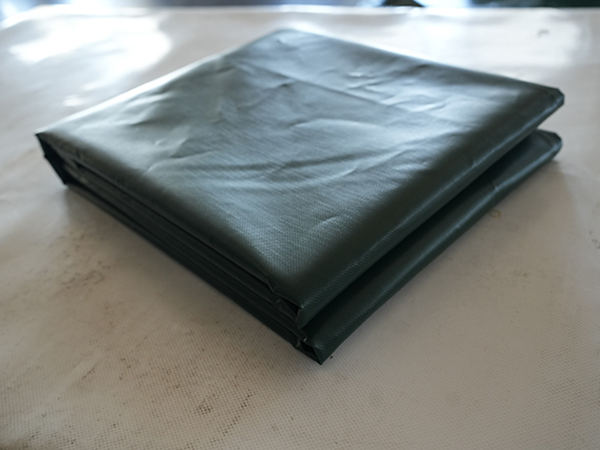
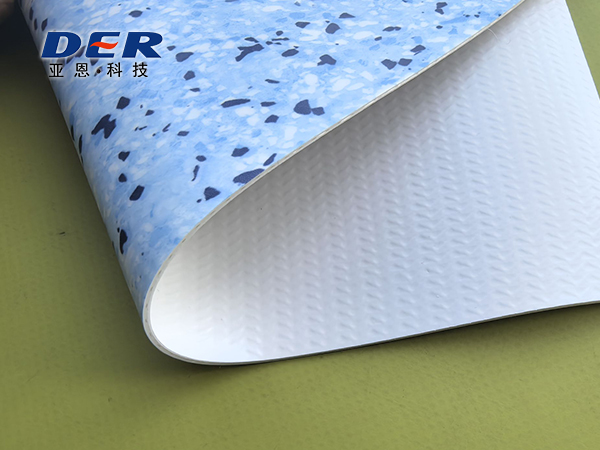
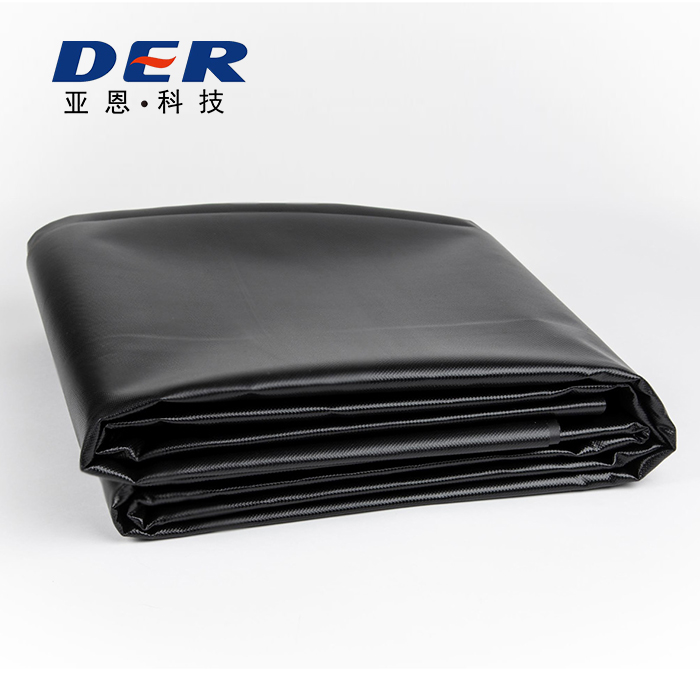
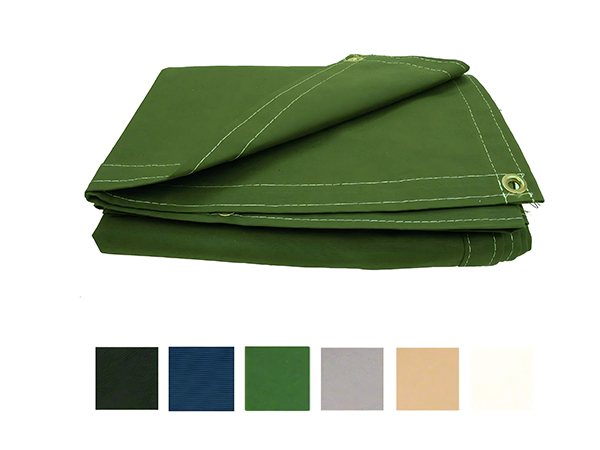
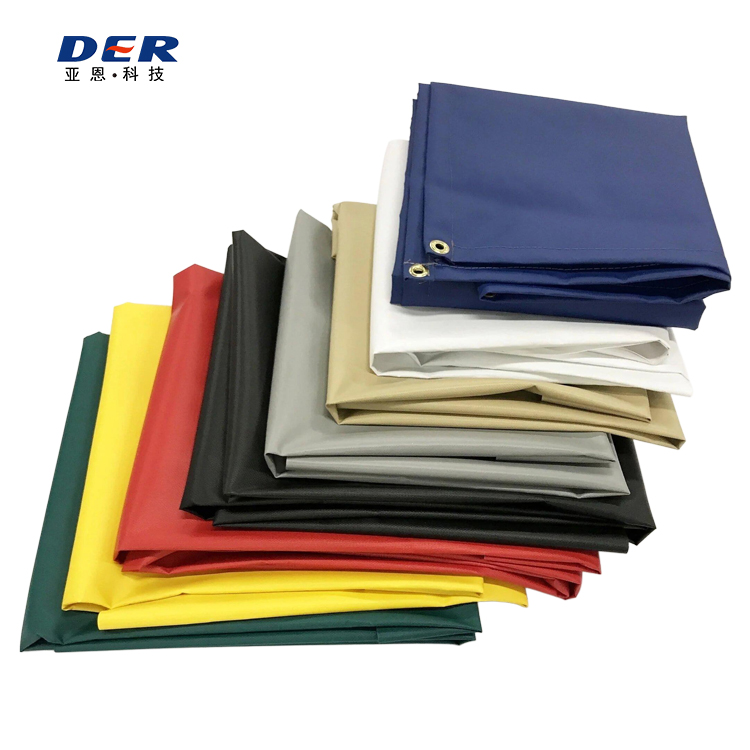
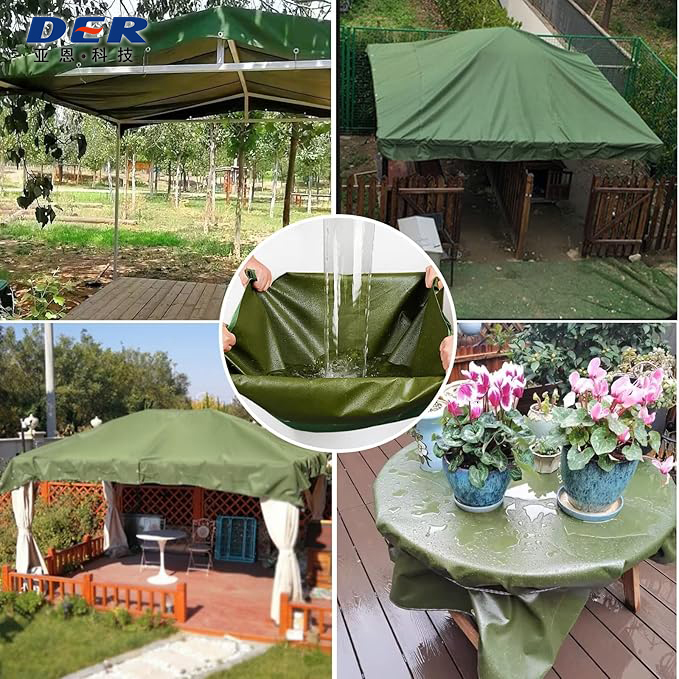
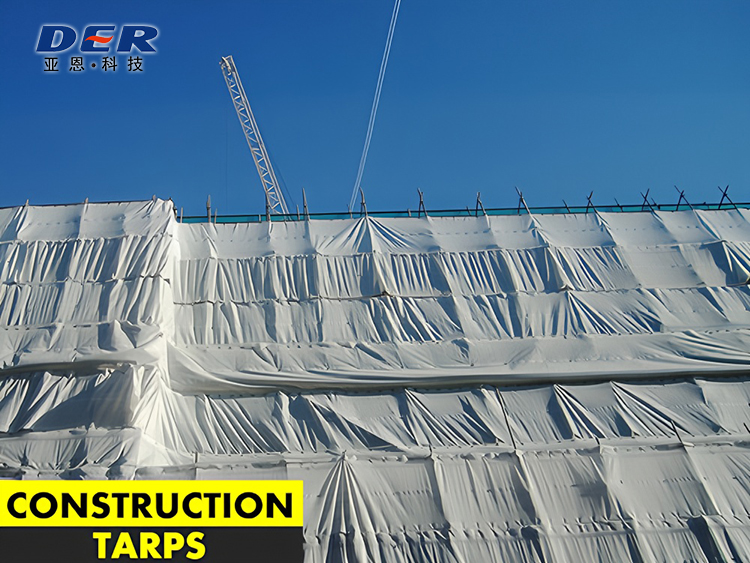
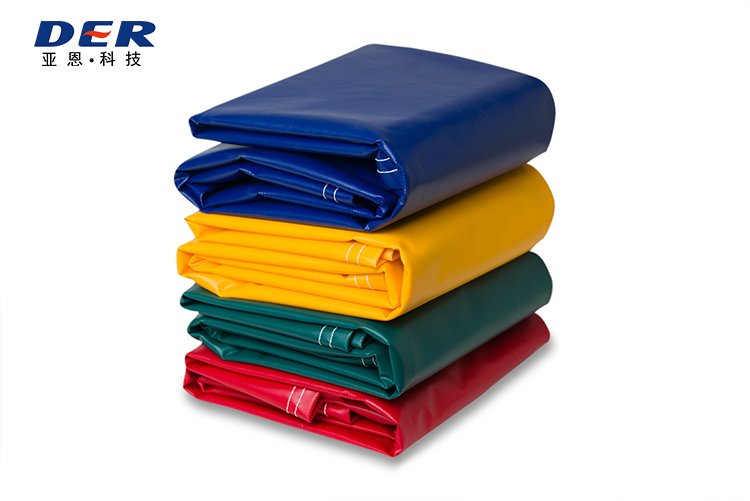
Our products are widely used in our residential and industrial area, which can be used for producing tents, outdoor covering, flexible ventilation tube, water bladders, inflatable castles, architecture membrane structures, etc. Our main products: PVC coated fabrics, PU/TPU coated fabrics, Oxford fabric, PVC ceiling film, flexible banner material. Welcome to our site and order online.