

Premium Tarps & Tarpaulin Manufacturer

+86 15601786499 (steven)

info@der-factory.com

中

Update time:2026/11/1 0:02:01 Views:0

Material comparison / B2B buying guide

Vinyl Tarp vs Poly Tarp:
Which Should You Buy?

Choose by the work the cover must do. Compare PVC vinyl and polyethylene tarps for repeated handling, outdoor exposure, finished weight and cost across the same job.

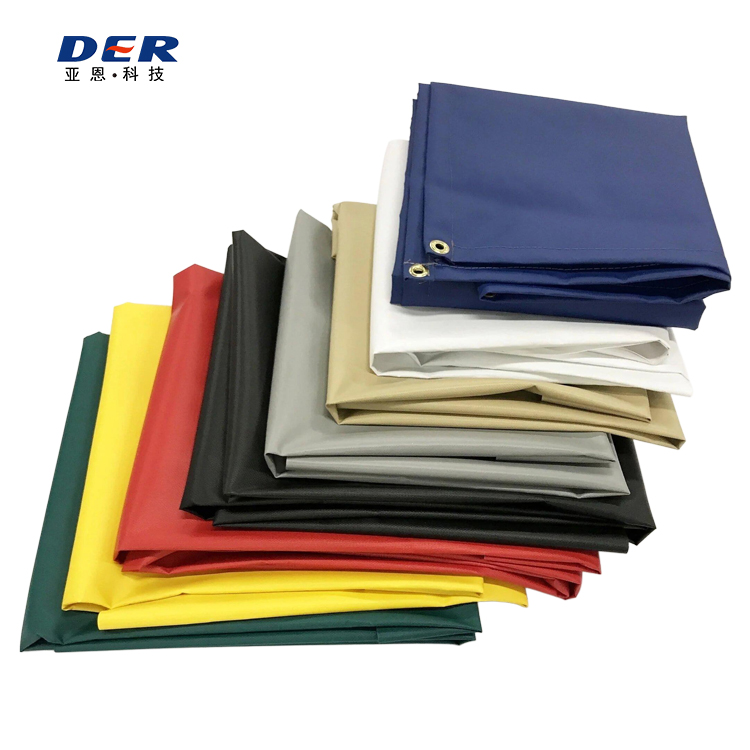
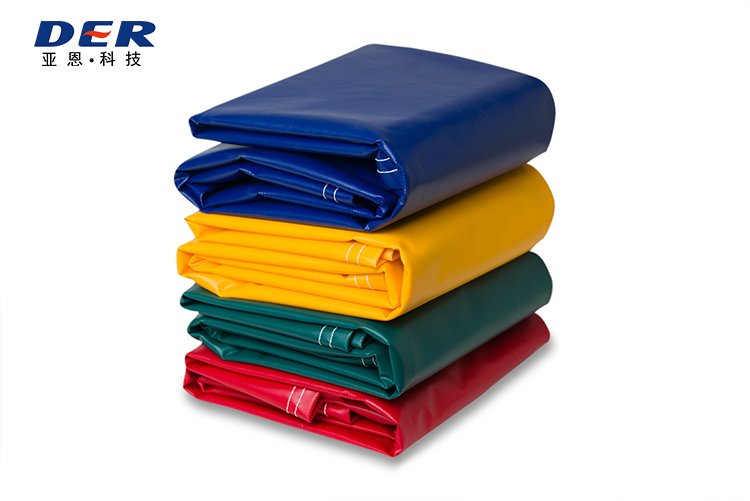
Folded blue, yellow, green and red vinyl tarps shown in this vinyl tarp vs poly tarp buying guide
DER factory PVC vinyl tarp examples. The photographs on this page show vinyl products and cover applications; the polyethylene construction below is explained separately.

Vinyl or poly: the practical answer

Choose a suitably specified vinyl tarp for repeated, abrasive industrial service; choose a suitably specified poly tarp when low carrying weight and initial cost matter most. A vinyl tarp normally combines a polyester reinforcing fabric with PVC coating or lamination. A poly tarp normally combines woven polyethylene tapes with polyethylene outer layers. Both can provide waterproof coverage, but reinforcement, seams, fixing points and exposure conditions decide how the finished cover performs. DER factory reviews roll material, cut panels and custom finished covers against your application, dimensions and required performance.

01 / The buying decision

Vinyl tarp vs poly tarp: compare the offered grade

The material name narrows the choice. It does not establish a strength rating, outdoor lifespan or waterproof finished assembly. Use these typical differences to shortlist options, then compare samples and documented specifications.

Typical commercial constructions; individual grades can differ substantially.
Decision factorVinyl tarp / PVC tarpPoly tarp / PE tarp
ConstructionUsually PVC-coated or PVC-laminated polyester reinforcement.Usually woven high-density polyethylene tapes with polyethylene coating or film.
Carrying weightCommon industrial grades are heavier; calculate the complete cover weight.Often lighter for the same area; useful for frequent deployment and portable covers.
Abrasion & repeated useOften shortlisted for rubbing, folding and reusable industrial covers.Economy grades suit lower-wear tasks; reinforced grades require their own evaluation.
Rain protectionIntact barrier fabric can be waterproof; seams and hardware still need checking.Intact laminated or coated fabric can be waterproof; damage and seams remain critical.
Sun & temperatureUV and cold-flex performance depend on the formulation and construction.UV-stabilized and temperature-specified grades exist; verify the offered grade.
Joining & repairCompatible PVC fabrics can be welded; use a validated PVC repair system.Requires PE-compatible sealing or repairs. PVC settings and adhesives do not transfer automatically.
First purchase costOften higher, with added cost for reinforcement, hardware and fabrication.Often lower for general-purpose covers; premium PE is a separate comparison.
Best starting pointRepeated equipment coverage, purpose-designed truck covers and fabricated OEM covers.Temporary stock protection, portable weather covers and cost-sensitive projects.

On small screens, swipe the comparison table horizontally.

Compare equivalent tasks. An economy poly sheet and an industrial vinyl cover are different duty levels. Ask each supplier to quote the same finished size, exposure, fixing layout and acceptance tests.

02 / Inside the fabric

What are vinyl and poly tarps made of?

The reinforcement carries much of the tensile load; the surface polymer provides the barrier and affects joining, flexibility and wear. A thicker outer layer alone does not prove higher tear strength.

PVC / VINYL

Coated or laminated polyester

Polyvinyl chloride, commonly called PVC or vinyl in the tarp trade, surrounds a woven polyester scrim. Yarn, weave, coating adhesion and finish work together.

PVC outer surfaceWoven polyester reinforcementPVC outer surface

Coating and lamination describe different manufacturing routes. Choose against finished performance and the intended weld process rather than assuming one process label proves quality.

Review PVC-coated fabric constructions →
PE / POLYETHYLENE

Woven tapes with outer layers

A common poly tarp uses woven high-density polyethylene (HDPE) tapes and polyethylene surface layers, often based on low-density polyethylene. Blends and construction vary.

Polyethylene coating or filmWoven polyethylene tapesPolyethylene coating or film

Check tape properties, weave and layer bonding together. “Poly” usually means polyethylene in this context; it should not be confused with the polyester scrim inside a vinyl tarp.

Layer diagrams are explanatory, not to scale and not a product specification.
03 / Match the job

Which tarp fits your application?

Start with exposure duration, contact surfaces and deployment frequency. Then confirm that the shortlisted material can meet the finished-cover requirements.

01

Truck and trailer covers

Repeated transport often points toward purpose-specified vinyl. The decision must include abrasion protection, panel seams, fixing reinforcement and manageable weight. A generic tarp label does not approve road use.

Prevent loose flapping and protect sharp cargo edges. Keep cargo restraint independent of the cover.

Explore truck tarpaulin requirements →
02

Temporary site and stock covers

Poly is often practical when crews need lightweight coverage for a defined project and replacements are manageable. Specify finished dimensions, reinforcement and exposure rather than selecting by color.

For long-running work with repeated folding and rubbing, compare a heavier-duty PE option with a suitable vinyl grade.

03

Machinery and reusable covers

Vinyl is a useful starting point where the same cover is removed and refitted repeatedly. Reduce rubbing through fit, padding and local reinforcement. More fabric mass does not remove a poor load path.

Compare heavy-duty tarp options →
04

Portable and seasonal protection

Poly often suits frequent carrying, short deployments and low-cost general coverage. Verify packed size and total mass. For stored machinery or moisture-sensitive materials, consider ventilation as well as keeping rain out.

Neither a continuous PVC surface nor a PE surface should be assumed breathable. Condensation can form beneath either.

Black fitted tarp covering a long truck trailer with multiple fastening points
Truck-cover application shown on DER factory’s website. Finished fit, fastening layout and seam design belong in the specification alongside material selection.
04 / Specify the finished cover

What specifications should a buyer compare?

Request both a fabric specification and a finished-cover drawing. A strong sheet can still fail at an unsupported corner, weak seam or poorly placed eyelet.

Define acceptance criteria before sample approval or bulk production.
SpecifyWhat to requestWhy it changes the decision
Material & constructionPolymer, scrim or tape type, coating or lamination route, relevant finish.Prevents substitution based on appearance alone.
Weight & thicknessGSM or oz/yd², measured thickness, method and tolerance.Separates handling mass from thickness; neither is a complete strength rating.
StrengthTensile and tear values in both directions, method, units and conditioning.Values from different test methods may not be directly comparable.
Size & layoutFinished dimensions, tolerance, roll width if relevant, panel joins and orientation.Cut size can shrink after hemming; extra joins affect fabrication and inspection.
Edges & fixingsHem, webbing, corner patches, hardware type and exact spacing.Attachment design must distribute forces into the fabric.
Outdoor performanceUV exposure protocol, retained properties, cold-flex criteria and service conditions.A test duration or a color does not establish years outdoors.
Supply & packingRoll goods, cut panels or finished covers; identification, quantity and packing.Changes conversion work, freight and incoming inspection.

Offered values, tolerances and test requirements must be agreed for the selected construction.

Inspect the seam and edge together

Confirm overlap, welding or sealing process and the finished joint. Hot-air or hot-wedge processes may suit compatible constructions; settings need trials on the actual fabric. PVC is commonly compatible with high-frequency welding, while conventional PE generally is not.

Adding eyelets alone does not establish pull-out resistance. Check the complete hem, reinforcement and hardware assembly.

Agree the water barrier

Ask whether the proposed test covers a fabric coupon, a seam or the complete cover. Stitch holes, penetrations, open edges and abrasion can create leak paths even when the base material is waterproof.

Use supported slopes and suitable drainage. A weather cover should not be treated as a water-storage liner.

Review waterproof tarp construction →

Ordering to a drawing? Send finished dimensions, seam locations and fixing positions. DER factory can review material direction, reinforcement and fabrication for a custom cover.

Request A Quote
05 / Exposure & maintenance

How do weather, cleaning and repair affect the choice?

Outdoor performance belongs to the grade and installation. The letters PVC or PE alone do not verify UV life, low-temperature flexibility, flame performance or chemical suitability.

01 / SUN & COLD

Ask for retained properties

For weathered material, compare strength retention and visible cracking after an agreed exposure protocol. Laboratory UV hours are not a direct conversion to outdoor years. A cold-bend result also describes a different condition from continuous service temperature.

02 / SPECIAL REQUIREMENTS

Specify the exact condition

For chemicals, identify the liquid, concentration, temperature and contact duration. For flame performance, identify the required standard and evidence for the exact construction. A general weather tarp is not automatically qualified.

Discuss flame-retardant fabric requirements →
03 / REPAIR

Match the patch to the surface

Use compatible patches, adhesive or welding procedures on clean, sound material. PE has a low-energy surface, so a vinyl repair adhesive should not be assumed effective. Trial the repair and inspect the joint before returning a cover to service.

04 / REUSE

Inspect before the next deployment

Remove dirt using a supplier-approved method, dry before storage and inspect creases, contact zones, seams and fixing points. Widespread brittleness, delamination or degraded reinforcement calls for a replacement assessment rather than more patches.

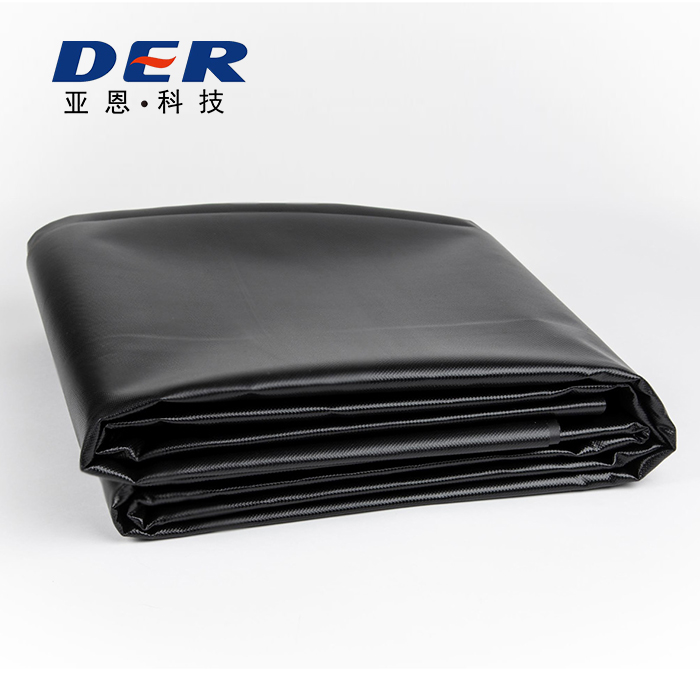
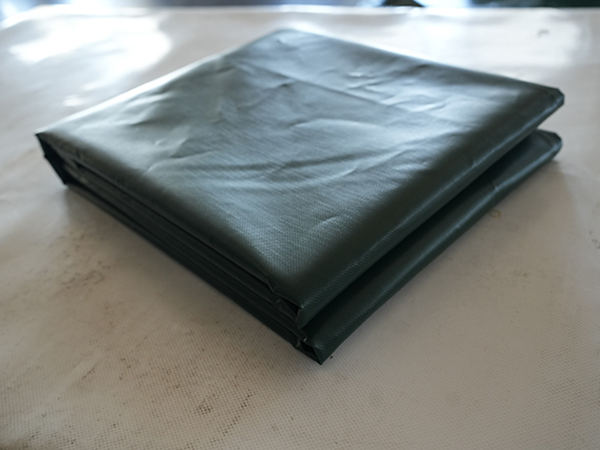
Folded dark green heavy-duty tarp showing its coated surface and folded edges
Folded heavy-duty tarp: check repeated fold lines and contact surfaces during inspection.
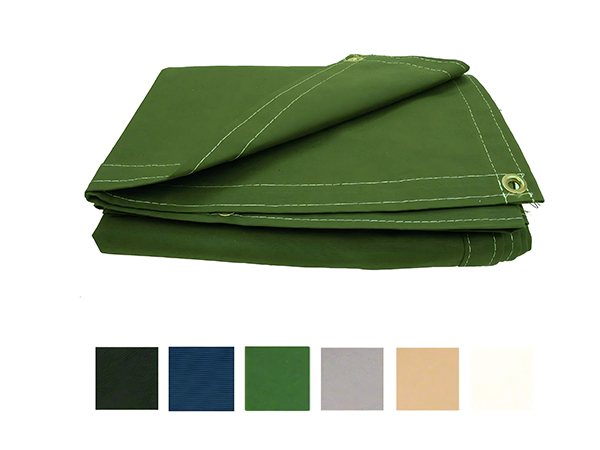
Green folded waterproof tarp with stitched edge detail and a metal eyelet
Edge and eyelet example: hardware, hem and reinforcement should be evaluated as an assembly.

Technical references: TWI guidance on polymers suitable for RF welding and 3M guidance on surface energy and bonding. These explain process selection; they are not test reports for a DER factory grade.

06 / Weight & whole-job cost

Is a vinyl tarp worth the extra cost?

It can be when verified reuse reduces replacements and disruption. Poly can remain the better purchase for a short task. Compare both against the same coverage area and required service period.

First, calculate handling weight

GSM is grams per square metre. Mil is a thickness unit: 1 mil = 0.0254 mm. A tarp weight marked in ounces normally means ounces per square yard; confirm the denominator.

Base sheet mass (kg)
= area (m²) × GSM ÷ 1,000

For an illustrative 4 m × 6 m sheet, 650 GSM gives 15.6 kg and 200 GSM gives 4.8 kg. These are hypothetical comparison inputs, not DER factory product specifications.

Hems, overlaps, patches and hardware add mass. Request finished-cover weight and packed dimensions before choosing the handling plan.

Then, compare cost over the job

Whole-job cost
= purchase + freight + replacement + fitting + repair

Add documented disruption or damage costs separately if they can be estimated consistently. Do not insert an assumed material lifespan as though it were guaranteed.

For illustration, one cover at 180 cost units plus 20 fitting costs totals 200. Three replacement covers at 55 each plus 20 fitting costs each total 225. If only one 55-unit cover is needed, that alternative totals 75.

The example shows why replacement frequency matters. It is not a price quotation or a claim that vinyl lasts three times longer.

Avoid the unit trap. 18 oz/yd² is approximately 610 g/m². Eighteen mil is 0.4572 mm. Equal-looking numbers describe different quantities; neither proves equal service performance.

07 / Sample to repeat order

How should you qualify a custom tarp?

Approve the same construction that will be supplied in bulk. Keep an agreed specification, drawing and reference sample so subsequent orders can be checked against a common baseline.

01

Agree the comparison brief

Describe weather exposure, handling, contact surfaces and the required coverage period. Identify whether the order is for roll material, cut panels or a complete cover.

02

Review representative samples

Check appearance, mass, dimensions, flexibility and construction. For fabricated covers, include a representative seam, corner and attachment point, rather than approving only a flat swatch.

03

Set acceptance checks

Agree relevant strength, seam, water-barrier and exposure tests, including methods and pass criteria. Record weight and thickness tolerances, finished-size tolerances and visual defect limits.

04

Control the reorder

Retain the approved sample and construction reference. Confirm identification, packing and inspection records for the order. A changed polymer, reinforcement or finish should trigger technical review.

DER factory’s custom tarp supply options cover drawing-based review of sizes, material direction, seams, reinforcement, fixings, branding and packing. Confirm the proposed combination, sample process, minimum quantity and production timing during quotation.

08 / A useful enquiry

What should you send for a vinyl or poly tarp quote?

Send a common brief so material alternatives can be compared fairly. If the grade is undecided, describe the job and ask for a proposed construction with its technical basis.

  • Application & exposureCovered item, indoor or outdoor use, temperature, sunlight, contact surfaces and deployment frequency.
  • Finished size & drawingLength, width, fitted shape, tolerances, panel layout and required overlap or access points.
  • Material & performancePVC or PE preference, target GSM, strength criteria, color, water barrier, UV, cold or flame requirements.
  • Edges & accessoriesWebbing, hem, corner reinforcement, eyelets, D-rings, straps and spacing on the drawing.
  • Supply & quantityRoll goods, cut panels or finished covers; quantities by size and color; sample or prototype needs.
  • Documentation & deliveryTesting, identification, OEM marking, packaging, destination and required delivery date.
09 / Buyer questions

Vinyl vs poly tarp FAQ

Clear answers to common material, outdoor-use and purchasing questions.

Is a vinyl tarp the same as a PVC tarp?

Usually, yes. In reinforced tarp products, vinyl generally refers to polyvinyl chloride (PVC) coated or laminated onto a fabric such as polyester. Ask for the full construction because unreinforced clear vinyl film is a different product.

Are vinyl tarps better than poly tarps?

Vinyl is often the better starting point for repeated industrial handling, abrasion exposure and custom welded covers. Poly is often preferable for portable, temporary and cost-sensitive coverage. Compare the offered grades and finished-cover construction before deciding.

Are poly tarps waterproof?

An intact, appropriately coated or laminated polyethylene tarp can be waterproof. A finished cover can still leak through damage, seams, eyelets or uncovered edges. Check the fabric, joints, drainage and installation together.

Which tarp lasts longer outside?

A suitably specified vinyl tarp can offer an advantage over an economy poly tarp in repeated outdoor service, but there is no universal lifespan for either material. UV formulation, retained strength, rubbing, temperature, installation and maintenance determine service life.

Is 18 oz vinyl the same as 18 mil poly?

No. In tarp specifications, 18 oz normally means 18 ounces per square yard, a mass per area. That equals approximately 610 g/m². Eighteen mil is a thickness of 0.4572 mm. One cannot be converted into the other without the construction and density.

Can vinyl and poly tarps use the same repair tape or adhesive?

Do not assume so. Use a repair system approved for the exact PVC or polyethylene surface and its service conditions. Trial the patch on a clean sample. General-purpose vinyl adhesive is not automatically suitable for polyethylene.

Which tarp should I choose for a truck or trailer?

For repeated transport, start with a purpose-specified truck tarp and review tear strength, abrasion, seams, reinforced fixing points and handling weight. A generic vinyl or poly material label does not establish suitability for road use. The cover does not replace cargo restraint.

What should I send DER factory for a custom tarp quote?

Send the application, finished dimensions and drawing, material preference, target weight, quantity, exposure conditions, reinforcement and fixing layout, required testing and delivery destination. Ask for sample approval, MOQ and production timing for the quoted construction.

Discuss the construction

Specify the cover your job needs.

Send DER factory your application, finished dimensions, quantity and special performance requirements. Request a material proposal, fabrication review and sample plan before approving bulk supply.

DER factory · Material comparison and custom tarp procurement guide. Grade-specific performance and order terms require confirmation.

Contact Us (You are welcome to consult at any time!)

Zhangbaling Plastic Polymer Industrial Park, Zhangbaling Town, Mingguang City, Chuzhou, Anhui Provin

info@der-factory.com

+86 15601786499 (steven)

Product recommendation

#
truck tarps
  • 2026-10-26
#
#
#
vinyl tarps
  • 2026-09-13
#
Waterproof Tarps
  • 2026-08-27
#
#
#
#
Vinyl Coated Tarps
  • 2026-05-24
#

Application Fields Of Our Products

Our products are widely used in our residential and industrial area, which can be used for producing tents, outdoor covering, flexible ventilation tube, water bladders, inflatable castles, architecture membrane structures, etc. Our main products: PVC coated fabrics, PU/TPU coated fabrics, Oxford fabric, PVC ceiling film, flexible banner material. Welcome to our site and order online.