Grams per square meter
Also written g/m². Specify the total finished fabric weight when you want the base textile plus coating. Base-cloth GSM alone is a different value.

GSM · oz/yd² · mil · mm
Compare fabric weight, read thickness correctly and estimate handling mass before you order a custom tarp or a roll of PVC coated fabric.

The direct answer
GSM and oz/yd² measure material mass per area. Mil measures thickness. One ounce per square yard is approximately 33.9057 GSM; one mil is exactly 0.0254 mm. You can convert between the two weight units or between thickness units, but there is no universal GSM-to-mil conversion. A tarp is a composite of reinforcement and coatings, so its thickness must be specified separately.
For distributors, converters, fleet buyers and industrial projects, these units help compare quotations and plan handling. DER factory can review target fabric weight, material construction, roll or finished-cover dimensions, seam details and reinforcement for a project-specific specification.
Also written g/m². Specify the total finished fabric weight when you want the base textile plus coating. Base-cloth GSM alone is a different value.
The same property in another unit. An “18 oz tarp” commonly means 18 oz/yd² of material; ask the supplier to state the area basis explicitly.
Not a millimeter. A 20 mil sheet measures 0.508 mm nominally. Confirm whether the value describes the finished sheet, a coating layer or a reinforced seam.
Denier belongs in a different column. Denier describes yarn linear mass: grams per 9,000 meters. A “1000D” reinforcement does not mean 1,000 GSM or establish a particular mil thickness. Review the yarn, weave and coating together in the PVC coated polyester fabric construction guide.
Keep the properties separate
Use the left chart for area weight and the right chart for physical thickness. Rows across the two charts are independent; they are not matching product grades.
oz/yd² = GSM ÷ 33.9057
| Area weight | Equivalent | 100 m² sheet* |
|---|---|---|
| 100 GSM | 2.95 oz/yd² | 10.0 kg |
| 200 GSM | 5.90 oz/yd² | 20.0 kg |
| 300 GSM | 8.85 oz/yd² | 30.0 kg |
| 450 GSM | 13.27 oz/yd² | 45.0 kg |
| 500 GSM | 14.75 oz/yd² | 50.0 kg |
| 610 GSM | 17.99 oz/yd² | 61.0 kg |
| 650 GSM | 19.17 oz/yd² | 65.0 kg |
| 680 GSM | 20.06 oz/yd² | 68.0 kg |
| 750 GSM | 22.12 oz/yd² | 75.0 kg |
| 900 GSM | 26.54 oz/yd² | 90.0 kg |
*Fabric mass only, before extra overlaps, hems, fittings and packaging. Chart values are unit examples, not a DER factory stock list. Conversion factor from NIST [1].
mm = mil × 0.0254
| Mil | Millimeters | Micrometers |
|---|---|---|
| 5 mil | 0.1270 mm | 127 µm |
| 6 mil | 0.1524 mm | 152.4 µm |
| 8 mil | 0.2032 mm | 203.2 µm |
| 10 mil | 0.2540 mm | 254 µm |
| 12 mil | 0.3048 mm | 304.8 µm |
| 16 mil | 0.4064 mm | 406.4 µm |
| 18 mil | 0.4572 mm | 457.2 µm |
| 20 mil | 0.5080 mm | 508 µm |
| 24 mil | 0.6096 mm | 609.6 µm |
| 30 mil | 0.7620 mm | 762 µm |
A unit conversion does not remove manufacturing tolerance. The measured thickness of a supplied sample remains construction- and method-dependent. Conversion factor from NIST [2].
Useful reverse conversions: GSM = oz/yd² × 33.9057; mil = mm ÷ 0.0254. Thus 18 oz/yd² is about 610.30 GSM, 22 oz/yd² is about 745.93 GSM, and 0.50 mm is about 19.69 mil.
Work with your actual specification
Convert one property at a time. These tools do not infer thickness from GSM or predict strength, service life or a finished shipping weight.
Area weight of the finished fabric.
Thickness of the specified sheet or layer.
Enter dimensions and area weight. Use actual sheet or panel dimensions, not the volume of the object under a fitted cover.
A worked example
At 650 GSM, the material estimate is:
8 × 12 × 650 ÷ 1,000 = 62.40 kg
That is the mass of one 96 m² sheet at the stated fabric weight. Fabrication can add seam overlaps, turned hems, webbing, patches, straps and metal fittings. Packing adds further shipping weight.
For a fitted cover: add the actual area of the top, drops, doors and flaps, then account for fabrication allowances. A footprint alone will undercount the material.
Roll example: a 2 m × 50 m roll at 650 GSM contains about 65 kg of fabric. Its core and packaging are additional.
Read quotations on equal terms
A quotation needs both the measurement and its basis. “18 oz” without an area unit, or “heavy duty” without a construction, leaves room for suppliers to price different products.
| Quotation wording | What it establishes | What still needs confirmation |
|---|---|---|
| 18 oz/yd² finished fabric | About 610.30 GSM of total fabric mass per area | Measured thickness, reinforcement, coating, tolerances and tests |
| 18 mil finished sheet | Nominal thickness of 0.4572 mm | Actual area weight, material family and measurement conditions |
| 650 GSM PVC-coated polyester | About 19.17 oz/yd², if it describes the total coated fabric | Yarn and weave, coating build, separate thickness, seam compatibility |
| 1000D reinforcement | A yarn linear-mass designation | Weave construction, finished fabric mass and performance values |
| “Heavy-duty waterproof tarp” | An intended product category | All measurable requirements and the finished-cover details |
One ounce per square foot equals nine ounces per square yard. Total ounces of a complete tarp are another quantity again. Always write the full unit and identify the measured material.
For canvas, ask whether the ounce figure describes untreated cloth or finished treated fabric. For a vinyl tarp made from PVC-coated material, confirm that coating is included in the stated GSM or oz/yd².
Two reinforced fabrics at the same nominal thickness can have different yarn, coating formulation and tensile or tear behavior. A generic plastic-density assumption does not reliably replace measurement of a coated textile.
Use the tarpaulin thickness guide when physical thickness and application fit are the main buying questions.
Choose around the job
Choose the material family first, then balance fabric mass with handling, reinforcement and performance. There is no universal GSM threshold that makes every PE, PVC, canvas or mesh tarp “heavy duty.”
A 100 m² sheet weighs about 45 kg. For frequent manual handling, this lower mass may be worth evaluating within an appropriate PVC fabric construction.
A 100 m² sheet weighs about 65 kg. Compared with 450 GSM, the extra material mass must deliver a useful benefit in the actual proposed construction.
A 100 m² sheet weighs about 90 kg. This is twice the mass of 450 GSM, so check folding, lifting and storage before specifying a heavier cover.
These are comparison examples, not guaranteed stock grades or recommended specifications for every application. A fabric weight does not establish load capacity.
| Application | How to use GSM / oz / mil | What to specify alongside it |
|---|---|---|
| Reusable truck and cargo covers | Estimate handling mass and compare candidate coated fabrics. | Abrasion areas, folding, seam strength, webbing and fastening layout; review truck cover tarpaulin requirements. |
| Large outdoor storage covers | Check whether heavier fabric is practical over the whole area. | UV exposure, drainage, support and anchoring; assess industrial heavy duty tarp constructions. |
| Fabrication from roll goods | Specify finished fabric mass and measured thickness separately. | Usable roll width, surface, adhesion, weldability and allowable variation |
| Clear flexible enclosures | Use actual sheet thickness plus area weight for a clear film or reinforced grade. | Whether scrim is present, transparency, cold flex, seam design and exposure |
| Frequently removed equipment covers | Set a manageable mass target and evaluate a full-size or representative sample. | Fit, access, padded contact points, condensation and attachment detail |
Send both sheets, the cover dimensions and the service conditions for a project-specific review.
Material and finished-cover views
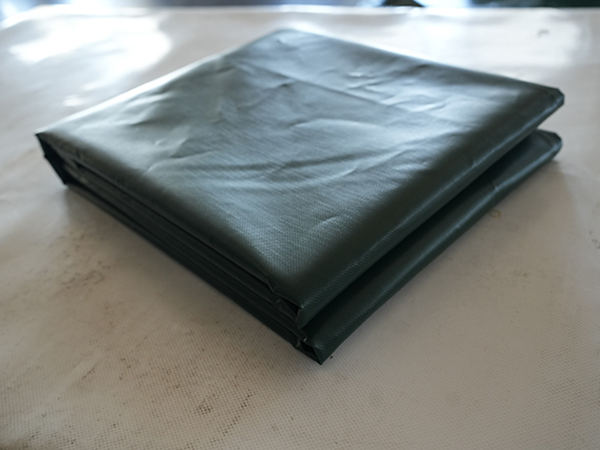
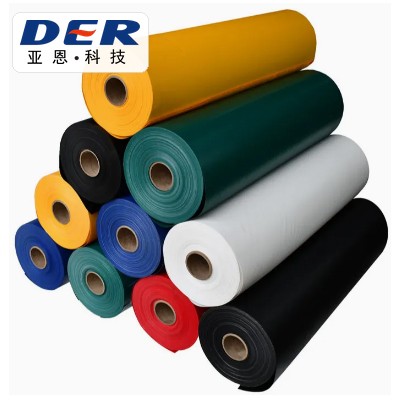
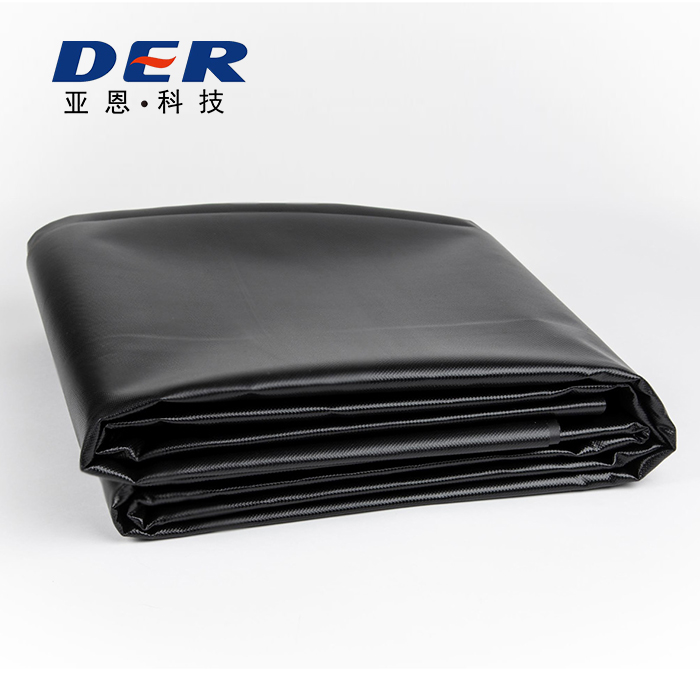
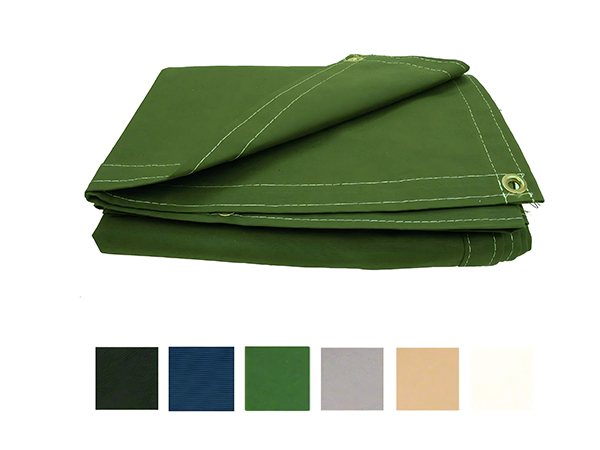
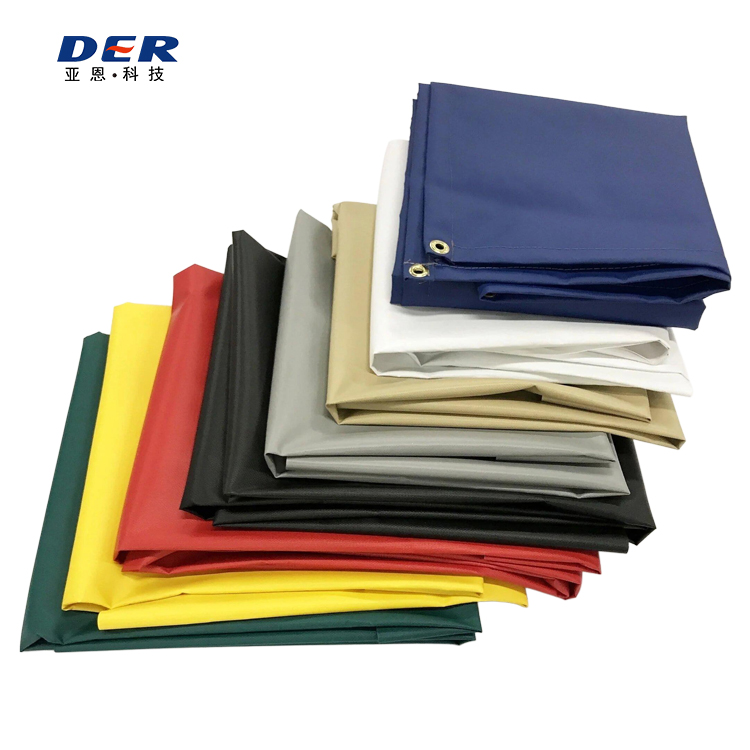
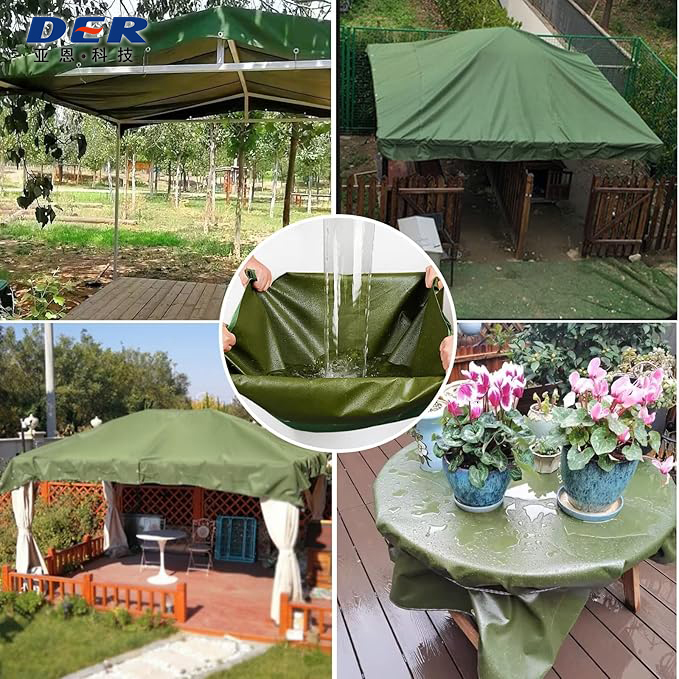
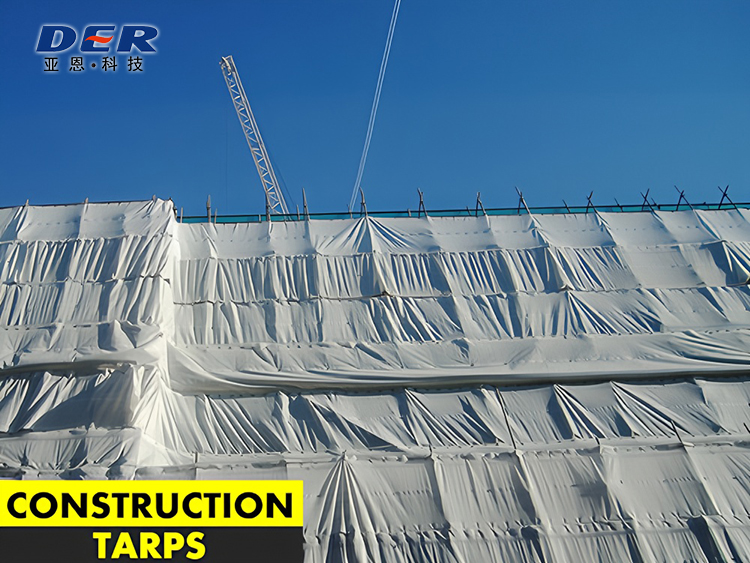
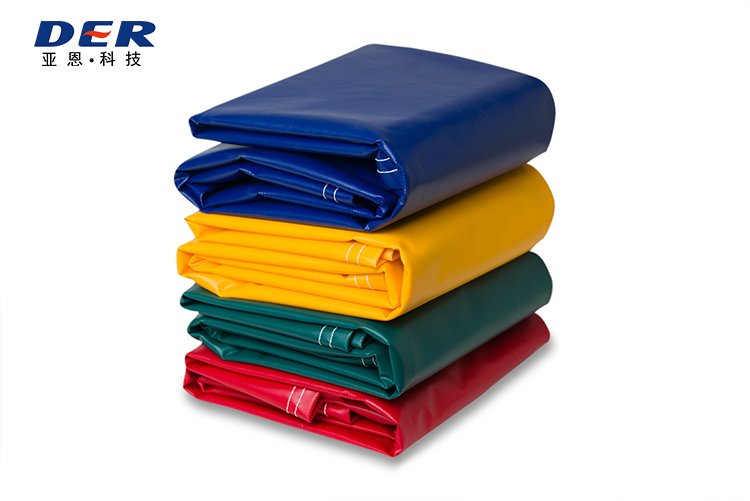
Roll format, the coated textile and the fabricated cover describe different parts of the purchase. The photographs illustrate these supply forms; they do not establish a tested GSM or mil value.


Sample and production acceptance
Agree the measurement basis before sampling. A nominal number alone cannot tell you whether two suppliers measured the same thing.
Identify material, yarn and weave, coating or lamination, surface treatment and color. Separate base-cloth mass, coating mass and total fabric mass. For coated fabrics, ISO 2286-2 addresses these mass measurements [3].
As a basic check, weigh a specimen of known area away from seams and hems: GSM = grams ÷ area in m². A 0.01 m² specimen weighing 6.5 g indicates 650 GSM. Formal acceptance needs an agreed sampling and conditioning method.
Use representative locations away from hems, seam overlaps and patches. State the gauge method, contact pressure and sampling positions. ISO 2286-3 measures coated-fabric thickness at a specified pressure [4]. Do not use a folded edge as body thickness.
Agree nominal values, minimums or ranges and whether acceptance is by the lot average, individual measurements or both. If a hypothetical RFQ sets 650 GSM ±5%, its range is 617.5–682.5 GSM. This example is not a DER factory standard tolerance.
Finish the performance check. Record tensile and tear results in both fabric directions, with the applicable method and units. Include coating adhesion, seam evaluation, dimensions, reinforcement and fitting placement where relevant. UV, cold-flex and flame requirements need separate project criteria; none can be confirmed from GSM alone.
Standards are measurement references, not claims that DER factory or the pictured materials hold a certification. Confirm the agreed testing scope before production.
From a number to a clear order
State finished fabric weight and measured thickness as separate fields, then define the product geometry and performance. This helps a manufacturer or supplier quote the same scope for wholesale, custom and OEM production.
For a fitted or reinforced product, review the custom tarp fabrication options and send a dimensioned drawing.
Illustrative request only. Replace the example application, dimensions and weight with your project requirements.
Common buying questions
GSM means grams per square meter: the mass of one square meter of material. A 650 GSM fabric weighs nominally 650 grams per square meter before extra seam overlaps, hems, reinforcement and fittings are counted. Confirm whether the quoted GSM describes finished coated fabric or the base textile alone.
If 18 oz means 18 ounces per square yard of finished material, it equals approximately 610.30 GSM. It does not mean 18 mil thick or describe the total weight of the tarp. Confirm the area unit and whether coating or treatment is included.
There is no universal conversion from tarp GSM to mil. GSM measures mass per area; mil measures thickness. Reinforcement, coating formulation, texture and measurement pressure affect their relationship. Obtain a separately measured thickness for the actual fabric construction.
A 20 mil tarp is nominally 0.508 mm thick because 1 mil equals exactly 0.0254 mm. The unit conversion is exact; the supplied material still needs an agreed thickness tolerance and measurement method.
These weights equal approximately 13.27, 19.17 and 26.54 oz/yd². For the same area, 900 GSM fabric has twice the material mass of 450 GSM fabric. That does not prove twice the strength, outdoor life or waterproof performance. Compare the reinforcement, coating, tests and finished construction.
No. Higher GSM establishes higher mass per area. Strength also depends on yarn, weave, coating adhesion and reinforcement. Waterproof performance depends on the material barrier, seams and penetrations. Ask for relevant performance results rather than treating GSM as a durability rating.
For a rectangular sheet, multiply length in meters by width in meters by GSM, then divide by 1,000 to estimate kilograms of material. An 8 m by 12 m sheet at 650 GSM contains about 62.40 kg of fabric at those dimensions. Add extra material and hardware for a fabricated tarp; use actual panel areas for shaped covers.
Send the application, roll or finished-cover format, dimensions, target finished fabric weight, any measured thickness requirement, quantity, color, seam and edge details, fittings, exposure conditions, destination and required tests. MOQ, samples, lead time and acceptable tolerances should be confirmed for the proposed construction before ordering.
Specify the complete cover
Send your application, dimensions, target finished fabric weight, separate thickness requirement, quantity and reinforcement details. DER factory can review material selection and finished fabrication for your project.

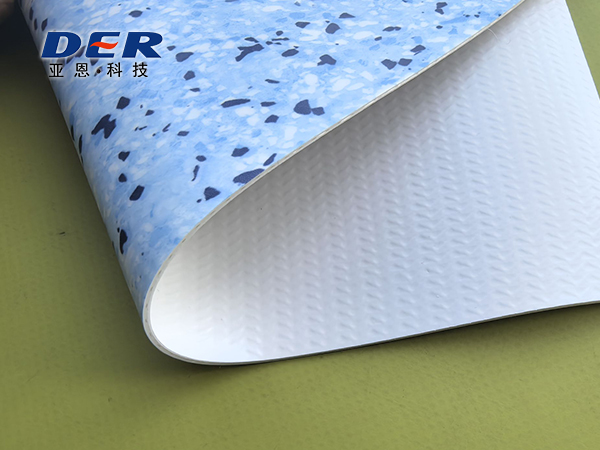
Our products are widely used in our residential and industrial area, which can be used for producing tents, outdoor covering, flexible ventilation tube, water bladders, inflatable castles, architecture membrane structures, etc. Our main products: PVC coated fabrics, PU/TPU coated fabrics, Oxford fabric, PVC ceiling film, flexible banner material. Welcome to our site and order online.