Warehouses & Distribution
Create heated, cooled or protected zones around picking, packing and storage operations.


Custom insulated industrial curtain systems for warehouses, cold rooms, production areas and logistics facilities that need practical temperature separation without building a permanent wall.
Der factory combines durable PVC coated textile skins with project-specific insulation, sealing and fabrication details to help buyers create flexible thermal barriers around real facility layouts.

Heating or cooling an entire warehouse is often inefficient when only one production cell, packing area, cold-storage aisle or employee work zone requires a controlled temperature. Thermal insulation industrial curtains create a flexible enclosure that helps reduce direct air exchange between zones while adding an insulating layer between hot and cold sides.
Unlike a rigid partition, an insulated industrial curtain can be designed around columns, conveyors, doorways and changing workflows. Panels can be stationary for continuous separation or developed around a retractable concept where frequent access matters.
The most important purchasing point is not simply “how thick is the curtain?” Good thermal separation depends on the complete system: outer textile, insulation core, seam geometry, panel joints, top and side sealing, floor contact and how often openings are used.
For faster selection, send a facility sketch, opening size, temperatures on both sides, access frequency and any fire-rating requirement.
Der factory approaches the curtain as a layered assembly rather than a single sheet, allowing durability, cleanability, flexibility and thermal performance to be balanced for the application.
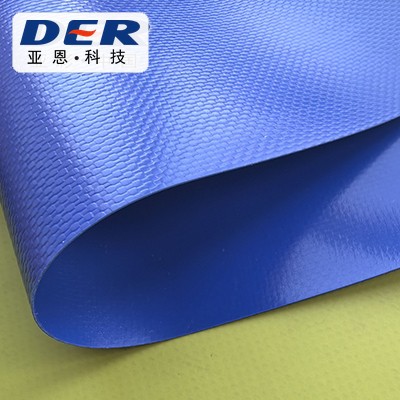
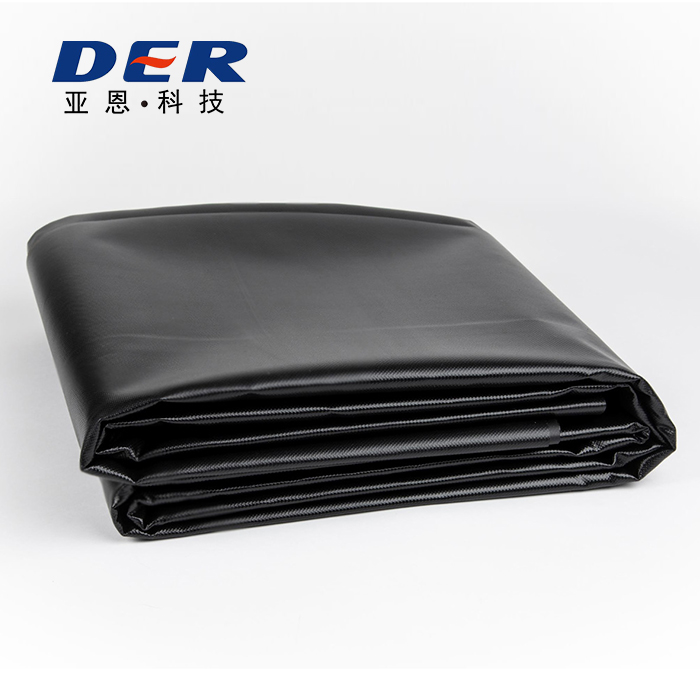
The insulation core reduces heat transfer, but the curtain still has to survive industrial handling. PVC coated polyester provides a tough, weldable surface that is easy to wipe down and can be produced in different weights, colors and surface finishes.
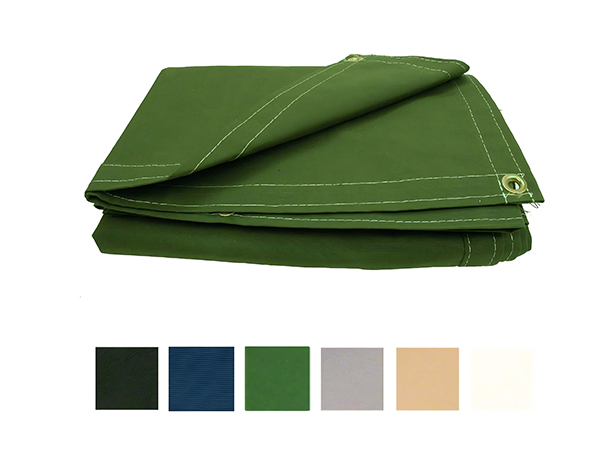
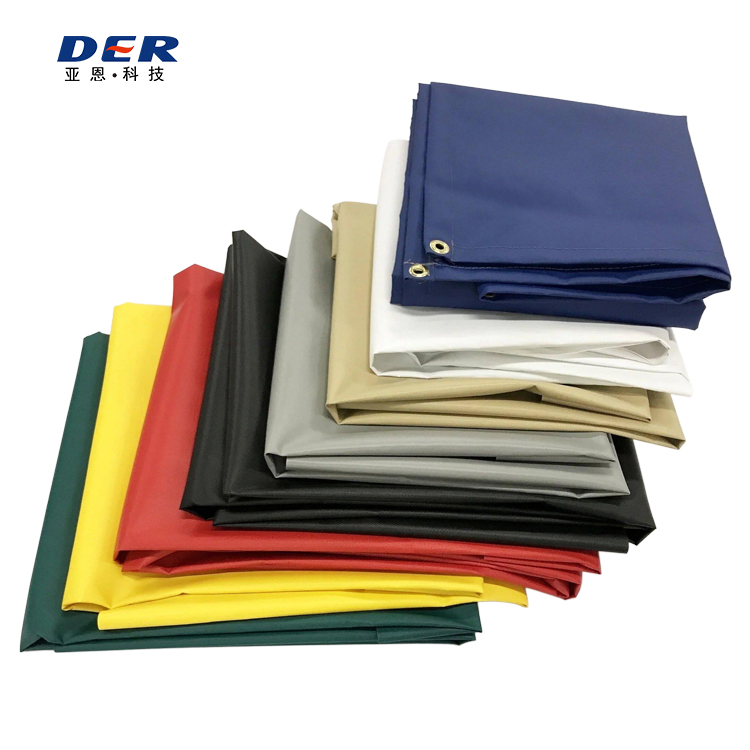
Der factory's PVC coated polyester range supports industrial curtain fabrication with customizable coating weight, width, finish and optional flame-retardant directions. That gives project buyers a practical way to specify the visible and high-wear layers separately from the insulation requirement.
Related material: PVC coated polyester fabric.
Procurement teams often compare curtain thickness first. In real installations, these six performance factors usually have a larger impact on whether the project works as expected.
A multi-layer insulated construction slows conductive heat flow between adjacent zones. The selected core and its uncompressed thickness determine much of the insulation performance.
Side seals, top closure, panel overlaps and floor details matter because uncontrolled airflow can bypass the insulation layer and reduce the value of the entire barrier.
PVC coated textile skins resist abrasion, repeated movement and warehouse dirt better than delicate insulation materials exposed without a protective facing.
Personnel doors, zipper openings, strip-door passages and track-based sections can be integrated so temperature zoning does not create an operational bottleneck.
Modular panels can be planned for seasonal layouts, leased buildings or process changes where a permanent insulated wall would be expensive or difficult to alter.
When flame-retardant performance is required, the target standard should be specified before sampling so the correct PVC construction and documentation can be selected.
The best industrial thermal curtain is the one that provides enough insulation without making the daily workflow difficult.
For heated work cells, packaging spaces or comfort zones inside a larger warehouse.
Focus: flexible panels, practical seals, moderate insulation, fast access.
For separating conditioned storage from general warehouse space or reducing HVAC load around active zones.
Focus: continuous perimeter closure, durable outer skin, modular panels.
For vestibules, internal cold-room partitions and refrigerated staging areas where air exchange is a major concern.
Focus: thicker insulation direction, low-temperature flexibility, tight access details.
For forklift and personnel movement between temperature zones in distribution and loading operations.
Focus: access opening design, replaceable wear parts, reinforced edges and visibility.
The table below is a purchasing framework. Final construction should be confirmed against the required temperature differential, opening size, traffic level, installation method and local fire-safety requirements.
| Item | Typical Der factory Direction | What the Buyer Should Specify |
|---|---|---|
| Product Type | Thermal insulation industrial curtain / insulated warehouse curtain / temperature control partition | Stationary, retractable or modular removable layout |
| Outer Skin | PVC coated polyester fabric; coating weight and finish customizable | Indoor/outdoor use, abrasion level, cleaning method, color |
| Material Weight | Project selected; Der PVC coated fabric ranges include light to heavy industrial grades | Do not select by GSM alone—state durability and fabrication requirements |
| Insulation Core | Project-selected insulated composite construction | Target temperature differential, target thermal resistance if specified, flexibility and thickness limits |
| Thermal Rating | Project-specific; confirmed for the complete curtain build-up | Required R-value/U-value or performance test method if contractually required |
| Fabric Width | Common coated textile roll widths approximately 1.0–3.2 m; larger assemblies made by joining panels | Finished opening width and preferred panel layout |
| Finished Size | Custom | Clear width, clear height, roof slope, columns and obstructions |
| Surface | Glossy, matte, anti-fouling or reflective direction depending on material | Cleaning, appearance, light reflection and process environment |
| Access Options | Zipper opening, overlapping flap, clear viewing window, strip-door passage or custom opening | Personnel/forklift traffic frequency and opening size |
| Edge Sealing | Hook-and-loop, overlap, flap, weighted/floor-sweep or custom perimeter detail | Wall/floor condition and allowable air leakage |
| Fabrication | Welding, sewing, reinforced hems, webbing, grommets, joining and custom hardware interface | Track/hanging system, panel replacement strategy and field installation method |
| Flame Retardancy | Optional specified FR PVC constructions; supporting reports depend on selected grade | State required standard before quotation, sampling and production |
| Color / Branding | Standard or custom color; logo/marking options can be discussed | Pantone reference, safety color zones and branding requirements |
Important: the operating temperature of the finished insulated curtain must be evaluated as a complete assembly. The PVC outer skin, insulation core, thread/welds, fasteners and track components can have different temperature limits.

Industrial temperature-control projects rarely use a perfect rectangular opening. Beams, sprinklers, cable trays, columns, conveyors and door traffic all affect the final shape. Der factory can work from dimensions, photos or drawings to develop a manufacturable curtain layout.
For non-insulated zoning projects, see our industrial curtains and PVC industrial curtains.
The strongest use case is a facility that needs a controllable boundary but does not want the cost, downtime or permanence of a built wall.
Create heated, cooled or protected zones around picking, packing and storage operations.
Separate process areas, employee comfort zones or temperature-sensitive assembly operations.
Reduce uncontrolled air exchange around refrigerated staging, dock interfaces and cooler buffer zones.
Internal partitions and vestibule concepts can help reduce the volume that needs active refrigeration and control infiltration at busy access points.
Divide production, packaging and storage zones where washable surfaces, temperature control and clearly separated workflows are important.
Create winter work cells, summer cooling zones or temporary process enclosures that can be changed as production demand changes.
Even a well-insulated curtain can underperform when warm or cold air freely passes around the top, sides or floor. Provide wall conditions and any obstructions so the perimeter detail can be designed rather than treated as an afterthought.
A warehouse curtain that stays closed all day has a different job from a forklift opening used every two minutes. High-traffic projects should prioritize fast access, self-closing behavior where practical and easily replaced wear components.
Excessive compression changes insulation behavior. Retractable systems must balance stacking space with the need to maintain enough effective insulation thickness when deployed.
In cold-chain and food applications, vapor, washdown and condensation can affect materials and joints. The selected PVC surface and edge construction should fit the hygiene and moisture conditions of the facility.
Industrial curtain requirements vary by project and location. If a flame-retardant grade is mandatory, put the exact requested standard in the inquiry and purchase specification. Der factory supplies flame-retardant fabric options for specified applications.
For a B2B curtain project, “industrial grade” is not enough information. Der factory can match the material and fabrication route to defined requirements for coating, tensile performance, tear resistance, flame-retardant direction and environmental documentation.
The key is to state the required standard during quotation. Certification and test-report availability depend on the selected material formulation and product grade, so documentation should be confirmed before the purchase order rather than assumed from a general catalog description.

Der factory supplies PVC coated fabrics, industrial curtain materials and custom fabricated technical textile products for global B2B buyers. The focus is specification matching, factory manufacturing, customization and export support.
Explore related Der factory pages for material selection, non-insulated partitions, dust control and custom fabrication.
They are flexible partition systems used to reduce heat transfer and uncontrolled air exchange between industrial zones. Common applications include warehouses, refrigerated staging, cold storage, loading areas, food processing, manufacturing cells and temporary temperature-controlled workspaces.
A meaningful R-value belongs to the complete insulated construction, not the PVC face fabric by itself. If your project requires a defined R-value or U-value, include that requirement in the inquiry. The insulation core, thickness, compression, seam design and perimeter sealing should then be selected and verified as a system.
Yes. Width, drop height, sloped tops, modular panel layout, clear windows, access openings, reinforcement, grommet spacing, hook-and-loop joins and other details can be customized. Photos or a simple facility drawing help identify columns, beams, conveyors and door traffic that affect the curtain shape.
Stationary curtains are usually simpler when the barrier remains closed most of the time and a tight seal is the priority. Retractable systems are useful where access and layout flexibility matter, but curtain thickness, panel weight, stacking space and edge sealing need to be considered together.
Flame-retardant PVC coated material options are available for specified projects. Because standards differ by market and facility type, state the required test method or fire rating before sampling and quotation so the correct material construction and documents can be confirmed.
Send the opening width and height, hot-side and cold-side temperatures, indoor or outdoor location, preferred stationary or retractable operation, personnel/forklift access requirements, required fire standard, quantity and any drawings or photos. Also indicate whether you need finished curtains, semi-finished panels or a custom OEM program.
Need a custom thermal insulation industrial curtain for a warehouse, cooler, production line or logistics facility? Share your dimensions and operating conditions. We can review the PVC outer material, insulated construction, access details and fabrication route for your project.
Request A Quote
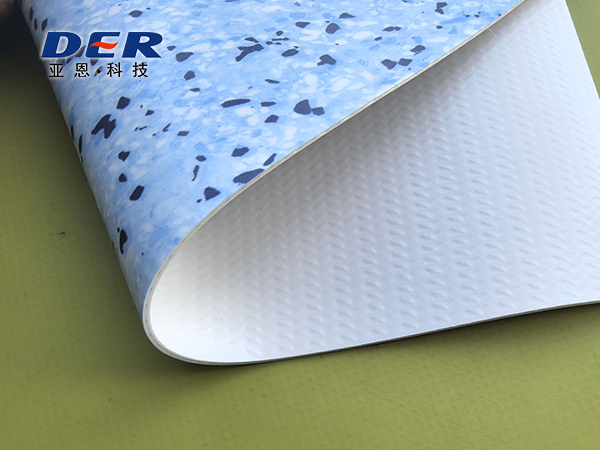
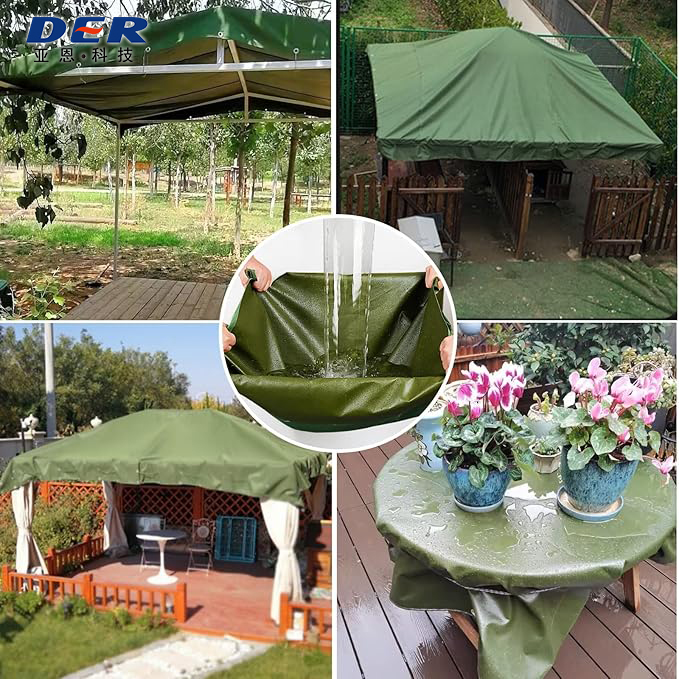
Our products are widely used in our residential and industrial area, which can be used for producing tents, outdoor covering, flexible ventilation tube, water bladders, inflatable castles, architecture membrane structures, etc. Our main products: PVC coated fabrics, PU/TPU coated fabrics, Oxford fabric, PVC ceiling film, flexible banner material. Welcome to our site and order online.