Chemical + concentration
Provide the chemical name, CAS number where available, product trade name and safety data sheet (SDS). State concentration and mixtures, including cleaning agents.

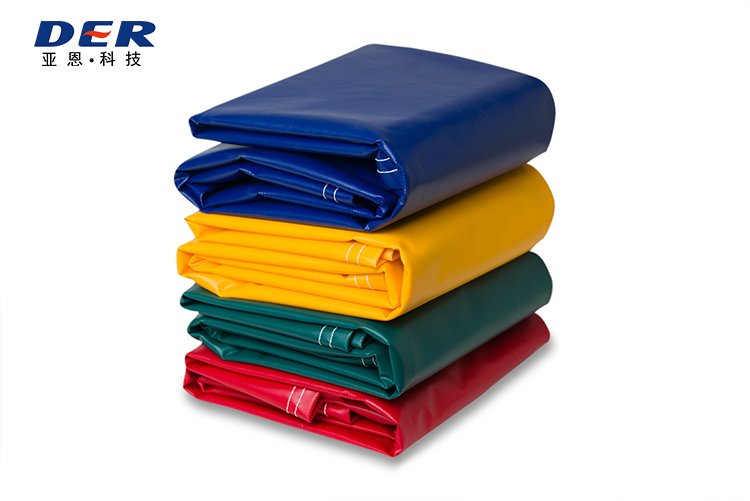

A chemical resistant PVC tarp starts with the liquid it will contact. DER factory reviews material construction, finished dimensions, seams and reinforcement for industrial covers with defined chemical exposure.

A chemical resistant tarp is a flexible protective cover specified to tolerate identified chemical contact under defined service conditions. A PVC version typically combines polyester reinforcement with a polyvinyl chloride coating, then adds seams, hems and attachment points for its intended use. Resistance depends on the complete material formulation, chemical concentration, temperature, contact duration and exposure method. Industrial buyers should specify these conditions before selecting a fabric weight or finished size. DER factory can review roll material, cut panels and custom finished tarps, with compatibility evidence and fabrication details agreed for the project.
Select a construction using the actual chemical contact conditions. A fabric weight, generic PVC chart or waterproof label cannot establish suitability for your finished tarp.
Provide the chemical name, CAS number where available, product trade name and safety data sheet (SDS). State concentration and mixtures, including cleaning agents.
Separate occasional splash, repeated wetting, one-sided contact and full immersion. Give the longest contact time, operating temperature and cleaning temperature.
Agree what evidence is needed for the selected coating, seams, folds and hardware. Define acceptance criteria before ordering a production quantity.
| Exposure to review | Information the buyer should supply | What the review must resolve |
|---|---|---|
| Acidic or alkaline liquids | Exact substance, concentration, additives, temperature and wet-contact duration | Compatibility of the selected flexible coating and finished joints with the actual solution |
| Oils, fuels or hydraulic fluids | Specific fluid or product grade, SDS and splash or immersion conditions | Changes in coating condition, dimensions, adhesion and required functional properties |
| Solvents or blended cleaners | Full formulation where available, cleaning frequency and rinse/dry sequence | Suitability of the exact coating, including repeated cleaning; avoid approval by generic family name |
| Salt solutions or wet process residues | Mixture composition, retained moisture, drying deposits and mechanical contact | Material compatibility together with abrasion, fastening and hardware requirements |
| Long contact, immersion or mixed exposure | All contacting liquids, both sides of the tarp, duration, temperature and loading | Whether a tarp construction is appropriate or a separately qualified liner/system is needed |
On smaller screens, scroll the table horizontally to compare all three columns.
Review the polymer surface and textile reinforcement as separate specification items, then confirm how they perform together.
Identify the coating formulation, finish and exposed side. Document any lacquer or surface treatment rather than treating every flexible PVC sheet as interchangeable. Explore DER factory’s PVC coated fabric range for the material starting point.
Specify tensile and tear performance for handling, attachment loads and service conditions. GSM measures mass per area; it does not independently establish strength or chemical resistance.
Compare the actual samples, coating adhesion, fabrication route and required performance. A construction label alone is insufficient evidence that a material suits a given chemical exposure.

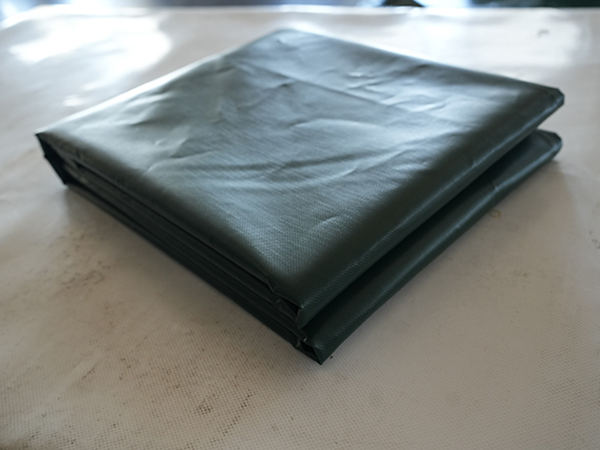
No chemical approval follows from GSM alone. Extra mass may affect handling and mechanical performance, but resistance must be evaluated for the selected coating and exposure. See heavy duty tarp selection when the cover also needs reinforcement for demanding handling.
Specify performance and finished-cover details together. The fields below guide a project quotation; they are not a published stock specification or a blanket compatibility claim.
| Specification field | Supply direction / confirmation needed | Buyer decision |
|---|---|---|
| Material and construction | PVC-coated polyester or another project-reviewed construction | Approve the exact material against the named chemical exposure |
| Chemical compatibility | Project-specific; test evidence and acceptance criteria to be agreed | Name, concentration, temperature, time and contact method |
| Weight and thickness | Target GSM and measured thickness confirmed during quotation | Balance handling, mechanical requirements and coating construction |
| Roll width / panel arrangement | Available width and seam layout to be confirmed | Mark chemical-contact zones and preferred seam locations |
| Finished size and tolerance | Drawing-based dimensions, drops, openings and tolerance | Specify finished measurements after hems and assembly |
| Surface and color | Project selection, subject to material review | State required finish, exposed side and inspection needs |
| Strength and adhesion | Agreed methods, directions, units and acceptance values | Include tensile, tear, coating adhesion and relevant seam checks |
| Seams and reinforcement | Welding or another technically reviewed assembly method | Define contact, load and leakage requirements for joints |
| Hems and accessories | Webbing, reinforcement patches, grommets or D-rings after review | Choose position, spacing, exposed material and attachment method |
| Temperature and outdoor use | Service temperature and UV requirements confirmed for the selected grade | Include chemical-contact and cleaning conditions, not ambient temperature alone |
| Additional fire requirements | Separate review of required standard and compatible construction | Request the relevant evidence; chemical resistance does not establish fire performance |
| OEM and packing | Color, labels, logo, folding/rolling and quantity confirmed in the order | Review marking materials and packing method for the approved cover |
For projects with fire requirements, review the flame retardant tarp specification guide and confirm both requirements for the selected construction.
Send both with the contact temperature, duration and quantity to begin the material and fabrication review.
Material compatibility is one part of a finished tarp specification. Include every joint and accessory that may contact the liquid or carry tension.
Mark the expected wet zone on the drawing. Review hot-air or high-frequency welding for a compatible PVC construction. Specify joint strength and leakage checks separately; a welded joint still needs qualification for its intended service.
Define reinforced corners, webbing and grommet or D-ring positions. Include the chemical exposure of metal hardware, thread, straps and patches in the review. Check the installed load path instead of selecting hardware by appearance.
Check fit, access openings, folds, removal and cleaning. For wet-contact applications, include representative fabricated joints in the agreed evaluation. DER factory’s custom tarp fabrication options provide a starting point for the drawing and assembly brief.
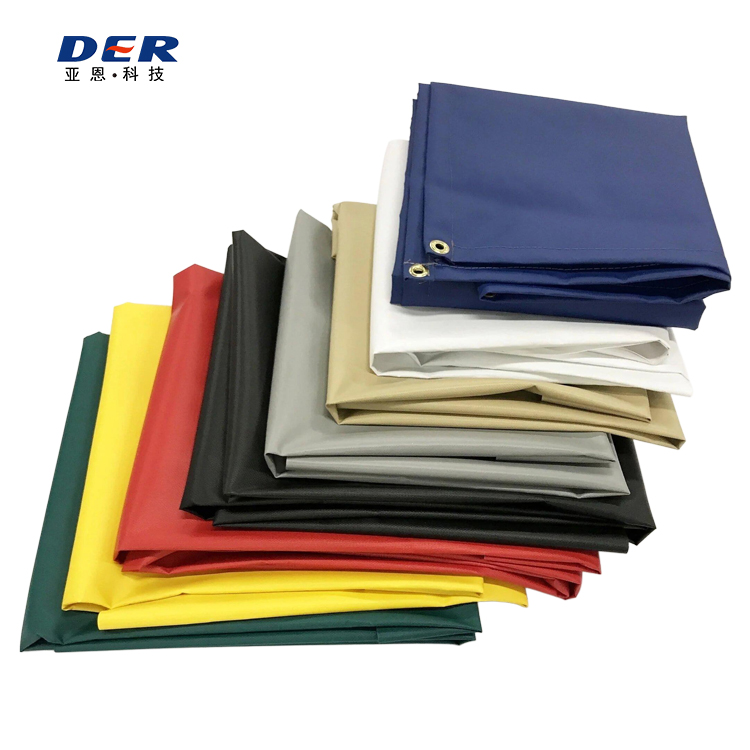
Chemical-exposure tarps may be reviewed for equipment covers, removable splash shields and process-area covers. Each use needs its own exposure and mechanical brief.
For machinery or components near a process area, identify the expected splash and cleaning liquids. Specify fit, access openings, contact with edges and how the cover is removed.
For a curtain or shield, define liquid contact on each face and the opening cycle. Review seams, mounting, cleaning and the function of the assembled shield.
State both chemical contact and weather exposure. Review water-shedding geometry, anchoring, sunlight, abrasion and repeated folding alongside material compatibility.
Identify the cleaning product, dilution, temperature and repeat cycle. Describe rinsing and drying so evaluation reflects the actual maintenance process.
Agree a test plan for the exact material and exposure, then compare relevant properties before and after contact. Include representative finished joints where the application requires them.
Record the liquid, concentration, temperature, duration and exposed side. Include mixtures and repeat cycles in the agreed service brief.
Identify the proposed grade, surface system, thickness and fabrication method. Retain an unexposed reference and record the sample identity.
Select checks such as appearance, mass or dimensions, strength, adhesion and relevant joint performance. Set acceptance limits before testing.
Confirm the approved material, drawing, seam method, reinforcement and inspection requirements. Review changes to formulation or service conditions.
Test-method references: ISO 6450:2021 addresses liquid exposure of rubber- or plastics-coated fabrics using full or one-sided immersion. ASTM D751-26 includes coated-fabric methods for dimensions/mass, breaking and tearing strength, hydrostatic resistance, coating adhesion and seams. These references describe methods, not a DER factory certification or an application pass result. Agree the applicable methods and criteria during quotation.
Inspect the proposed production cover. The order brief should cover material identification, coating condition, agreed weight/thickness, finished dimensions, joints, reinforcement placement, hardware and packing. Any required laboratory evidence should be confirmed for the selected construction.
DER factory supplies coated materials and custom tarps. For chemical-contact projects, bring material review, fabrication and procurement requirements into one confirmed specification.
Request roll goods when your fabricator controls assembly. Request finished covers when panel layout, hems, reinforcement and packing need to be agreed as one delivery. Include fabricator requirements in either case.
Review sizes, colors, labels, logo placement, accessories and packing against the approved construction. A repeat-order record should identify the material, drawing revision and inspection requirements.
Material formulation, testing, panel yield, seam quantity, reinforcement, hardware and packing affect the quote. Compare equivalent briefs using the tarpaulin cost guide. MOQ and lead time are confirmed for the actual order.
A complete brief helps DER factory review a chemical resistant tarp for your intended use and quote the required fabrication.
If the material is undecided, send the exposure brief first. Final grade, compatibility, testing, MOQ and delivery timing are confirmed during project review.
Add your SDS and drawing when sending the enquiry.
A PVC tarp may be suitable for a defined chemical exposure, but the material name alone does not establish compatibility. Review the exact flexible coating, chemical concentration, temperature, contact duration and finished construction. Request evidence for the proposed material and conditions.
These broad chemical families are not enough to approve a tarp. Provide the exact substance or product, concentration, SDS and service conditions. One grade should not be assumed suitable for every acid, oil, solvent or mixture; select the material after compatibility review.
There is no universal GSM that proves chemical resistance. Select the compatible coating first, then specify weight, reinforcement and thickness for handling, tear performance, abrasion and fabrication. Confirm the agreed values and test requirements during quotation.
Waterproof performance does not establish chemical compatibility or containment-system suitability. A liner or containment assembly needs a separate specification covering liquid contact, joints, loading, supports and leakage requirements. A protective tarp should not be assumed approved for chemical storage.
DER factory can review custom dimensions, panel arrangements, hems, reinforcement, grommets and D-rings for a finished tarp. Welding or other assembly methods depend on the selected material and intended use. Send a drawing and exposure brief so the details can be confirmed.
Agree chemical-contact conditions and acceptance criteria for the exact material. Compare relevant properties before and after exposure, and include representative fabricated joints where required. ISO 6450 addresses liquid resistance of coated fabrics; ASTM D751 includes relevant physical and seam test methods. The methods and evidence must be confirmed for the project.
The proposed material, finished dimensions, fabrication, accessories, testing, quantity and packing determine the quotation. Ask DER factory to confirm MOQ, sample or prototype availability and lead time against that specification. No universal price or delivery period applies to every custom chemical-contact tarp.
Send the chemical/SDS, concentration, contact temperature and time, finished dimensions and quantity. DER factory will review the material and fabrication requirements for your quotation.


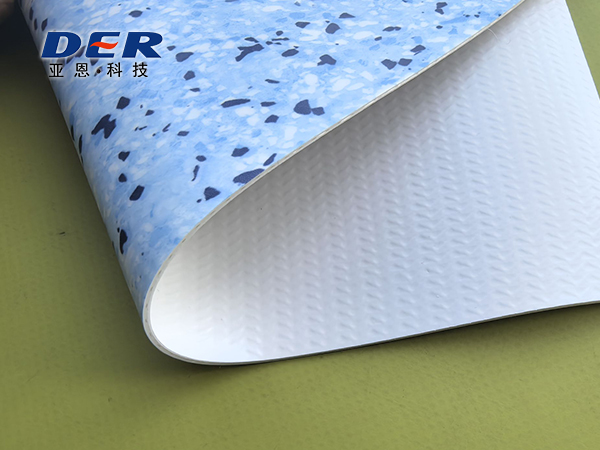
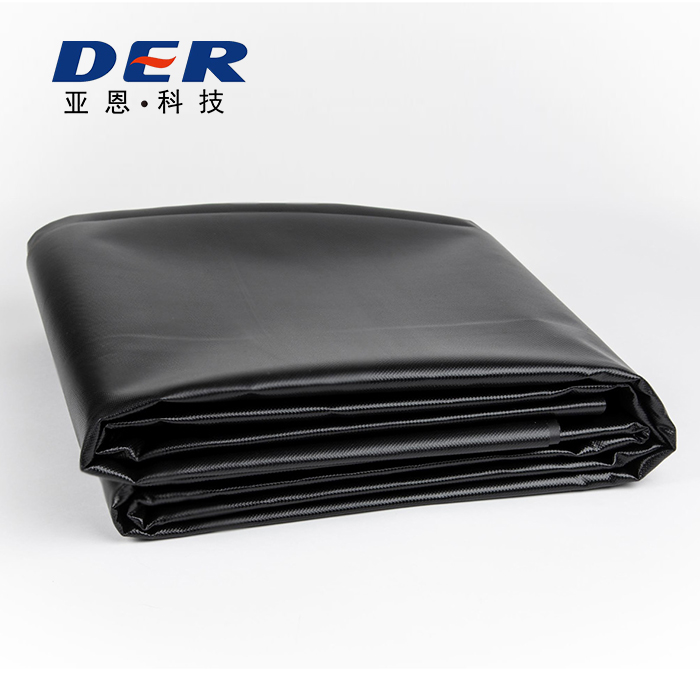
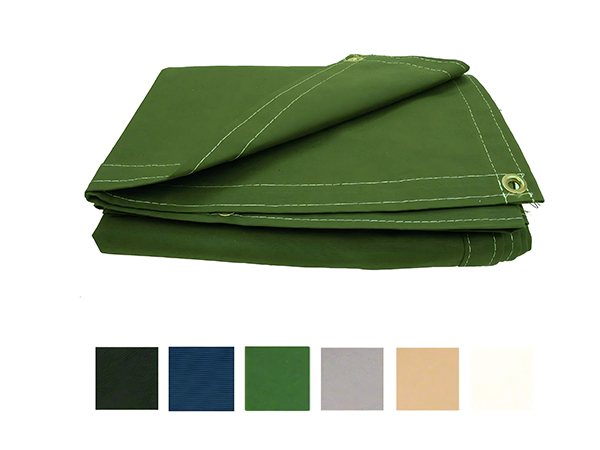

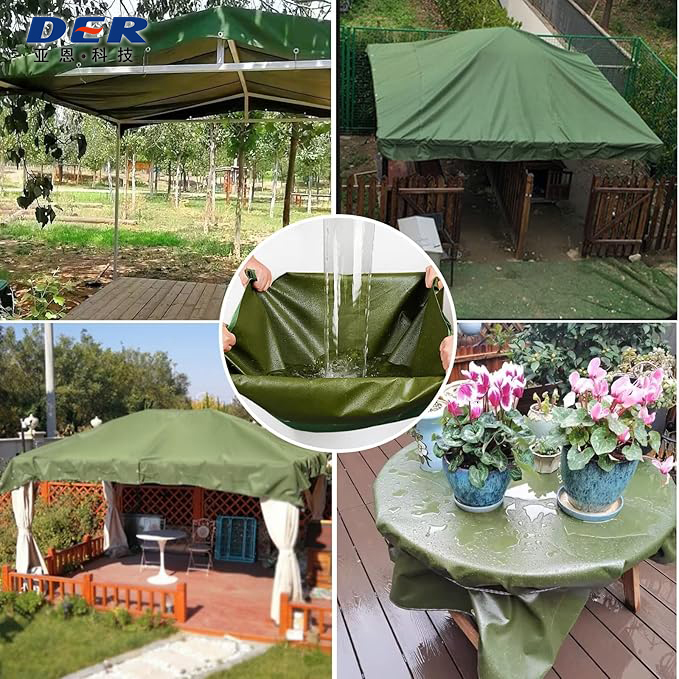
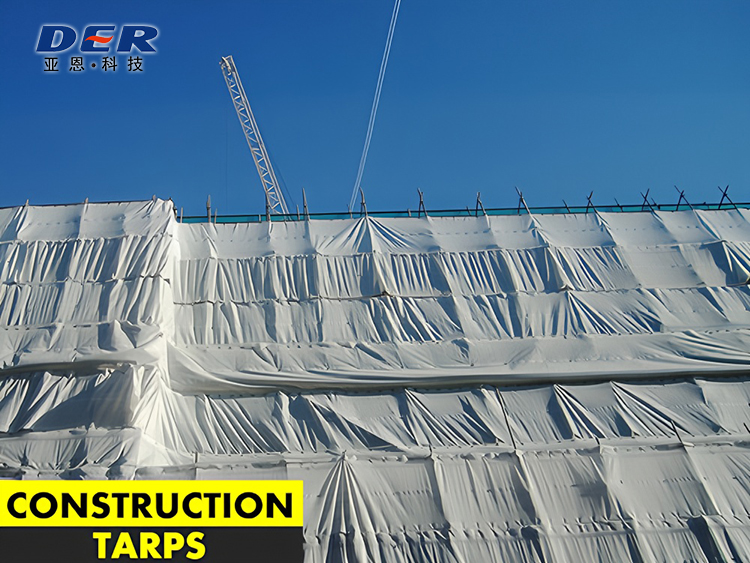
Our products are widely used in our residential and industrial area, which can be used for producing tents, outdoor covering, flexible ventilation tube, water bladders, inflatable castles, architecture membrane structures, etc. Our main products: PVC coated fabrics, PU/TPU coated fabrics, Oxford fabric, PVC ceiling film, flexible banner material. Welcome to our site and order online.