Reinforced substrate
Base cloth, coating adhesion, tear resistance and flexibility affect how the sheet behaves under handling and repeated pulling. Two fabrics with similar GSM can have different textile reinforcement and coating build.

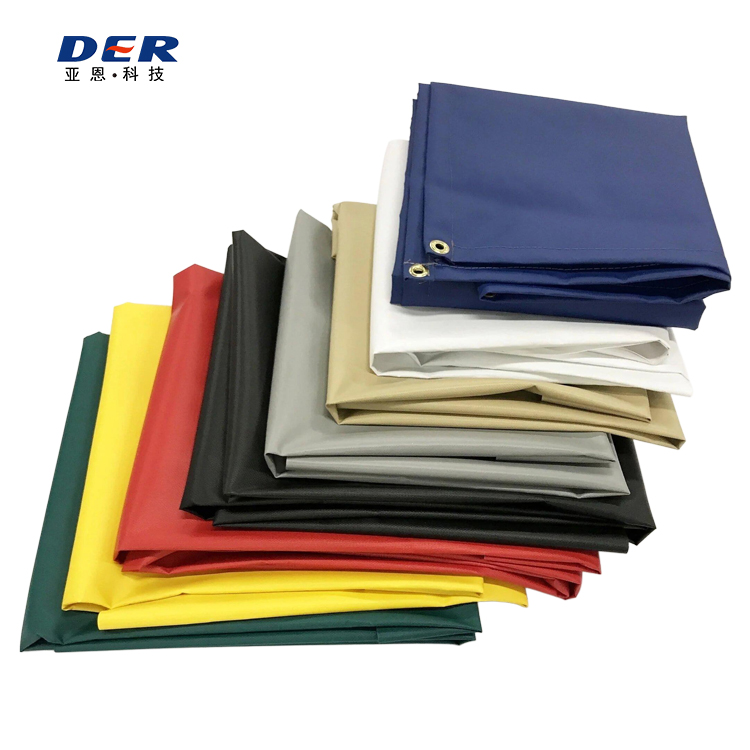
Specify the cover and its attachment system together. DER factory supplies custom grommet tarps with application-matched fabric, reinforced hems and drawing-based eyelet layouts for equipment, construction, transport and bulk purchasing.

A tarp with grommets is a protective sheet with metal rings reinforcing holes along its edges, corners or selected attachment points. These holes connect the tarp to compatible ropes, lacing, bungee cords or hooks. For a reusable industrial cover, the ring is one part of the assembly: the washer, folded hem, webbing or backing patch and main fabric must also carry the pull. A heavy duty tarp with grommets should therefore be selected by the complete edge construction and anchor layout, rather than by fabric weight or metal type alone.
For a waterproof vinyl tarp with grommets, woven polyester supplies the reinforcement and polyvinyl chloride (PVC) provides the coated surface. Welding can form larger panels; edge finishing creates zones for eyelets and other hardware. Compare the underlying PVC coated polyester fabric before specifying the finished edge.
Send the application, finished dimensions, quantity and a marked drawing. Material, color, seams, eyelet coordinates, reinforcement, printing and packing can be reviewed for custom tarp manufacturing. Final hardware and performance requirements are agreed during quotation and sample approval.
A stronger ring cannot compensate for weak fabric around it. The useful specification follows the attachment force into the reinforced edge and then into the tarp body.
Base cloth, coating adhesion, tear resistance and flexibility affect how the sheet behaves under handling and repeated pulling. Two fabrics with similar GSM can have different textile reinforcement and coating build.
Hem width, folded layers, webbing and local patches distribute load around the hole. A rope in the hem supports the perimeter, but does not automatically create adequate backing for every grommet.
The eyelet opening must fit the connector. Flange size, washer type, barrel length and setting quality must also match the finished stack thickness. A loose setting can move and abrade the coating.
For a reusable cover, review the whole heavy duty tarp construction, including corners, seams and wear zones.
There is no single standard configuration for every grommet tarp. Use this table to define a production drawing and acceptance criteria. Values below are specification choices to confirm, rather than guaranteed stock specifications.
| Specification | Direction to review | What the buyer should define |
|---|---|---|
| Material & structure | PVC-coated polyester; other constructions after review | Application, substrate, coating, surface finish and required fabric performance. |
| Weight & thickness | Application-dependent; confirm on the selected grade | Finished GSM and measured thickness separately. Weight does not establish edge strength. |
| Finished dimensions | Drawing-based length, width, shape and seams | Dimensions after hemming, measurement conditions and agreed tolerances. |
| Eyelet opening | Matched to the actual connector | Installed clear opening in mm or inches, plus flange and barrel details. Do not rely only on a size number. |
| Metal & finish | Brass, stainless steel or aluminum to discuss | Alloy or grade, finish, corrosion environment and washer design; availability to confirm. |
| Spacing & position | All sides, selected edges or individual coordinates | Center-to-center pitch, maximum interval, end offsets, hole count and center-to-edge distance. |
| Hem & reinforcement | Folded/welded edge, webbing or backing patches | Hem width, reinforcement width, corner build-up and eyelet position within the reinforced zone. |
| Seams & accessories | Welded panels; sewing where appropriate; mixed fixings | Seam placement, sealed areas, D-rings, loops, straps, pockets or access flaps. |
| Exposure requirements | UV, cold-flex and FR directions subject to review | Outdoor duration, temperature, required standard and finished-product testing scope. |
| Acceptance & packing | Approved sample and order-specific inspection plan | Pull-out test method, fit check, labels, folding/rolling, carton and destination. |
Roll width, tensile/tear values, temperature limits, MOQ and lead time must be confirmed for the selected construction. No wind-load or attachment-load rating is implied by this table.
Already have an old cover? Send its dimensions and photos of the damaged eyelets, hems and actual anchors. A marked drawing is more useful than a request for “extra strong grommets.”
Discuss My Specification ↗Specify spacing around the actual anchors. Intervals such as 18 or 24 inches appear in stock products, but none is a universal design rule. More holes do not establish a safe load capacity.
Mark the viewing side, seam locations, corners and pulling direction. Uniform spacing works only when it matches the frame or allows suitable lacing. Fixed hooks may need exact individual hole coordinates.
With the first and last hole centers each 100 mm from the ends, the usable span is 4,000 − 100 − 100 = 3,800 mm. Divide by the maximum interval and round up: 3,800 ÷ 500 → 8 intervals. Equal spacing becomes 475 mm, giving 9 holes along that edge.
This is a geometry example, not a load recommendation. List holes separately on each edge and resolve corner positions on the full drawing; do not turn this example into a perimeter count without checking the corners.
Keep unit conversions accurate: 12 in = 304.8 mm; 18 in = 457.2 mm; 24 in = 609.6 mm. A 600 mm pitch and a 24-inch pitch are different dimensions.
Choose by service conditions, compatible connectors and the supporting edge. Grommets, D-rings and loops solve different attachment problems; none is automatically stronger in every construction.
PVC-coated polyester is a practical direction for reusable waterproof covers and welded fabrication. PE woven tarps can suit lighter handling or temporary coverage where cost and portability matter. Compare finished assemblies under the same conditions; weight, thickness and material names alone do not prove service life.
Grommets give compact holes for compatible lacing and connectors. D-rings can connect to reinforced webbing tabs or defined strap locations. Loops can reduce metal contact in selected zones. Review how each detail transfers force into the fabric, including the real pull angle.
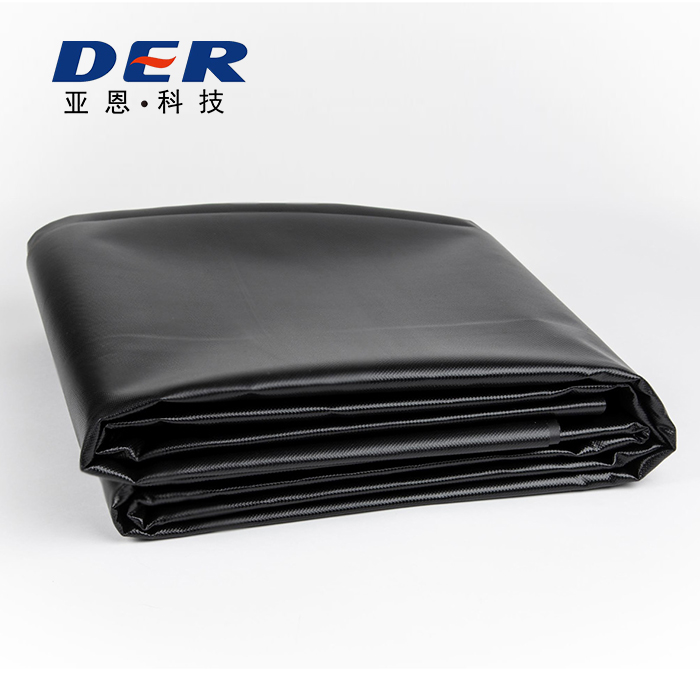
A number such as “#2” is insufficient by itself because dimensions vary across grommet constructions. Specify the installed clear opening and hardware type, and confirm connector clearance on the finished sample.
A “reinforced tarp with grommets” needs a defined hem and patch design. A material tensile report does not establish the resistance of a hole near the edge. Inspect the assembled detail and agree an appropriate test.
Start with the object, frame and handling pattern. The same finished size can require very different corners, seams and attachment rows.
| Application | Specification priority | Reason |
|---|---|---|
| Equipment & outdoor storage | Finished fit, drape, abrasion patches and anchor access | Sharp contact zones and inaccessible eyelets can damage the cover or make installation difficult. |
| Construction enclosure | Frame coordinates, continuous edge reinforcement, drainage and required FR grade | Large exposed sheets and repeated installation require a reviewed support and fastening plan. |
| Truck or trailer cover | Vehicle fixing rows, wear zones, pull direction and compatible connectors | Road vibration, handling and airflow require application-specific fabrication. Review the truck tarpaulin configuration. |
| Agricultural cover | Sunlight exposure, cleanability, repeated folding and actual tie points | Field handling and irregular loads make access, wear protection and maintenance important. |
| OEM / distributor program | Controlled drawings, sample approval, inspection, labels and packing | Repeat supply needs the same finished dimensions and attachment construction across orders. |
Where fire performance is specified, review the relevant flame retardant tarp requirements and agree the required standard. An FR material designation does not automatically qualify every finished enclosure.
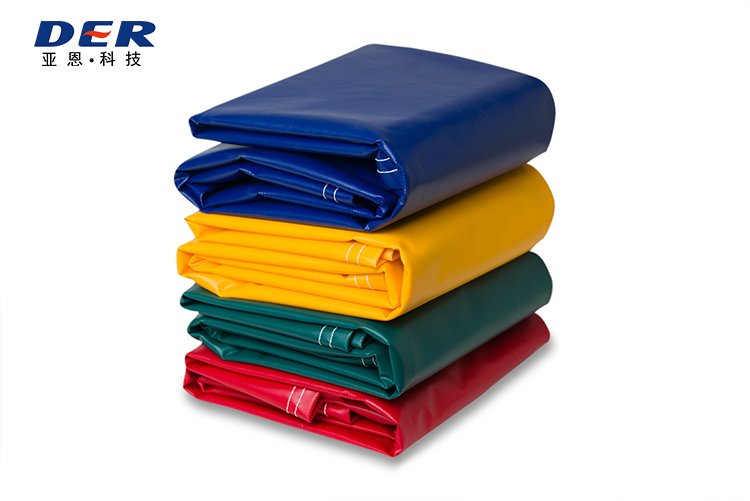

A fabric swatch cannot verify eyelet fit or pull-out behavior. Agree the finished drawing, a representative sample and the inspection plan before bulk production.
Measure finished length and width, seam positions, hem depth, hole centers, offsets and count against the drawing.
Inspect for loose or rotating rings, splits, sharp edges, washer seating and damage to the fabric or coating.
Agree pull direction, connector, clamping, conditioning and acceptance criterion. Record failure location and method, not only peak force.
Fit the cover to representative anchors, inspect tension distribution and approve folding, labels, packing and handling.
What does grommet pull-out testing tell you? It evaluates the assembled fixing point under defined conditions. Results cannot be treated as a universal working load or wind rating without the relevant design assessment. If repeated flexing, UV exposure or cold handling matters, specify the relevant conditioned evaluation as part of the approval plan.
Send the finished dimensions, application, quantity and drawing first. Then add the material direction, eyelet opening, spacing, offsets, reinforcement and required testing. The checklist below helps you assemble a message for DER factory.
Finished area, fabric grade, cutting waste, seams, eyelet count, metal choice, webbing, patches and inspection affect cost. Branding, packing and destination also matter. Compare quotations with the same drawing and acceptance requirements; see how tarpaulin manufacturing cost is built.
Sample arrangements, order minimums, available hardware and lead time are confirmed with the project specification.
A tarp with grommets is a protective sheet fitted with metal rings that reinforce attachment holes, usually along its hems and corners. The holes accept compatible rope, lacing, bungee cords or hooks. The eyelet, washer, reinforced hem and main fabric together determine how the attachment handles pull.
There is no universal spacing. Stock products often use intervals around 18 or 24 inches, while custom layouts can follow the actual anchors. Specify center-to-center spacing, corner offsets and whether a dimension is a maximum or an exact pitch. Exposure and edge construction must be reviewed separately; spacing alone is not a wind rating.
Choose by exposure, hardware compatibility and the approved construction. Brass is commonly used on outdoor tarps; an appropriate stainless steel grade can be considered for more corrosive environments. Aluminum is another option for lighter covers. Confirm alloy, finish, washer design and setting quality rather than assuming that one metal guarantees higher pull-out strength.
A waterproof fabric can shed rain, but an open grommet hole is a penetration. Place fixing holes outside the area that must stay dry and plan overlaps, seams and drainage. A finished grommet tarp should not be assumed suitable for immersion, liquid containment or standing-water loads.
Only after checking the fabric condition, hem depth and reinforcement. Use compatible grommets, washers and setting tools, and place the hole in a reinforced zone. A larger ring installed in damaged or unsupported fabric may still tear out. For repeated industrial use, approve a reinforced repair or a new finished tarp sample.
Match the attachment to a reinforced hem, add appropriate corner or local patches, align the pull with the intended anchors and avoid excessive tension or flapping. Inspect for loose rings, coating cracks and growing holes. Validate the finished attachment with an agreed pull-out test; fabric tensile strength alone does not establish grommet resistance.
DER factory can review drawing-based layouts for all four sides, selected edges or specific fixing points. Specify finished dimensions, hole positions, metal and opening size, reinforcement, seams and any D-rings, straps or pockets. Hardware availability and fabrication details are confirmed during quotation and sample approval.
Fabric construction, finished area, seam layout, eyelet count, hardware type, reinforcement, testing, printing and packing affect the quotation. MOQ, sample arrangements and lead time depend on the agreed design and order quantity. Send a drawing, application, quantity and destination for confirmation; no fixed price or delivery period applies to every custom tarp.
Send DER factory the application, finished size, quantity and anchor drawing. Add eyelet positions, reinforcement, material direction and any exposure or testing requirements for a project-specific quotation.
A marked drawing and photos of the anchors are enough to begin the specification discussion.
Request A Quote
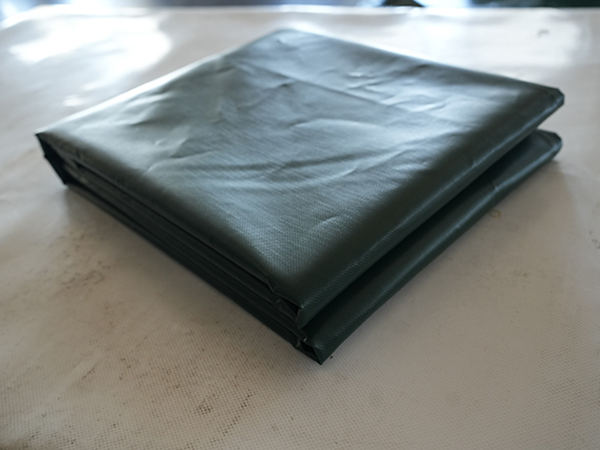


Our products are widely used in our residential and industrial area, which can be used for producing tents, outdoor covering, flexible ventilation tube, water bladders, inflatable castles, architecture membrane structures, etc. Our main products: PVC coated fabrics, PU/TPU coated fabrics, Oxford fabric, PVC ceiling film, flexible banner material. Welcome to our site and order online.