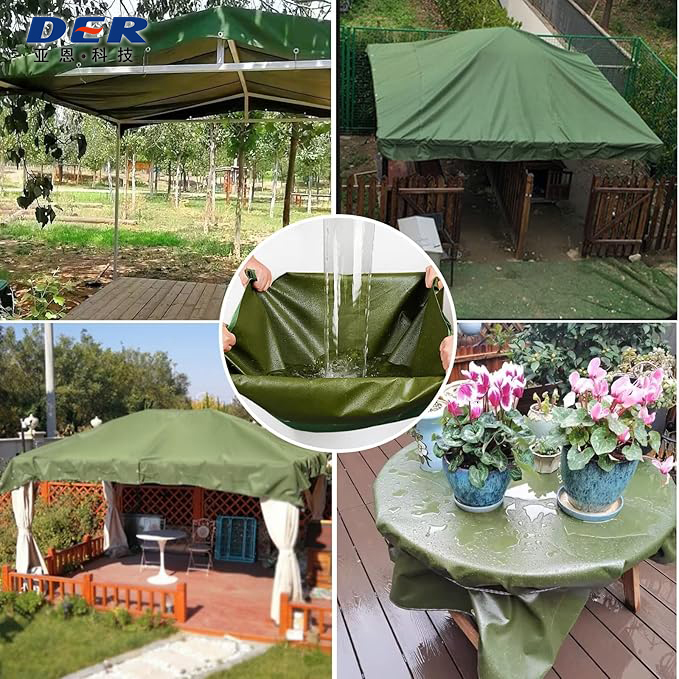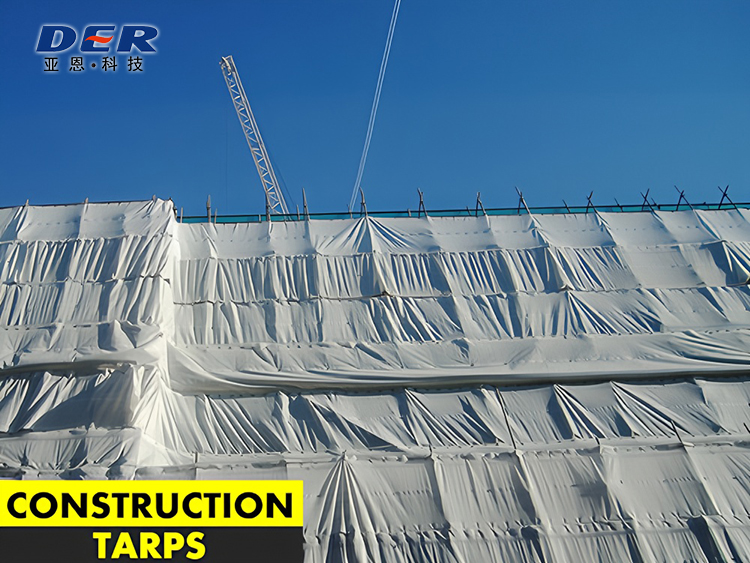


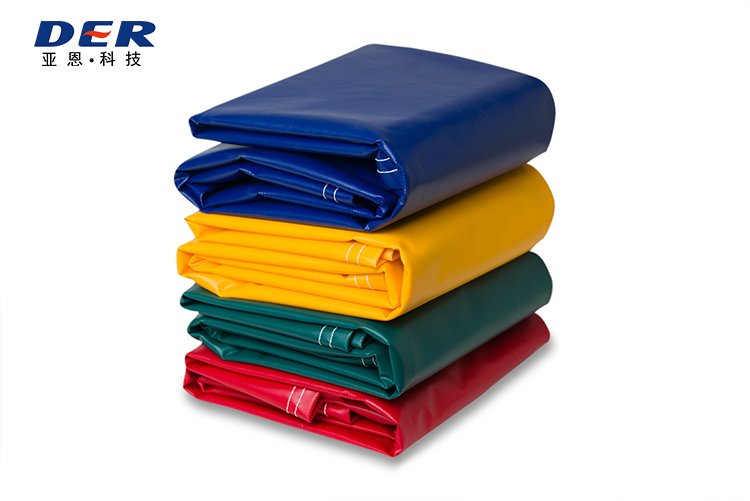
What GSM is best for tarpaulin in your application?
For temporary covers, start by comparing 80–150 GSM polyethylene (PE). For reusable general outdoor covers, evaluate 180–250 GSM PE. For industrial covers, 450–650 GSM polyvinyl chloride (PVC) coated polyester is a practical starting range; consider 650–900 GSM PVC when repeated handling or abrasion justifies added weight. These are sourcing directions, not guaranteed performance grades.
Choose the final construction using tensile and tear data, coating quality, seams, UV requirements, reinforcement and finished-cover weight—not GSM alone.
What does GSM mean for tarpaulin?
GSM means grams per square meter. A 200 GSM tarpaulin material has a nominal mass of 200 grams for each square meter. Specify whether the figure covers the complete coated fabric or only its textile reinforcement.
GSM is useful for estimating handling weight and comparing quotations within a similar construction. It does not directly measure thickness, tear resistance, waterproofness, UV stability or years of service.
PE tarpaulin commonly combines woven polyethylene reinforcement with laminated or coated surfaces. PVC tarpaulin commonly combines polyester reinforcement with a PVC coating or laminate. Their weights belong to different construction families; review the PVC tarp vs PE tarp comparison before treating two GSM figures as equivalent.

Tarpaulin GSM chart: compare the material and the job
Use this chart to shortlist a construction for sampling. Ranges overlap between suppliers; “heavy duty” is a sales description unless a purchase specification defines the required performance.
| Fabric weight | Material to compare | Useful starting application | Check before approval |
|---|---|---|---|
| 80–150 GSM | PE woven tarp | Temporary dust protection, occasional garden or short-duration covering | Exposure duration, supported pitch, coating continuity and reinforced corners |
| 180–250 GSM | PE woven tarp | Reusable garden, farm and outdoor storage covers where handling weight matters | UV formulation, finished size, weave and eyelet-zone strength |
| 300–450 GSM | Lighter PVC constructions | Light commercial panels, partitions and less demanding equipment covers | Base textile, fold behavior, coating adhesion and fabrication method |
| 450–550 GSM | PVC coated polyester | General industrial covers and fabricated weather-protection sheets | Tear and tensile requirements, seam quality and local wear points |
| 550–650 GSM | PVC coated polyester | Repeated-use equipment covers and transport-cover evaluation | System compatibility, reinforcement layout and finished handling mass |
| 650–900 GSM | Heavier PVC constructions | Higher-wear covers and repeated transport or outdoor handling | Demonstrated wear benefit, cold flexibility, hardware and operator handling |
| 900 GSM and above | Application-specific coated fabric | Specialty industrial fabrication where design requires added material mass | Project test requirements, support, seam design and handling equipment |
A PE tarp and PVC coated polyester fabric with similar GSM can differ substantially in reinforcement, coating, stiffness and fabrication behavior. Confirm the full technical data sheet for the selected grade.
Choose GSM by the work the tarp must do
The best tarpaulin weight balances protection, manageable handling and documented performance for the actual job.
Occasional use, easy carrying
Compare 80–150 GSM PE when the cover is temporary, supported and subject to limited rubbing. Moving to 180–250 GSM can be worth evaluating for more frequent use, but it does not replace suitable anchoring or a compatible UV formulation.
Tell the supplier how long the cover stays outside, how it is supported and whether it touches rough edges.
Repeated coverage, weather exposure
Start with 180–250 GSM PE if light handling remains a priority. Compare 450–650 GSM PVC coated polyester when repeated folding, fabrication and equipment contact become more demanding.
Ask separately about ventilation, water drainage, seam sealing and abrasion pads. Simply adding mass does not resolve condensation beneath a cover.
Match the roll system and cargo
For PVC truck-cover sourcing, compare 550–650 GSM initially, then evaluate 650–900 GSM for a defined wear requirement. System geometry, pulling cycles and tie-down loads can matter more than the headline weight.
The truck tarpaulin range provides the application context. Confirm compatibility with the vehicle and cover system; covering fabric does not establish a cargo-restraint rating.
Specify a complete fabric system
For PVC tent panels, 450–650 GSM is an initial material discussion, not a structural approval. Roof shape, panel span, seam loading, light transmission and flame-retardant requirements can change the specification.
Review PVC tent fabric options against the structure design. A tent or shelter rating cannot be inferred from GSM.
Unsure which range to sample? Send the use, finished dimensions, exposure and current failure problem.
Ask DER factory to review the specification →150 vs 200 GSM, and 650 vs 900 GSM
150 vs 200 GSM PE tarpaulin
At the same area, 200 GSM contains about 33% more material mass than 150 GSM. That can be useful when the added material is part of a better construction, but also increases carrying weight. A better UV formulation or reinforced edge may address the real problem more effectively than mass alone.
For occasional use, ask whether the lower-weight option meets the required tear, seam and exposure criteria. For repeat outdoor deployment, compare physical samples rather than assuming “200” means a fixed service life.
650 vs 900 GSM PVC tarpaulin
A 900 GSM sheet has about 38.5% more base material mass than a 650 GSM sheet of the same area. Additional mass may provide more body or coating reserve, depending on where it is added. It does not automatically increase reinforcement or seam strength by 38.5%.
If failure occurs only at corners or rubbing points, compare a suitable base fabric with local reinforcement against a heavier fabric throughout. Keep cold folding, fabrication and the lifting method in the decision.
A large tarp can be heavy even at a moderate GSM
Estimate base material mass by multiplying the material area by its GSM. Finished weight also includes seam overlaps, hems, webbing, patches, eyelets and other fittings.
Length (m) × width (m) × GSM ÷ 1,000 = base material mass (kg)
| Nominal GSM | Base material mass |
|---|---|
| 200 GSM | 9.6 kg |
| 450 GSM | 21.6 kg |
| 650 GSM | 31.2 kg |
| 900 GSM | 43.2 kg |
Moving from 650 to 900 GSM adds 12 kg of base material in this example, before extra finishing. Ask how the finished cover will be lifted, deployed, folded, dried and stored.
For imperial units, 18 oz/yd² is about 610 GSM and 22 oz/yd² about 746 GSM. See the GSM, oz and mil measurement guide for detailed conversions.

When extra GSM helps—and when another change matters more
Identify where the previous cover failed before increasing fabric weight. The weak point may be a joint, a fastening or the formulation rather than the fabric’s total mass.
| What you observe | Check first | Useful specification response |
|---|---|---|
| Holes at repeated contact points | Rough or sharp edges, rubbing path and coating wear | Compare abrasion performance; consider wear patches and smoother support before adding weight everywhere. |
| Eyelets pull out or corners split | Load transfer, spacing, patches, webbing and hem construction | Redesign the reinforced attachment zone; heavier center fabric alone may leave the edge weak. |
| Surface becomes brittle outside | Formulation, actual UV exposure, heat and cleaning history | Agree a weathering requirement and retained-performance criteria; do not equate GSM with UV life. |
| Cracking follows fold lines | Handling temperature, bend severity, aging and coating flexibility | Evaluate the selected grade under the intended folding and cold conditions. |
| Water enters along joins | Seam process, coating compatibility and penetrations | Approve a fabricated seam sample and agreed water-resistance test rather than increasing GSM alone. |
What to verify on a tarpaulin sample
Approve the finished fabric and a representative fabricated detail. A small swatch can show appearance and flexibility, but cannot demonstrate the performance of a full-size seam or reinforced corner.
- Confirm the construction. Record PE or PVC coated polyester, coated or laminated construction, reinforcement and relevant surface finish.
- Define the GSM basis and tolerance. State total finished-fabric mass per area, the measurement procedure, sampling locations and acceptance limits.
- Compare performance on the same basis. Request tensile and tear values with direction, units, test method and conditioning. Numbers from different methods may not be comparable.
- Check the finished detail. Review seam overlap, welding or sealing method, hem layout, webbing, patch size and eyelet or D-ring attachment.
- Match exposure requirements. Define UV, cold-folding, water-resistance or flame-retardant requirements where relevant, then agree evidence for the selected grade.
- Retain an approved reference. Match production inspection to the signed specification, sample identification and agreed batch acceptance plan.
Use the tarpaulin specification checklist to turn the shortlisted GSM into measurable purchasing requirements.
Technical reference: ISO 2286-2 describes methods for separating total, coating and substrate mass per area in coated fabrics. Referencing a test method here does not mean a DER factory grade has been tested or certified to it.
Get comparable quotes for your selected GSM
For wholesale tarpaulin and OEM cover sourcing, compare quotations against the same fabric and fabrication specification. Material mass, reinforcement, coating formulation, roll width, panel layout, finishing, test requirements and packing all influence cost.
DER factory’s custom tarpaulin cover service can be discussed as roll goods, cut panels or finished covers. Ask for the available material grades, dimensions, reinforcement, color and finishing options for your application; confirm feasibility and the approved sample before production.
A useful quotation identifies what is included: finished dimensions rather than an ambiguous cut size, specified seam and edge details, and agreed performance evidence. MOQ, sampling arrangements and lead time depend on the chosen construction and order details and should be confirmed during quotation.
Send these details with your inquiry
- Application, country and exposure conditions
- Finished dimensions or panel drawing; roll goods or finished cover
- Preferred material and target GSM, if already known
- Current failure issue, handling method and reference sample
- Seams, reinforced areas, fastenings, color and printing
- Quantity, packing, destination and required test criteria
Tarpaulin GSM: frequently asked questions
What GSM is best for outdoor tarpaulin?
For general outdoor covering, 180–250 GSM PE is a useful comparison range when low handling weight matters. For repeatedly handled industrial covers, consider 450–650 GSM PVC coated polyester, or 650–900 GSM where wear justifies the extra mass. Confirm UV performance, seams, reinforcement and site exposure before selecting a grade.
Is 200 GSM tarpaulin good enough?
A 200 GSM PE tarp can be a reasonable candidate for garden, storage and general weather covering with appropriate support and reinforcement. It is not automatically suitable for repeated truck use, sharp contact, severe wind or long service. Check the actual construction and required performance.
Is 150 GSM or 200 GSM tarpaulin better?
Within a comparable PE construction, 200 GSM contains about 33% more material mass per square meter than 150 GSM. It also makes the same-size sheet about 33% heavier before accessories. Compare tear strength, UV formulation and edge construction; the extra mass does not establish a proportional improvement in durability.
Is 500 GSM tarpaulin heavy duty?
A 500 GSM PVC coated polyester fabric falls within a useful industrial-cover evaluation range, but “heavy duty” is not a universal performance grade. Specify tensile and tear results, coating adhesion, seam strength and reinforcement rather than accepting the label alone.
Should I choose 650 GSM or 900 GSM PVC tarpaulin?
Evaluate 650 GSM first when repeated-use protection and manageable sheet weight must be balanced. Consider 900 GSM when the actual abrasion or construction requirement supports it. A 900 GSM sheet has about 38.5% more base material mass than a 650 GSM sheet of the same area; it is not automatically 38.5% stronger.
Does higher GSM mean a stronger or more waterproof tarp?
No. GSM measures material mass per area. Reinforcement, coating quality, seams and finishing control the performance of a finished tarp. A heavier sheet can still fail at a weak seam or eyelet, and a lighter construction can be waterproof when its barrier and seams are suitable.
What GSM is best for a truck tarpaulin?
For PVC coated polyester truck-cover sourcing, 550–650 GSM is a useful initial comparison range; 650–900 GSM may be evaluated for more demanding wear or frequent use. Match the final fabric to the tarp system, cargo contact, tie-down design, climate and handling method. Cover fabric is not a substitute for a cargo restraint system.
How many millimeters is 650 GSM tarpaulin?
There is no universal millimeter thickness for 650 GSM. GSM is mass per area, while millimeters measure thickness. The relationship changes with coating formulation, reinforcement, density and surface finish. Ask for the measured thickness and its tolerance separately from finished-fabric GSM.
Choose a tarpaulin weight your job can justify
Send DER factory your application, dimensions, quantity, handling conditions and any required performance standards. Include the current tarp or technical data sheet if available, so the material and reinforcement can be reviewed together.
Ask for a material recommendation, sample options and a quotation based on the confirmed specification.