UV and heat
Weathering can fade, harden or crack exposed PVC surfaces. High radiation and repeated hot/cold cycling make formulation and finish important.

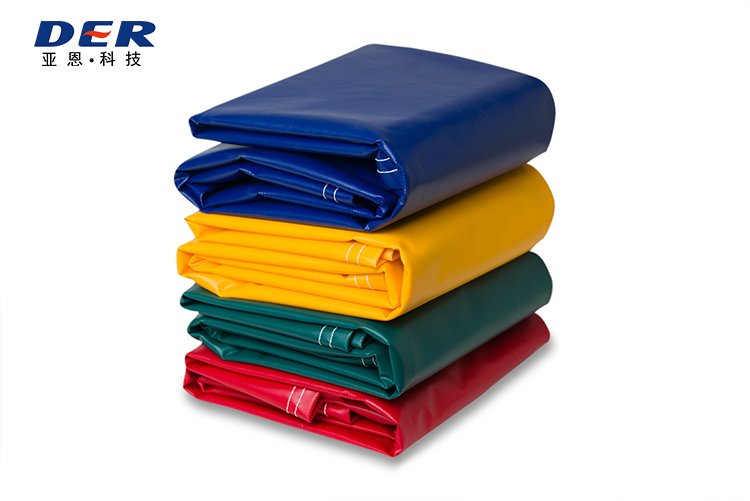

An industrial PVC tarp can protect equipment for years—but sunlight, wind movement and a single badly stressed attachment point can shorten its life. Learn realistic planning ranges, how to inspect an aging tarp and what to request when buying for long-term use.
For distributors, industrial fabricators, fleet buyers and custom-cover OEMs.
A UV-stabilized PVC-coated polyester tarp is commonly planned for about 3–5 years of continuous outdoor use. Enhanced heavy PVC systems with suitable formulation, protective finish and sound fabrication may be planned for approximately 5–8+ years under favorable conditions. Some tarps last longer, particularly with seasonal or sheltered use. These are general sourcing ranges, not a product life guarantee.
Illustrative continuous outdoor planning direction where wear is controlled.
Potentially appropriate under managed exposure, fit and maintenance.
Do not buy against a ten-year claim without a specific grade and evidence.
Useful life ends when the tarp no longer meets its purpose, such as keeping water out, securing a load or transferring tie-down forces safely. A faded cover may still work; a newer cover with torn grommets or an open seam may already need removal. A fixed shelter is not exposed to the same repeated motion as a truck cover. Review the material fundamentals in PVC coated fabric construction.
Estimates reflect general industrial sourcing discussions and vary with climate, installed geometry, handling, coating formulation, reinforcement and acceptance criteria. DER factory has not represented these ranges as a tested service-life warranty for any specific order.
Calendar years alone are not a fair comparison. Start with how many hours the cover is exposed, how often it moves and which component carries the greatest load.
| Use condition | Likely life-limiting mechanism | Material priority | Cover-design priority |
|---|---|---|---|
| Permanent outdoor equipment cover | UV, heat cycling, retained water, fixed-point tension | Outdoor UV formulation, coating stability, flexibility | Drainage slope, tension relief, reinforced attachment zones |
| Truck and trailer tarpaulin | Wind flutter, cargo-corner abrasion, daily fastening | Tear and abrasion performance, weldable PVC surface | Contact pads, webbing, hem design and correctly spaced hardware |
| Seasonal farm or storage cover | Sun exposure during use; dirt and folds during storage | Suitable UV grade and fold durability | Secure anchoring and dry, protected off-season storage |
| Construction site protection | Dragging, punctures, snagging and temporary fixtures | Tear resistance and repairability | Wear patches, accessible repairs, safe securing method |
| Industrial or chemical-adjacent cover | Oil, chemicals, heat and contact abrasion | Confirm specific compatibility and operating range | Contamination control, isolation and inspection access |
On a phone, swipe the table sideways.
For moving cargo covers, see truck tarpaulin selection. For a heavier-duty starting point, review heavy-duty tarp options. The life of the actual finished tarp may be limited by the tie-down arrangement even when the PVC fabric remains serviceable.

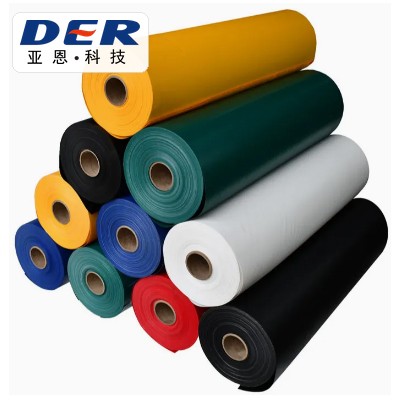
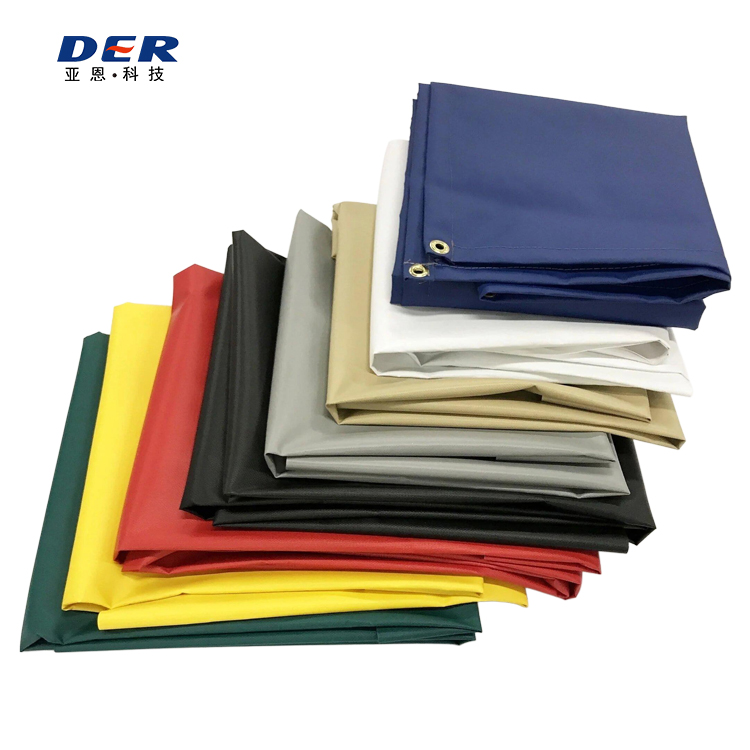
In many installations, the first failure is local rather than an even, all-over loss of fabric performance. Inspect these six causes before deciding that a thicker tarp will solve the problem.
Weathering can fade, harden or crack exposed PVC surfaces. High radiation and repeated hot/cold cycling make formulation and finish important.
Loose fabric snaps in wind and repeatedly flexes the same lines. A correctly fitted and tensioned cover may resist fatigue better than a loose heavier one.
Rubbing against steel, wood or concrete can remove coating and expose yarns. Local wear pads may be more useful than increasing weight across the whole sheet.
Pooled water adds sustained load. A waterproof sheet still needs slope, drainage and adequate support.
Eyelets, D-rings and corners concentrate force. If webbing, patch size or spacing is insufficient, attachment points can fail before the central tarp.
Repeated folds, embedded grit, incompatible chemicals and damp storage may promote localized deterioration or difficult-to-clean damage.
Waterproof protection also depends on joints and penetrations, not simply the PVC membrane. The waterproof tarps guide provides related context for specifying complete covers.
GSM is mass per square meter, not a weathering rating. PVC-coated polyester contains a woven load-bearing textile and a polymer protective layer. Two tarps with the same weight can use different yarns, coating ratios, adhesion systems, weathering additives, finishes and construction details.
Compare fabric weight with yarn construction, actual test values and finishing. See the GSM, ounce and mil guide for the distinction between mass and thickness.

Ask for the exact exposure, finish, fabric structure, seam design and agreed performance evidence—not only “heavy duty”.
No. A specified number of accelerated-weathering hours cannot be converted directly into outdoor calendar years. Test cycle, UV spectrum, irradiance, moisture, temperature, specimen condition and pass/fail property all affect the result.
For example, ASTM G154 or ISO 4892-3 may be relevant to agreed weathering assessments. A standard name without test conditions is not a lifespan prediction.
What changed: tensile strength, tear strength, flexibility, coating condition, color or another specified parameter? Determine acceptable retention criteria.
Verify base fabric, PVC formulation, color, surface finish and production construction; a report for another material may not apply.
Panel welding, edge reinforcement and attachment forces may govern useful life even when the base sheet ages well.
Technical references: ASTM G154 scope, ISO 4892-3:2024, and ACT guidance on coated fabric lightfastness. These describe methods or guidance; this article does not imply DER factory has tested a named SKU against them.
Assess weather protection and structural function separately. Use this field matrix as a practical starting point; an engineer or responsible site manager should determine acceptance for critical loads and safety-sensitive protection.
| Inspection area | Continue monitoring | Repair / re-check | Replace or remove from service |
|---|---|---|---|
| PVC surface | Intact, flexible; minor cosmetic fading | One localized cut, pinhole or abrasion mark | Widespread cracking, brittleness, coating loss or repeated leaking |
| Polyester reinforcement | No exposed or broken yarns | Limited local damage outside critical load zones | Broken yarns, spreading tears or reduced load-bearing integrity |
| Welds and seams | Continuous, bonded joint with no opening | Localized defect with repairable sound surrounding fabric | Widespread separation or repeated failure after repair |
| Hems, webbing, eyelets | No stretching, distortion or concentrated wear | One local reinforcement or hardware defect | Multiple pull-outs, tearing at anchors or inadequate remaining fabric |
| Water drainage & fit | Even tension and no pooling | Re-tension, add padding or correct support geometry | Unsafe trapped-water loads or an installation that cannot be secured safely |
On a phone, swipe the inspection table horizontally.
Repair is most credible when damage is isolated, the surrounding PVC remains flexible and compatible repair methods can be validated. It is not a substitute for replacing a tarp with widespread structural degradation. For repeat orders, agree on seam and reinforcement drawings through custom tarp fabrication so repaired and replacement batches follow the same design.
The most effective maintenance work targets the actual failure mechanism: loose movement, abrasion points, overloaded hardware, contamination and poor storage.
Check dimensions and attachment layout, protect corners, support the span and avoid water pooling. Do not over-tighten individual grommets.
After strong winds or unusual loads, examine seams, tie-down zones and contact points. Address looseness before repeated flapping causes fatigue.
Use a soft brush, water and mild compatible detergent when appropriate. Rinse contaminants; avoid aggressive solvents unless the grade is confirmed compatible.
Repair small defects early with an approved method. Before storing, dry and fold loosely in a protected location away from sharp edges.
A tarp used three months each year can have a longer calendar life than the same design under permanent sun and wind. But folding, loading, dragging and storing also create wear. Record exposure months, handling cycles, repairs and recurring failure zones rather than only purchase date.
Before ordering a replacement, compare the two materials using the PVC vs PE tarp guide. A lower-cost PE sheet may be reasonable for short temporary coverage, while reinforced PVC often merits evaluation for repeat fabrication and demanding use.
Ask the supplier to explain the expected failure mode and acceptance criteria. A target service interval belongs in the design brief, not as a substitute for the material specification.
Permanent or seasonal? Truck, static equipment, agriculture or construction? Climate, sunlight, wind, temperature and rubbing surfaces.
PVC-coated or laminated polyester, GSM and thickness where useful, yarn and weave construction, protective finish and color.
Exact size, panel layout, welding or sewing detail, rain drainage, fold lines and areas needing replaceable wear pads.
Grommet or D-ring type and spacing, webbing, corner patches, tie-down method and relevant installation loads.
Representative sample, dimensional tolerance, welded-joint checks, tensile/tear data or weathering comparisons when agreed.
Roll goods or finished covers, quantity, packaging, destination, inspection plan and repeat-order identification.
Use the tarpaulin specification guide to organize comparable supplier offers. DER factory can review custom tarp materials, roll supply or fabricated-cover requirements according to the project. Final material availability, production tolerances, testing, MOQ and lead time should be confirmed during quotation.
Short answers to the questions that affect material selection, care and replacement decisions.
For continuous outdoor exposure, UV-stabilized PVC-coated polyester is often planned around 3–5 years, with enhanced heavy PVC constructions sometimes planned at 5–8+ years in suitable conditions. Direct sun, heat, wind and poor installation can shorten the actual interval. These are broad estimates, not warranties.
Some well-specified tarps can remain functional for a decade, especially in sheltered or intermittent service. Ten years is not a reliable universal expectation for a cover exposed to continuous wind, abrasion and harsh UV. Validate the exact grade and duty cycle.
Not necessarily. Higher GSM means more material mass per square meter, but it does not prove better UV resistance, yarn strength, coating adhesion or seam quality. Compare the complete construction and the likely failure mechanism.
Look for localized coating wear, cracks around repeated folds, seam lifting, elongated grommet holes, fraying reinforcement and leaks at contact points. Color fading by itself does not establish that the tarp has failed.
PVC-coated polyester is often preferred for reusable industrial covers, welding, reinforcement and abrasion-prone service. PE may offer lower initial cost and easier handling for temporary uses. The best choice still depends on grade, environment and fabrication.
Localized cuts and worn areas may be repairable if the surrounding material remains sound and the patching or welding method suits the approved grade. Replace covers with widespread cracking, weak reinforcement or repeated loaded-seam failures.
No. UV-resistant is a performance description, not a fixed service-life guarantee. Ask for the weathering method, exposure conditions, measured properties and acceptance criteria; accelerated UV test hours do not directly equal outdoor years.
Clean off grit with an approved method, let the cover dry, avoid tight repetitive creasing, and store in a sheltered place without sharp objects or incompatible chemicals. Inspect stressed areas before reinstallation.
Send the application, exposure period, climate, finished dimensions, quantity, material direction, UV and abrasion requirements, seams, edge reinforcement, fixing layout, expected handling, packaging and destination. Agree on sample approval and any required test evidence.
Share the use environment, expected service interval, dimensions, contact points, fixing method and order volume. DER factory can review a practical material and fabrication direction, with performance requirements confirmed for the specific project.
No universal lifespan guarantee; specifications and testing are agreed case by case.

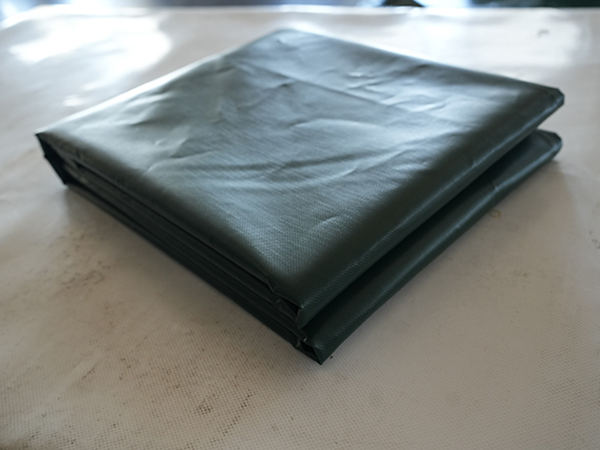
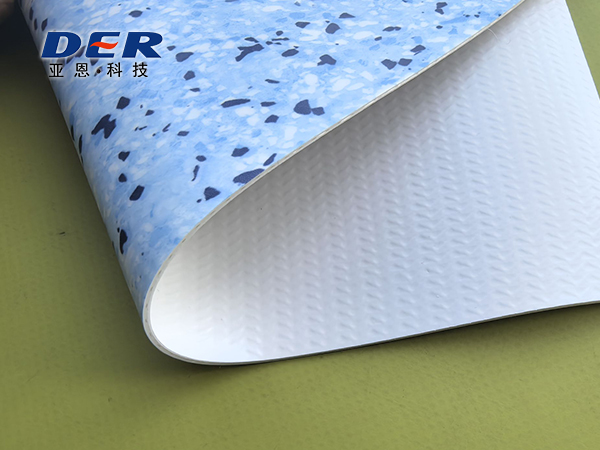
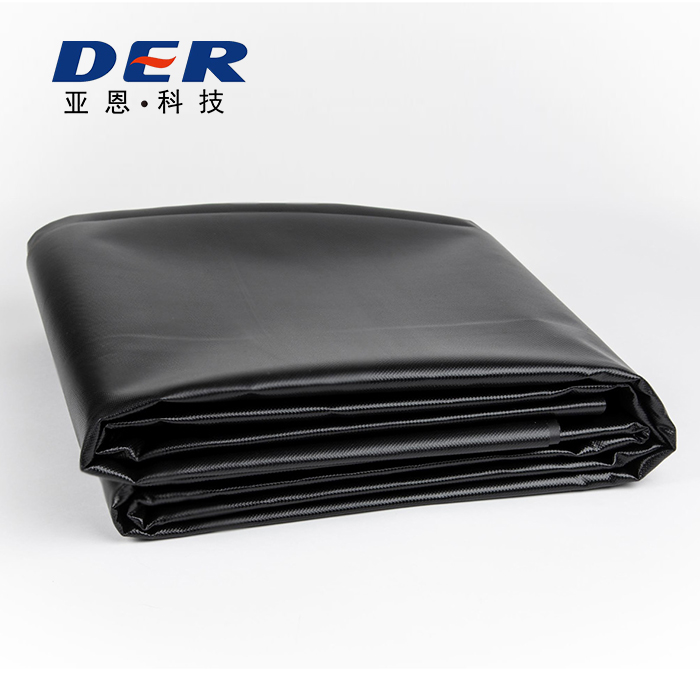
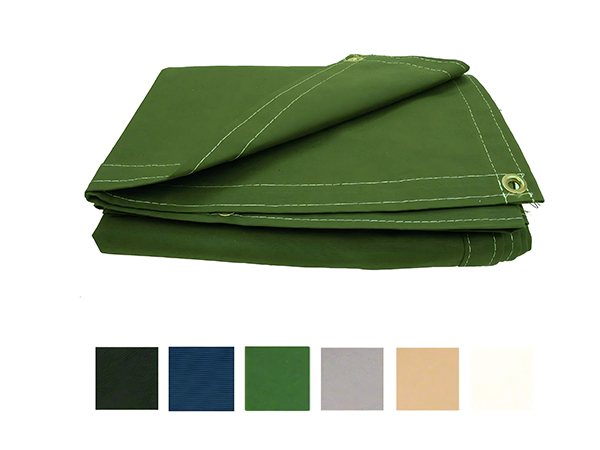
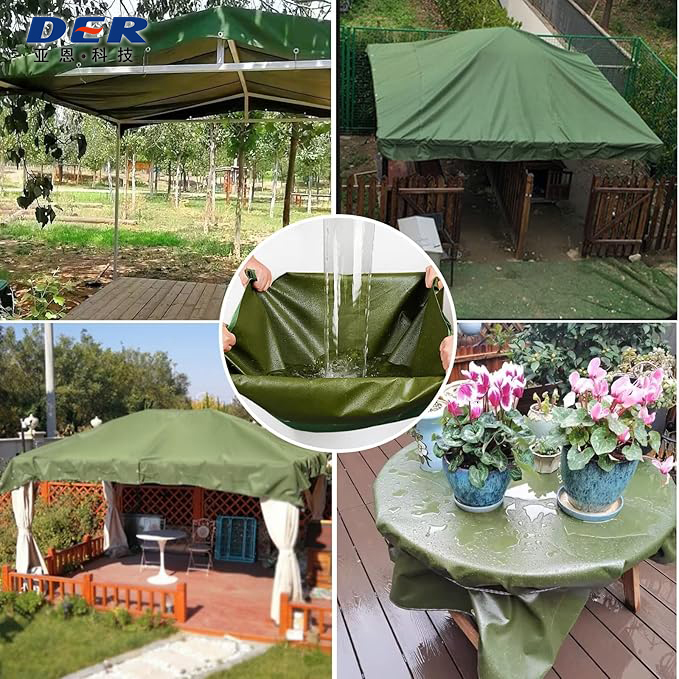
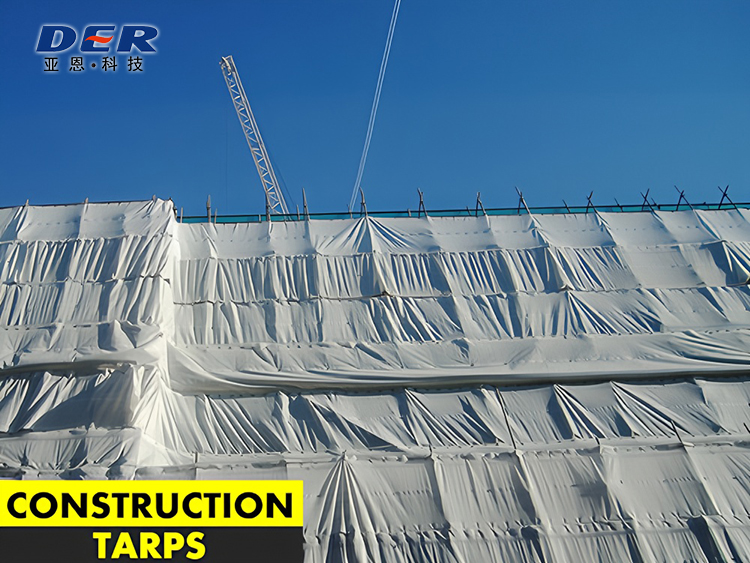
Our products are widely used in our residential and industrial area, which can be used for producing tents, outdoor covering, flexible ventilation tube, water bladders, inflatable castles, architecture membrane structures, etc. Our main products: PVC coated fabrics, PU/TPU coated fabrics, Oxford fabric, PVC ceiling film, flexible banner material. Welcome to our site and order online.