GSM
Grams per square metre. Useful for fabric comparison and sheet-weight estimates.

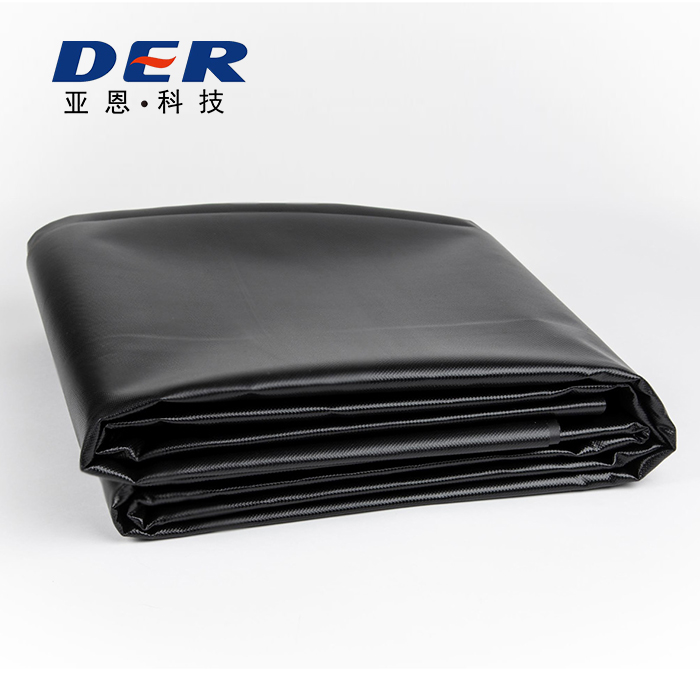
Industrial coated textiles & custom tarps
Discuss your tarp project ↗Choose a cover that fits the job, the load and the people handling it. Compare tarp materials, calculate coverage and turn your requirements into a clear buying specification.
For industrial buyers, distributors and fabricators. DER factory can review PVC roll material and custom finished-cover requirements.
Choose a tarp by its required protection, finished coverage and attachment conditions. Polyethylene suits many light, temporary covers; PVC-coated polyester suits many reusable industrial covers; canvas can provide breathable protection; mesh allows airflow; clear vinyl maintains visibility.
Then specify the finished size, fabric weight or thickness, seams, edge reinforcement and fixing layout. A tarp that blocks rain can still leak at openings, collect condensation underneath or fail where a tie-down loads an unreinforced edge.
This tarp buying guide compares material families for selection. DER factory’s PVC and custom-tarp offering should be confirmed against your project; the comparison does not imply every material or grade is available from stock.
There is no universal best tarp material. Match the barrier, ventilation and handling requirements before comparing price or “heavy duty” labels.
| Material family | Construction & protection | Useful selection direction | Trade-off to check |
|---|---|---|---|
| PE / poly tarp | Woven polyethylene reinforcement with a film barrier; intact solid grades can shed rain. | Temporary storage, light jobsite coverage and portable general-purpose protection. | Check UV grade, seam quality and repeated flexing. Low-cost grades may be unsuitable for frequent abrasive use. |
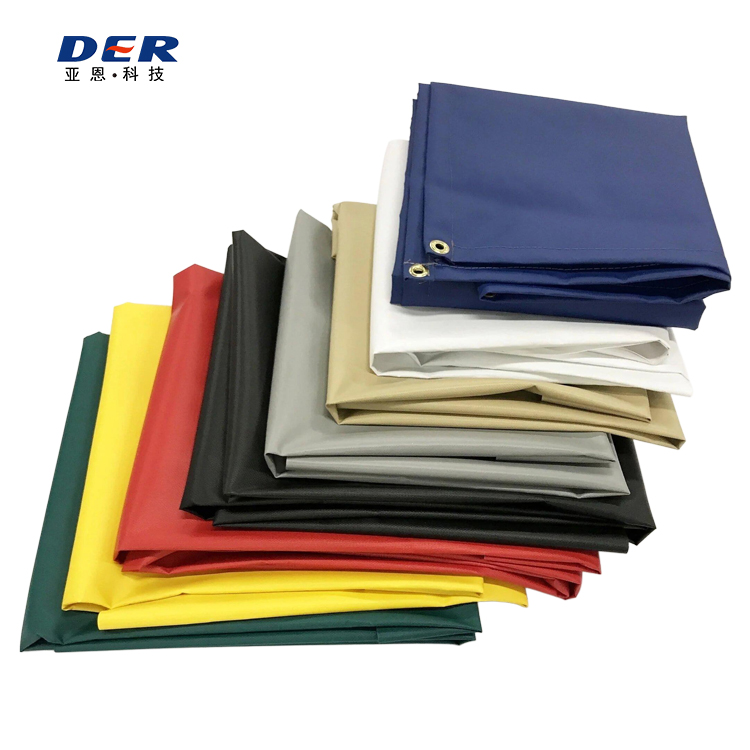
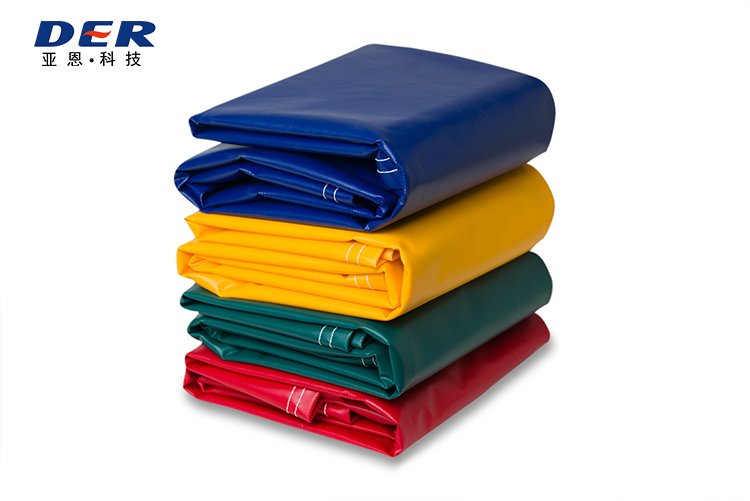
| PVC / vinyl tarp | Polyvinyl chloride on a polyester textile, by coating or lamination; compatible grades can be welded. | Reusable equipment covers, cargo tarps and fabricated industrial covers. | Handling mass, cold flexibility, coating adhesion and seams matter. Formulations vary; chemical or heat resistance needs specific confirmation. |
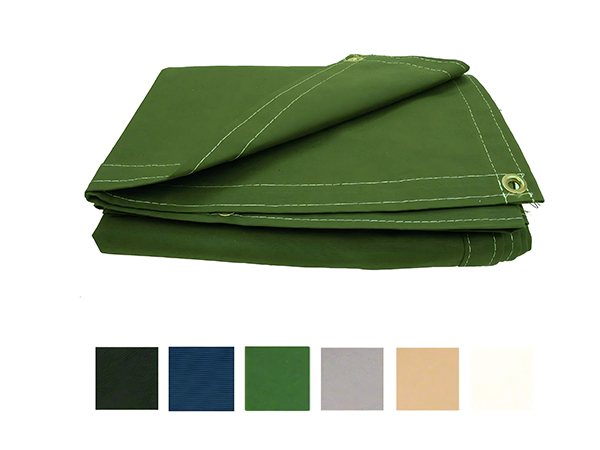
| Canvas tarp | Woven cotton or blended textile, sometimes treated for water resistance. | Breathable covers where moisture release is more important than a sealed rain barrier. | Treatment changes breathability and water resistance. Canvas does not guarantee dry storage or prevent condensation in every installation. |
| Mesh tarp | An open structure that permits air and some light or water to pass through. | Shade, ventilated screening and suitable loose-load cover systems. | It is not a waterproof sheet. Specify opening size, shade or open-area requirement, and whether it must retain particular debris. |
| Clear vinyl tarp | Flexible clear PVC film; reinforced variants can alter the view. | Weather screens and curtains that need visibility. | Check clarity, UV aging, cold folding and attachment reinforcement. Transparent film and reinforced tarp fabric are different constructions. |
For a reusable waterproof cover, examine the base textile and coating together. See PVC-coated polyester fabric for industrial rolls and fabrication for material-specific options.
Coated or laminated? Coating applies PVC to the textile; lamination bonds film to a reinforcing structure. Neither word alone determines service life. Compare adhesion, flex behavior, surface finish and weld compatibility on the actual grade.

GSM and ounces per square yard measure mass per area. Mil measures physical thickness. You can convert GSM to oz/yd², but you cannot reliably convert either to mil without knowing the construction.
Grams per square metre. Useful for fabric comparison and sheet-weight estimates.
Ounces per square yard. Confirm whether a canvas weight is before or after treatment.
One thousandth of an inch. 1 mil = 0.0254 mm. Mil is not millimetre.
1 oz/yd² ≈ 33.91 GSM. For example, 18 oz/yd² is about 610 GSM. This is a unit conversion, not a strength rating or an available DER factory grade.
Ask for tensile and tear results in both fabric directions, coating adhesion, and the agreed test method. A heavy sheet with weak seams or edges can be a poor purchase. Use the tarp GSM, oz and mil conversion guide when comparing differently labelled quotes.
Measure the full route the tarp must cover, including drops and attachment allowances. Ask whether the seller’s size is nominal, cut size or finished size; there is no universal deduction that applies to every supplier.
If the cover drops equally on all four sides, start with:
Worked example: a 3.0 × 2.0 m object, 0.5 m of drop on each side and 0.3 m of additional fabric allowance per edge needs a starting finished-sheet size of 4.6 × 3.6 m. Its area is 16.56 m²; at an illustrative 650 GSM, the main sheet alone weighs about 10.8 kg.
This is a planning estimate for a flat sheet draped over a simple rectangular shape. It excludes manufacturing cut allowances, hems, overlap, reinforcements and hardware. Fitted box covers, sloping roofs, irregular loads and asymmetric drops need a drawing. Extra fabric allowance is separate from the length of a tie-down strap.
These are examples of market size labels, not DER factory inventory. Confirm whether each listing represents nominal, cut or finished size.
| Label in feet | Approximate metric dimensions |
|---|---|
| 6 × 8 ft | 1.83 × 2.44 m |
| 10 × 12 ft | 3.05 × 3.66 m |
| 16 × 20 ft | 4.88 × 6.10 m |
| 20 × 30 ft | 6.10 × 9.14 m |
When fit or hardware position matters, review custom tarps made to finished dimensions and agree the measurement method and tolerance before production.
The same material family can serve different jobs, but the finished cover must match the exposure, contact points and fixing system. These are selection directions, not approved specifications.
| Use | Material direction | What to specify before ordering |
|---|---|---|
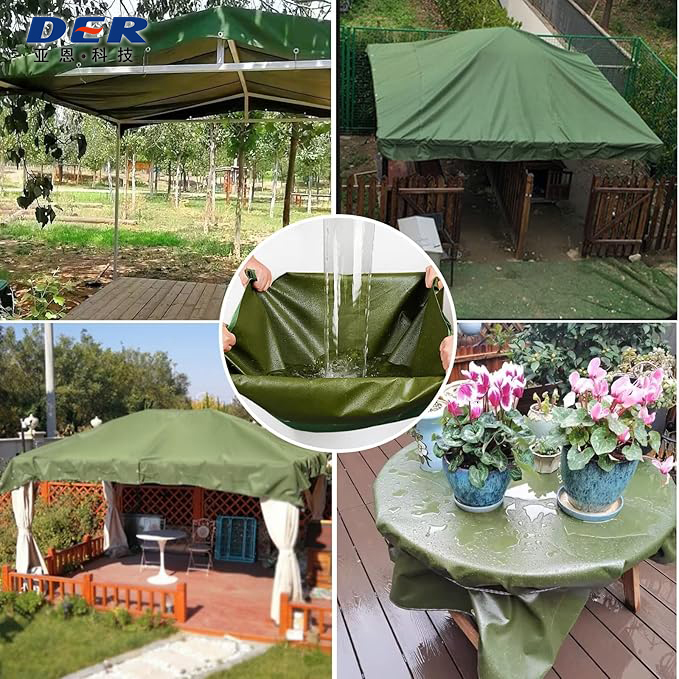
| Outdoor machinery & pallets | PVC for frequent reuse; PE for appropriate temporary coverage. | Finished drops, corner wear pads, runoff and ventilation. A waterproof cover does not remove moisture trapped below it. |
| Truck & trailer cargo | Reinforced PVC for rain protection; compatible mesh for selected loose loads. | Load geometry, road-wind exposure, fabric mass, seam layout and reinforced attachments. A tarp cover does not replace cargo restraints. |
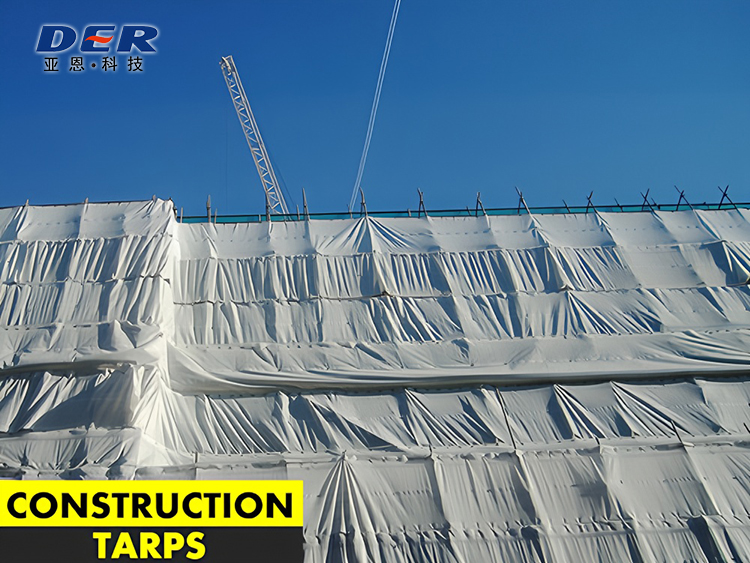
| Construction & temporary roofing | Solid PE or PVC, selected for duration and conditions. | Drainage, abrasion, anchoring, access and any required flame performance. Coverage and supports need to suit the actual structure. |
| Firewood & agricultural storage | A solid top cover with planned airflow, breathable canvas or mesh where suitable. | Rain exclusion versus drying, condensation risk, covered area and perimeter anchoring. Choose the storage arrangement as well as the fabric. |
| Camping & groundsheets | Light waterproof PE or a suitable coated lightweight fabric. | Packed weight, puncture resistance and coverage. A tent groundsheet should fit beneath the tent without extending into rain runoff. |
| Shade & ventilated screens | Mesh with the required openness. | Opening size, shade requirement and perimeter reinforcement. Wind can still load a mesh screen; it is not a sealed rain cover. |
| Visible weather curtains | Clear PVC with an appropriate edge system. | Cold flexibility, clarity, UV exposure, openings and restraint. Plan clear panels separately from reinforced opaque edges. |

Specify the finished construction as carefully as the fabric. Local reinforcement, a compatible seam and a planned fixing layout can address failure points that extra GSM alone will not solve.
Compatible PVC grades can be joined using hot-air or high-frequency welding. Sewing may suit other constructions, but stitch holes and thread need consideration where water exclusion matters. Approve a seam trial on the chosen material.
Agree the hem build, webbing or rope reinforcement and hardware positions. Grommet spacing should reflect the installation; simply adding more holes does not strengthen a weak hem. Review reinforced tarps with grommets and fixing-point layouts.
Mark corners, rubbing surfaces and repeated fold lines on the drawing. Ask about compatible wear pads, shaped panels, straps or access features where needed. Reduce loose fabric and ensure water can drain rather than collect.
For heat, chemicals or fire requirements: describe the substance, concentration, temperature, contact duration or exact fire-test requirement. Do not treat ordinary PVC or a generic “FR” label as proof of suitability. See flame-retardant tarp specification options and confirm the required standard, grade and supporting evidence before ordering.
Have a cover that keeps failing? Send a photo of the tear or wear location, its dimensions and how the tarp is fixed. That helps identify which construction detail needs to change.
Review my cover ↗Approve the material and the finished cover separately. A small swatch can show surface and flexibility, but it cannot confirm full-cover fit, seam layout or attachment performance.
Record textile construction, finished GSM, thickness method, surface and color reference. Agree any strength, adhesion, UV or cold-flex requirements with test methods and acceptance limits.
Check finished length, width, drops, openings and tolerance against a drawing. Agree whether dimensions are measured relaxed or under defined tension.
Review seam width and continuity, hem construction, webbing, eyelet quality and attachment positions. Confirm suitable seam or attachment checks for the actual use.
Retain an approved sample and revision-controlled specification. Confirm labeling, folding or rolling, carton or pallet format and inspection records for repeat orders.
These are buyer approval checkpoints. Test arrangements and documented acceptance criteria should be agreed during quotation; no certification or test result is implied.
A clear specification lets a tarp manufacturer or wholesale supplier quote the same product you intend to buy. Start with the job and dimensions; the material can be reviewed if you are unsure.
It depends on the job. PVC-coated polyester is a useful direction for many reusable industrial covers; PE can suit lightweight temporary coverage. Canvas may suit breathable protection, mesh suits airflow, and clear PVC suits visibility. Confirm the actual grade, exposure and finished construction.
No. Mesh permits water to pass through, and many canvas tarps are water-resistant rather than waterproof. Solid PE and PVC grades can provide a water barrier, but the complete cover also depends on seams, openings, condition, drainage and installation.
Measure the full coverage path, including side and end drops and fabric allowance for fastening. For a simple rectangular object with equal drops, add twice the drop and twice the per-edge allowance to both length and width. Confirm finished dimensions and tolerance with the supplier.
A listing may use nominal or cut dimensions instead of finished dimensions. Fabric consumed by hems or fabrication can change the usable size. Ask the seller for actual finished dimensions and tolerance; do not assume a universal percentage or fixed deduction.
There is no universal mil or GSM threshold. Choose the complete construction by strength, coating, cold flexibility, seams, edge reinforcement and exposure. GSM measures mass per area; mil measures thickness. A thicker sheet alone does not establish finished-cover durability.
Plan ventilation and moisture escape, then choose the material. Breathable canvas or mesh may suit some jobs, while a waterproof top cover with open sides can suit others. A sealed PE or PVC cover can trap moisture; rain protection and condensation control need separate consideration.
DER factory can review custom finished sizes, PVC material, reinforcement, hardware, color, branding and packing for industrial or OEM orders. Send a drawing and quantity by size and color. Feasibility, MOQ and lead time are confirmed during quotation for the approved specification.
Use a fabric sample to review surface, color, flexibility and material compatibility. Use a complete prototype when fit, seams, attachment positions or handling matter. Agree what each sample must demonstrate and retain the approved construction as the reference for production.
Send DER factory the application, finished dimensions, exposure, quantity and fixing details. Add your material preference or reference sample so the team can review PVC roll goods or a custom fabricated tarp.
Material availability, final construction, testing, MOQ and delivery are confirmed per project.

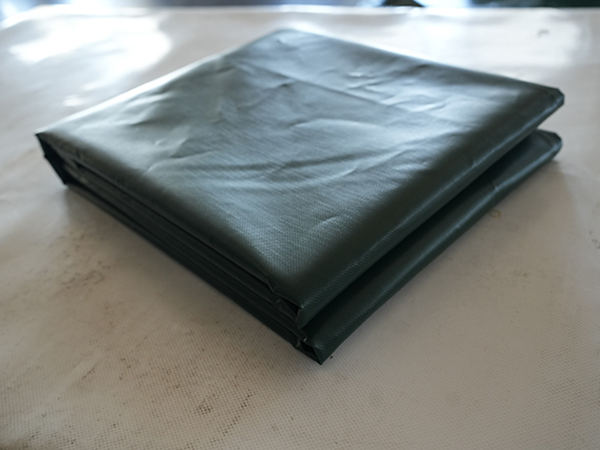
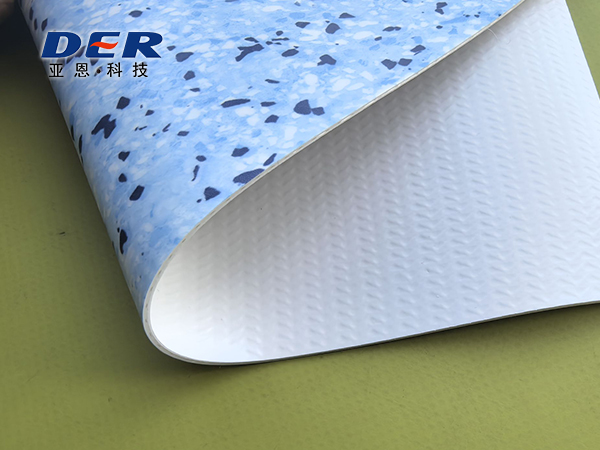
Our products are widely used in our residential and industrial area, which can be used for producing tents, outdoor covering, flexible ventilation tube, water bladders, inflatable castles, architecture membrane structures, etc. Our main products: PVC coated fabrics, PU/TPU coated fabrics, Oxford fabric, PVC ceiling film, flexible banner material. Welcome to our site and order online.