Water-Shedding Seams
Hot-air or high-frequency welded panel joints reduce needle holes and form a continuous barrier across large cover widths.


 DER
DER
Waterproof PVC container tarp covers for 20ft, 40ft, open-top, flat-rack and modified units. Der factory combines coated fabric selection, pattern engineering, reinforced fastening and OEM finishing in one supply program.

A dependable container cover is not simply a waterproof sheet. It must hold its shape across roof bows, resist edge loading at every fixing point, remain flexible when folded and create reliable joints across large fabricated panels.
The central woven polyester scrim carries tensile and tear loads. PVC coating on both faces creates the weather barrier, protects the yarn and gives the material a weldable surface. The coating formulation can be adjusted for UV exposure, low-temperature flexibility, mildew resistance, flame-retardant requirements or easier cleaning.
For open-top shipping and long-term outdoor storage, material weight should be selected together with reinforcement layout and tie-down spacing. A heavier fabric alone will not compensate for poorly placed fixing points or unsupported water pockets.
Illustrative structure. Yarn, weave density, coating chemistry and surface finish are selected against the approved specification.
Most service problems begin at seams, corners, roof contact points and attachment hardware—not in the middle of the fabric. The cover therefore needs to be engineered as a complete system.
Hot-air or high-frequency welded panel joints reduce needle holes and form a continuous barrier across large cover widths.
Folded hems, webbing and layered patches distribute pull around eyelets, straps and lashing points.
Eyelet pitch, TIR cable routing, elastic cord and straps are configured to keep the tarp tensioned in service.
Extra patches can be placed over roof bows, sharp transitions, corners and high-contact zones to slow wear.
UV-resistant and low-temperature formulations can be specified for exposed yards, winter routes and repeated reuse.
Zipper, hook-and-loop or roll-up flaps allow inspection or loading access without removing the entire cover.


The table below is a purchasing guide rather than a fixed catalog limitation. Der factory can develop the final construction around a drawing, approved sample or measured container.
| Cover Type | Open-top roof cover, five-sided storage cover, flat-rack cargo cover, modified container cover, equipment-module cover |
|---|---|
| Container Reference | 10ft, 20ft, 40ft, high-cube and non-standard units; finished pattern confirmed from drawing or measurement |
| Base Fabric | High-tenacity woven polyester, commonly 1000D or 1300D class depending on strength target |
| Typical Finished Weight | 550–900 gsm for common reusable PVC systems; lighter or heavier grades subject to application review |
| Typical Thickness | Approximately 0.45–0.75 mm, depending on coating system and required service life |
| Panel Joining | Hot-air welding, high-frequency welding, industrial sewing or a combined process |
| Edge Construction | Folded reinforced hem, polyester webbing, double-layer edge or local wear patches |
| Fastening Options | Brass/stainless eyelets, TIR cable route, elastic cord, D-rings, straps, buckles, hooks, hook-and-loop and zipper |
| Eyelet Spacing | Project-specific; commonly engineered between 200 and 500 mm according to fixing geometry and load |
| Performance Options | Waterproof, UV-resistant, mildew-resistant, cold-flexible, flame-retardant, anti-static or easy-clean surface |
| Color & Branding | Standard colors, customer color reference, screen/UV print, logo, serial number and private-label packing |
| Quality Documents | Dimensional inspection, material test data and applicable third-party reports available according to order requirements |
Important: performance values and compliance documents must be defined in the purchase specification. Do not select a cover only by GSM; geometry, support, seam design and tie-down layout have equal influence on service performance.
Different fleets and yards use different lashing rails, roof bows and access routines. The best cover is the one that fits the operating process—not just the outside dimensions.
Allowances for overlap, roof camber, corner cutouts, cargo projection and drainage direction.
Webbing, wear patches and double layers positioned at contact and fastening zones.
Roll-up flaps, zipper doors, inspection openings, transparent windows or protected vents.
Logo printing, part labels, folding diagrams, accessory kits and distributor-ready cartons.
Container type, route, weather, handling method, service target and compliance needs.
Finished dimensions, seam positions, fixing-point layout and accessory specification.
Fabric weight, color, surface, test requirements and pre-production sample when needed.
Cutting, welding, sewing, hardware assembly and dimensional/seam inspection.
Marked folding, accessory grouping, labels, cartons or palletized export packaging.
Container cover tarpaulins are used wherever a rigid container needs a removable weather barrier, a flexible roof or an additional layer of cargo containment.
Roof protection for machinery, steel products, pipes and over-height cargo loaded by crane through the top.
Intermodal LogisticsTemporary or long-term covers for jobsite containers, yard storage, used containers and roof-leak mitigation.
Storage YardsCustom-shaped weather covers around machinery modules, fabricated structures and awkward cargo profiles.
Project CargoSecure covers for routes involving repeated handling, wind exposure, vibration, dust and changing climates.
Road & RailContainment covers for skip bins, open boxes, debris loads and temporary material storage.
ConstructionFive-sided or access-equipped covers for mobile power units, industrial modules and service equipment.
Industrial OEMFinal installation must follow the container operator’s safety procedure and applicable transport rules. The sequence below helps reduce uneven loading and premature wear.
Remove sharp debris, check roof bows and protect unavoidable edges before positioning the tarp.
Match labels, corner cutouts and access panels to the correct container end.
Spread the cover evenly and avoid low pockets where rainwater can collect.
Secure opposite sides in stages so the perimeter load is balanced rather than concentrated.
Inspect tension, abrasion points and hardware after initial movement and at planned intervals.
Accurate information at the start reduces sample revisions, prevents fit problems and makes quotations easier to compare across suppliers.
Quality documents should match the purchased grade and order requirements. Der factory can coordinate material data, production checks and applicable third-party reports when these are defined before order confirmation.
Finished cover inspection can include:
Depending on the selected material and contract specification, available documentation may cover quality management, waterproofing, tensile/tear performance, UV or flame-retardant testing, and environmental compliance.
These six related Der factory resources support material selection, custom fabrication and adjacent logistics applications.
For repeated outdoor transport and storage, PVC-coated high-tenacity polyester is commonly selected because it combines waterproofing, tear strength, abrasion resistance and weldable seams. The final weight and coating system should be matched to climate, handling frequency and service-life target.
Yes. Covers can be patterned for nominal 20ft and 40ft open-top containers as well as high-cube, flat-rack, modified and special-purpose units. Container drawings or verified measurements are recommended before production.
Common systems include reinforced perimeter hems, brass or stainless eyelets, TIR cable compatibility, elastic cord, webbing straps, D-rings, buckles and corner cutouts. Fixing-point spacing should be designed around the actual container and expected loading.
Welded seams create a fused joint and are generally preferred where rain sealing is critical. Industrial sewing remains useful for reinforcement and hardware attachment; seam tape or additional welding can be specified for exposed areas.
Yes. Custom options include zipper or hook-and-loop access flaps, vent panels, inspection windows, reinforced corners, printed logos, serial labels, color matching and project-specific packaging.
Provide container type, dimensions or drawings, intended use, expected weather exposure, preferred material weight, fastening layout, access requirements, color, branding, order quantity and destination. Photos of the fixing points are especially useful.
Tell Der factory whether the cover is for open-top transport, outdoor storage, flat-rack cargo or a modified equipment container. Include dimensions, photos, quantity and service conditions for a faster technical review.
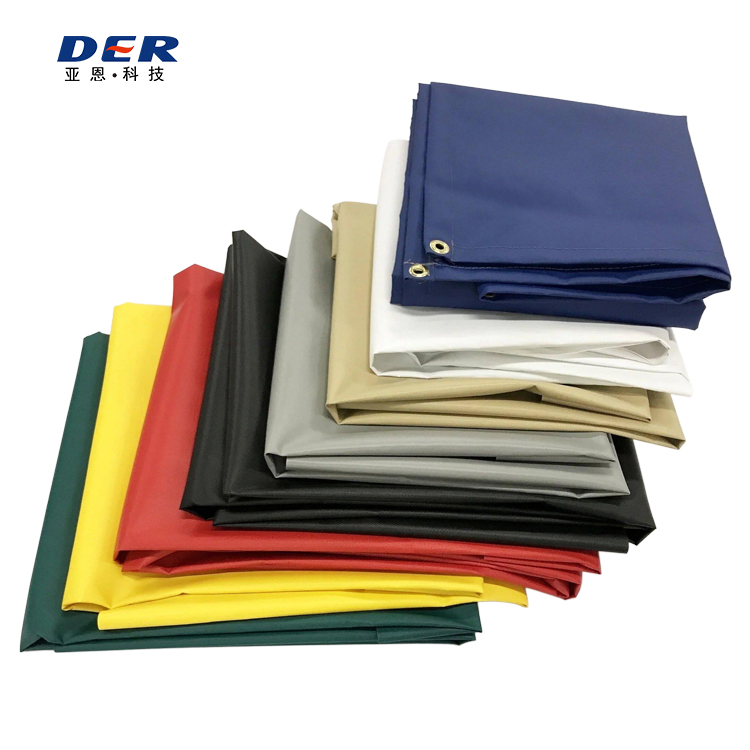
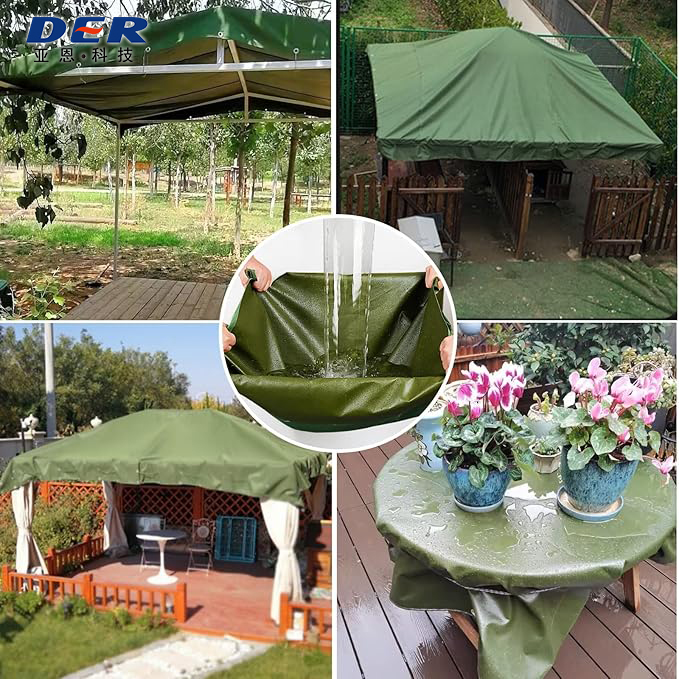
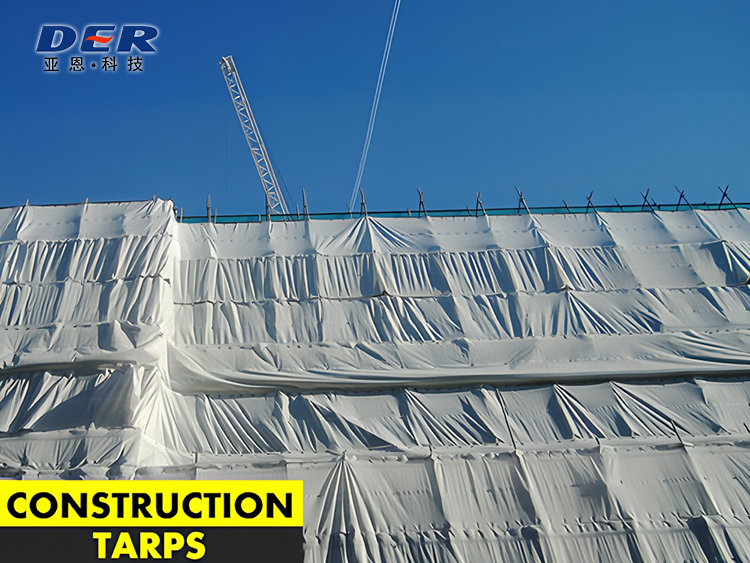
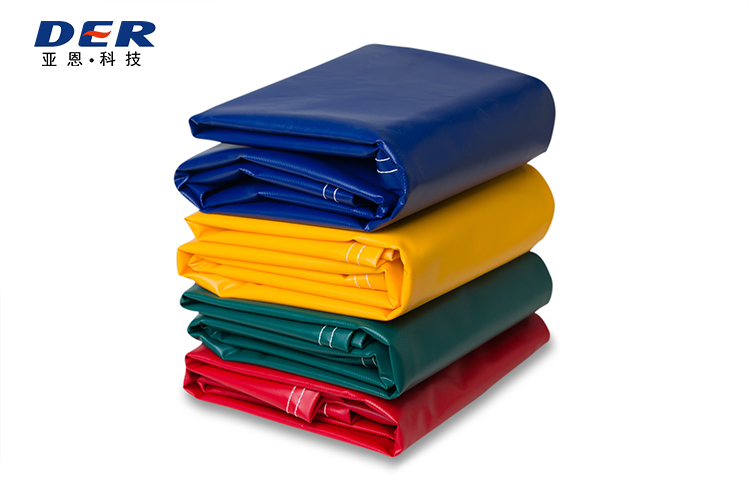
Our products are widely used in our residential and industrial area, which can be used for producing tents, outdoor covering, flexible ventilation tube, water bladders, inflatable castles, architecture membrane structures, etc. Our main products: PVC coated fabrics, PU/TPU coated fabrics, Oxford fabric, PVC ceiling film, flexible banner material. Welcome to our site and order online.