Woven polyester reinforcement
High-tenacity polyester yarn forms the load-bearing base textile. Yarn size, warp/weft density and weave geometry affect tensile strength, tear resistance, dimensional behavior and flexibility.

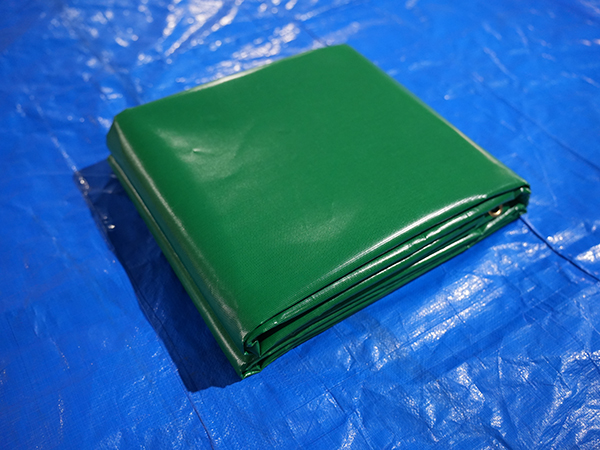
From woven polyester reinforcement to PVC coating, heat welding, reinforced hems and final inspection: understand every production stage—and the controls that matter when sourcing custom industrial tarps.
Discuss Your Tarp SpecificationExplore the Manufacturing ProcessPVC tarps are typically made by combining a woven polyester fabric with flexible polyvinyl chloride (PVC) using coating or film lamination. The material is heat-processed, cooled, finished and inspected as roll goods. To create a finished tarp, the roll is cut into panels, joined by a suitable welding or sewing process, hemmed, reinforced, fitted with grommets or other attachments, inspected and packed.
In short: polyester yarn → woven fabric → PVC coating/lamination → thermal bonding → finishing → roll inspection → cutting → joining and edge reinforcement → final QC.
Two separate approvals protect buyers: the material specification for the roll and the fabrication drawing for the finished cover. A waterproof roll does not automatically mean the completed cover has leak-free seams or adequately reinforced tie-down points.
High-tenacity polyester yarn forms the load-bearing base textile. Yarn size, warp/weft density and weave geometry affect tensile strength, tear resistance, dimensional behavior and flexibility.
PVC compound or film supplies the continuous protective barrier, surface appearance and many welding characteristics. Plasticizers, stabilizers, pigments and other additives are selected according to the required grade.
The interface between textile and PVC must remain stable in converting and service. Surface finishes can be designed for appearance, cleaning, printing or other approved performance goals.
Panel seams, hems, corner patches, webbing and attachment hardware make the roll material into a usable tarp. These details govern how local loads are transferred into the cover.
The exact equipment and sequence vary by factory and product grade. Some manufacturers produce coated rolls only; others also fabricate finished covers. Confirm which stages your supplier controls directly.
Begin with exposure, expected loads, finished dimensions, material weight, color, width, surface finish and intended welding method. A signed sample and revision-controlled specification prevent later substitutions.
Yarn denier, weave density and fabric stability influence tensile and tear performance. Inspect width, defects and web tension before adding the PVC system.
Direct-coating lines formulate a processable PVC compound; lamination lines prepare compatible preformed films and the bonding interface. Pigments and additives depend on the application.
Knife coating meters PVC directly onto the moving fabric. Lamination joins film and textile under controlled conditions. Both need consistent alignment and layer distribution.
Thermal processing develops the PVC layer and textile-to-polymer bond. Temperature, residence time, speed and tension must be validated for the specific formulation.
The surface may be matte, gloss, embossed or finished for a particular application. Inspect appearance, weight, usable width, adhesion and other agreed properties before winding and labeling.
For finished covers, cutting plans consider usable roll width and seam allowances. Panels are welded or sewn according to approved seam details and compatibility trials.
Hems, corner patches, webbing, grommets, D-rings and straps transfer load into the cover. Their spacing and construction must match the drawing and service conditions.
Inspect finished dimensions, seams, hardware, visual defects and packaging. Record material batches and approved specifications to support repeat orders.
Neither method is automatically superior. Choose on the basis of approved construction, measured performance, conversion trials and cost requirements—not the production label alone.
| Decision point | Direct PVC coating | PVC film lamination |
|---|---|---|
| How the layer forms | Liquid or paste-like PVC compound is metered onto textile. | Preformed PVC film is combined with textile. |
| Key controls | Coating rheology, knife setting, web tension and heat history. | Film uniformity, alignment, heat, pressure and bonding. |
| Typical checks | Coating consistency, fusion, adhesion and surface. | Bond uniformity, peel behavior, surface and flexibility. |
| Buyer acceptance | Approved sample, GSM and width tolerance, mechanical tests, weldability, appearance and traceability. | |
Note: coating weight, mechanical strength, UV behavior and service life must be specified and tested for the actual grade; no universal number applies to all PVC tarps.
Large covers may require multiple panels. The cutting plan must account for roll width, seam overlap, edge allowances, fabric orientation and usable yield. Drawings should distinguish finished outside dimensions from cut dimensions.
Hot-air and high-frequency welding are common options for compatible flexible PVC fabrics. Settings depend on fabric grade, surface treatment and equipment. Approve trial seams and define seam-strength or leak-testing requirements where appropriate.
Grommets are not a substitute for edge reinforcement. Corner patches, webbing and suitable attachment spacing reduce local stress concentration. Request an attachment drawing for windy or frequently tensioned applications.
Inspect finished length and width, seam position, attachment count, visual condition and packing method. Label material and finished-product batches for repeat-order control.
Focus on repeated handling, abrasion zones, welding, edge attachments and dimensional stability.
Define outdoor exposure, contact surfaces, fastening methods and expected maintenance.
Specify fabric strength, weld compatibility, applicable fire requirements and the engineered attachment system.
Consider exposure, cleaning, folds, installation geometry and service conditions.
Submit drawings, branding, dimensions, packing needs and an approved reference sample.
Request consistent usable width, roll length, joint policy, surface finish and batch tracking.
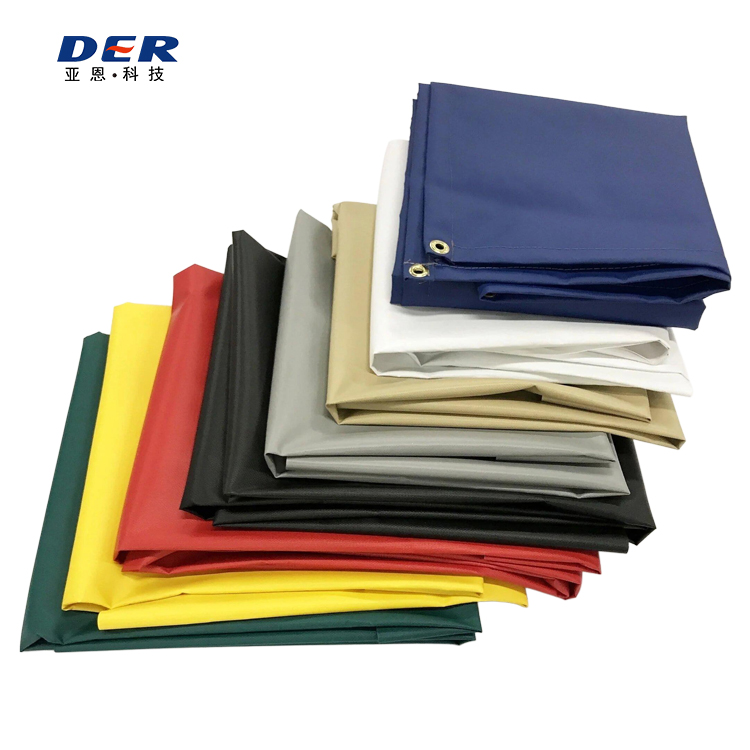
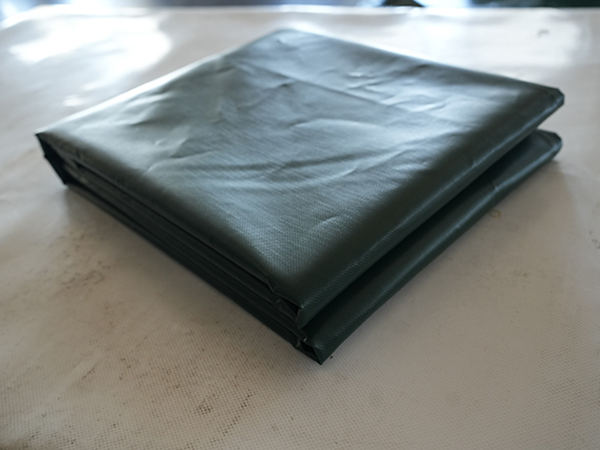
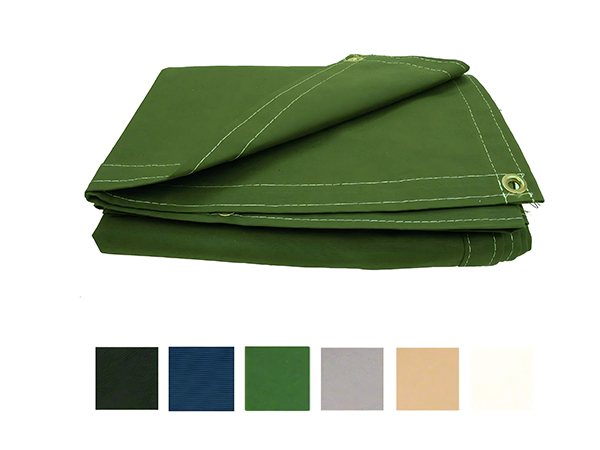
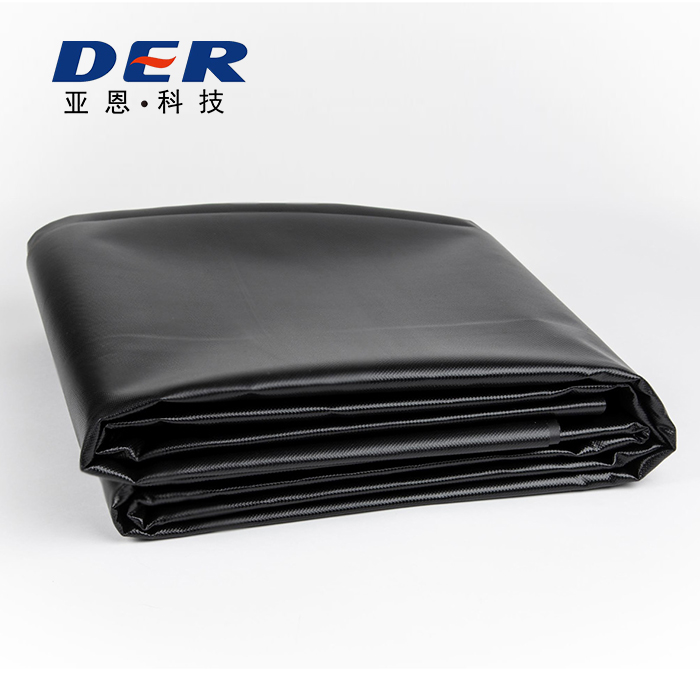
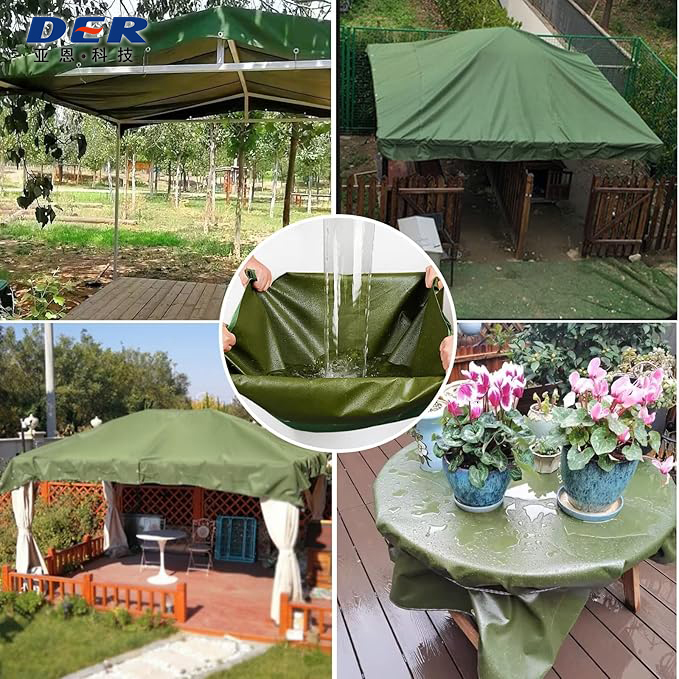
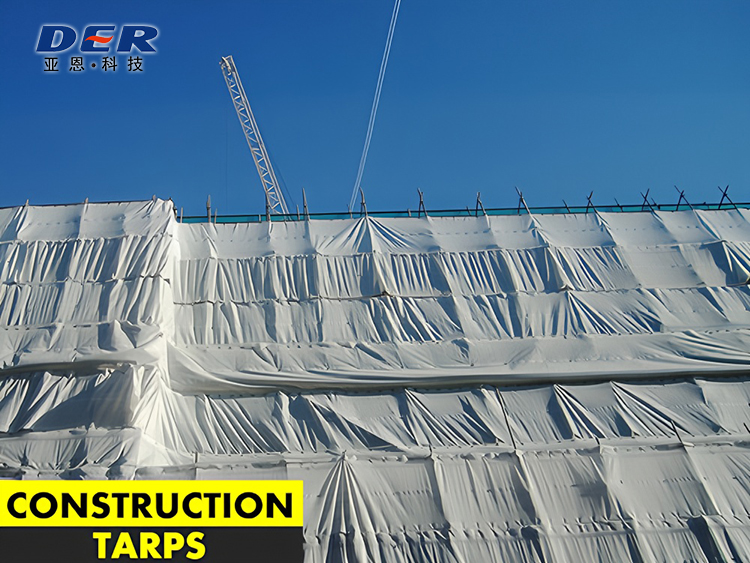
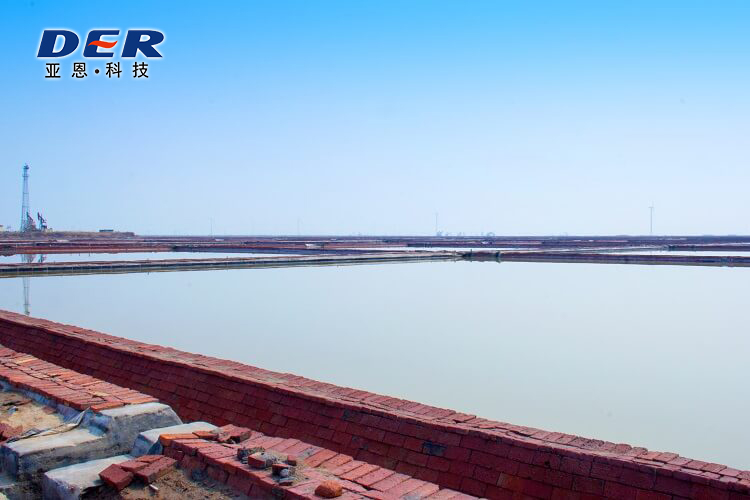
These product photographs reuse images previously documented on the DER factory English website. They illustrate coated fabric, roll stock, cover applications and finished edges; they are not presented as photographs of every manufacturing step.

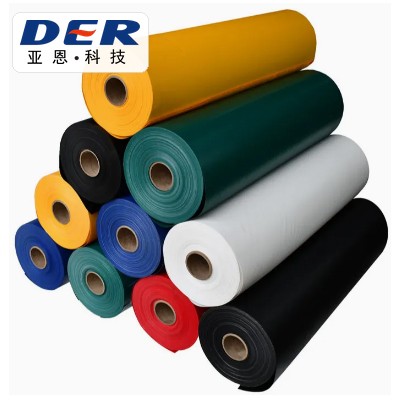
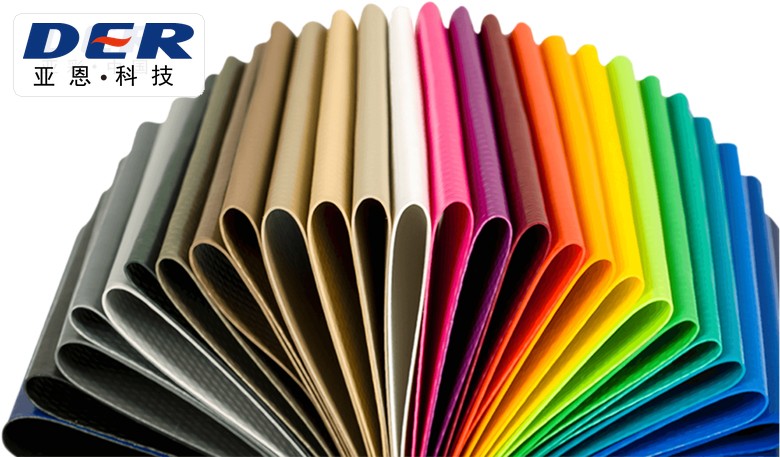
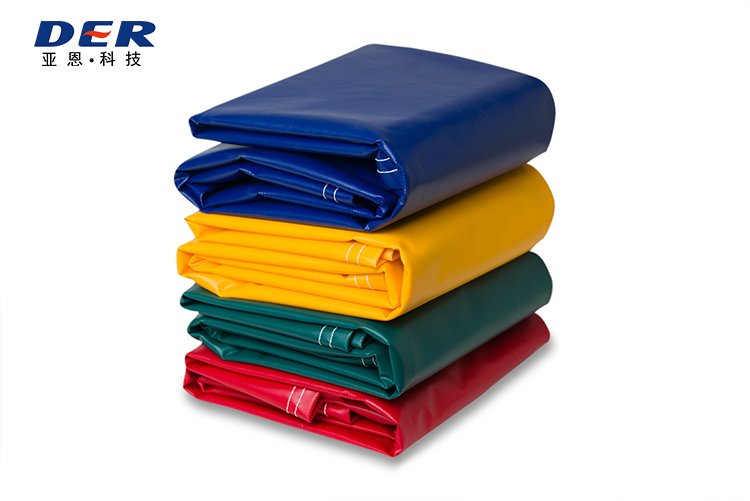

Publishing note: image file names above are proposed slots, not verified existing files. Replace with genuine photographs from www.der-factory.com/en/up/pic/ before publishing.
Send the following information to obtain a comparable technical quotation instead of a price based on an incomplete description.
Ask the supplier for a representative sample, product data sheet, test methods, production scope, lot identification approach and an explicit list of any requirements they cannot verify.
Transport-cover material and applications.
Understand industrial coated textile supply.
Compare film-based composite options.
Detailed manufacturing-route comparison.
Weight, dimensions and use-based selection.
Factory audit and procurement considerations.
Verify related-page slugs against the live website before publishing.
PVC tarps are made by combining a woven polyester reinforcement with flexible PVC through coating or lamination. The roll is heat-processed, finished and inspected, then cut, welded or sewn, reinforced and fitted with hardware to make a finished cover.
Coated tarpaulin receives a metered PVC compound on the textile; laminated tarpaulin combines preformed PVC film with the textile. Neither process alone guarantees a higher quality grade.
An intact, properly manufactured PVC barrier can prevent liquid water penetration, but a finished tarp also depends on seam quality, penetrations, edge details and installation.
Many flexible PVC-coated fabrics can be joined using hot-air or high-frequency welding, subject to the formulation, surface finish and validated equipment settings.
Request the agreed fabric weight and width, tensile and tear tests, adhesion where applicable, seam strength, dimensional inspection, and any required UV, flame or low-temperature testing.
Lead time depends on material availability, color, dimensions, finishing details, order quantity and approval of samples. Ask the factory to quote a project-specific schedule.
A roll is the coated or laminated material supplied for conversion. A finished tarp has been cut, joined, hemmed, reinforced and fitted with attachments according to a drawing.
Specify intended use, material construction, GSM, width, dimensions, color, surface, seams, hardware, quantities, testing, packaging and destination.
Share your application, material targets, size drawings, quantities and destination. DER factory can review your requirements and clarify the material and fabrication scope before quotation. Performance claims and available options should be confirmed against the actual quoted grade.
Contact DER factoryExplore DER factoryConfirm the preferred live enquiry URL before launch.

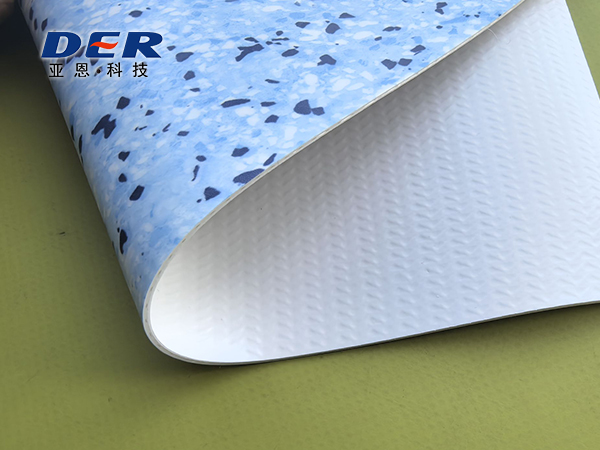
Our products are widely used in our residential and industrial area, which can be used for producing tents, outdoor covering, flexible ventilation tube, water bladders, inflatable castles, architecture membrane structures, etc. Our main products: PVC coated fabrics, PU/TPU coated fabrics, Oxford fabric, PVC ceiling film, flexible banner material. Welcome to our site and order online.