01 · GENERAL COVERING
Storage & equipment covers
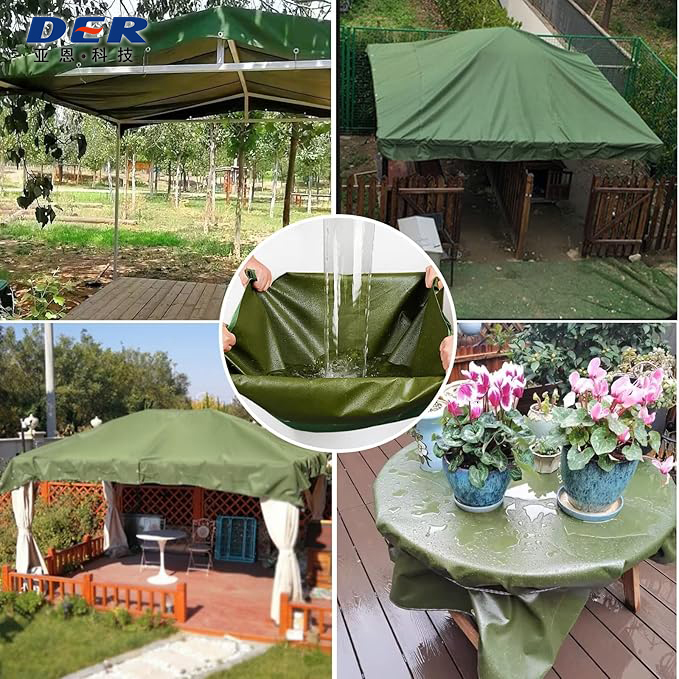
Consider water barrier, abrasion at contact points and practical handling weight. Edge reinforcement and fastener placement must be specified separately.
Verify: fold cycles + reinforced corners
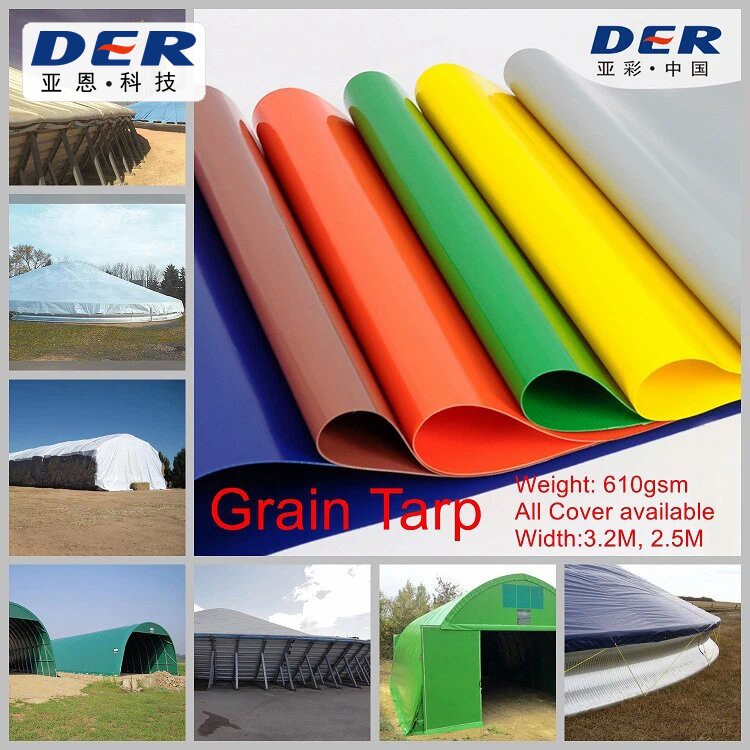

Reinforced PVC film laminates · Factory supply
Specify PVC film bonded to polyester reinforcement for waterproof covering, flexible partitions, sidewalls and converter-ready sheet materials. DER factory supports project-based lamination specifications, roll orders and review of finished-panel requirements—not just color and GSM selection.
Direct answer
PVC laminated fabric is a composite textile made by bonding polyvinyl chloride (PVC) film to a reinforcing fabric—commonly a woven polyester scrim—using a controlled lamination process. Polyester yarn provides much of the tensile and tear resistance; the PVC film supplies a water-blocking surface, finish and protection against routine exposure. One-side or two-side film configurations are possible depending on the grade.
Buyers use PVC laminated polyester fabric as a convertible material for temporary covers, tent sidewalls, flexible dividers, lightweight industrial enclosures and selected printed applications. The correct specification depends on the finished product, not on the word “laminated” alone.
For the wider tarp material family and alternative manufacturing routes, explore DER factory's PVC tarpaulin manufacturing and roll-supply overview.
Inside the laminate
A dependable specification describes each layer and the interfaces between them. The schematic below explains the functional stack; it is not a product photograph or a scale drawing.
The actual layer count, thickness and bonding method vary by grade and production route.
Yarn denier, thread density, weave and scrim condition influence mechanical strength and dimensional behavior. Two products with the same total GSM can have different base-cloth strength.
Film formulation and surface choices affect flexibility, color, surface appearance, UV exposure response and the possible welding window. Gloss, matte and embossing are finish directions, not performance guarantees.
Heat, pressure, surface condition and bonding chemistry influence film attachment. Specify peel-resistance evaluation when repeated flexing, folding or seam fabrication matters.
Set yarn construction, density and dimensional targets before the PVC layers are selected.
Review color, hand feel, opacity and target weight using a physical sample.
Examine peel behavior, visual defects and flex performance on the actual laminate.
Trial weld or sew the material; confirm panel fit and packaging for repeat production.
Technical specification
These are specification fields—not fabricated stock values. The final grade, numeric tolerances and test evidence should be confirmed before ordering.
| Specification | What to define | Why it affects procurement |
|---|---|---|
| Construction | PVC film / polyester reinforcement / one- or two-side laminate | Determines barrier and surface configuration |
| Base fabric | Polyester yarn, denier, ends/picks, weave, color | Drives tensile, tear and stability—not implied by GSM |
| Finished weight | Target GSM and agreed tolerance | Impacts handling, freight, flexibility and cost |
| Finished thickness | Caliper in mm or mil, with measurement method | A separate measure from areal weight |
| Roll format | Usable width, roll length, edge condition, cores | Controls converting yield and transport format |
| Surface | Color match, matte/gloss/emboss, print or weld compatibility | Changes appearance and conversion behavior |
| Mechanical tests | Warp/weft tensile, tear, adhesion/peel, seam strength | Supports an evidence-based acceptance criterion |
| Outdoor requirements | UV exposure, fold temperature, aging expectations | Grade suitability depends on conditions and duration |
| Special performance | Flame-retardant test, chemical exposure or other target, if relevant | Needs named method, result and matching sample grade |
| Order & packing | Quantity, rolls per color, labels, packaging and shipment terms | Clarifies production scope and total landed cost |
GSM is not thickness. For conversion and tender documents, distinguish grams per square meter, mm/mil thickness, fabric denier and test strength. See the tarp GSM / oz / mil guide before comparing supplier data sheets.
Application-to-specification matrix
Not every application needs the heaviest film. Start with exposure and manufacturing duty, then narrow the laminate structure.
Consider water barrier, abrasion at contact points and practical handling weight. Edge reinforcement and fastener placement must be specified separately.
Verify: fold cycles + reinforced cornersBalance opacity, cleanability, weldable seams and repeated setup. Public-use sites may have specific flame-test obligations.
Verify: seam method + relevant FR standardFocus on flexible handling, surface finish, dimensional stability and frequent movement at joining points.
Verify: bend behavior + attachment layoutScrim strength, edge loading, rain runoff and UV exposure matter more than an attractive surface alone. Higher-duty routes may require coated constructions.
Verify: tensile / tear + tie-down loadsChoose compatible top film and ink process together. A visually smooth laminate is not automatically approved for a specific printing method.
Verify: ink adhesion + color repeatabilityUse a production sample to check folded-pack dimensions, welding compatibility, accessories and consistency across color or batch changes.
Verify: production sample + acceptance sheetFor demanding freight-cover geometry and moving tie-down loads, cross-check your requirements with the truck tarpaulin application guide; material selection alone does not define a safe finished cover.
DER factory visual references
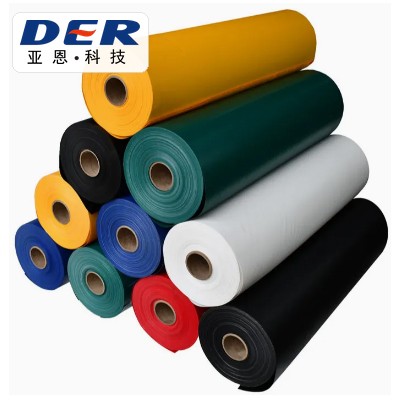
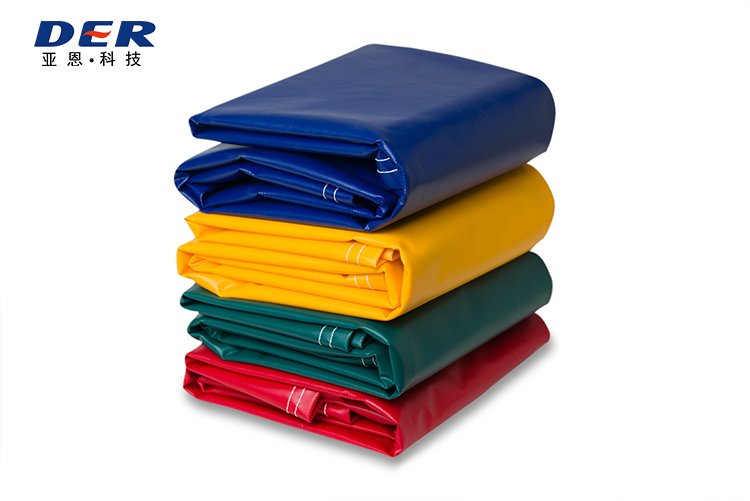
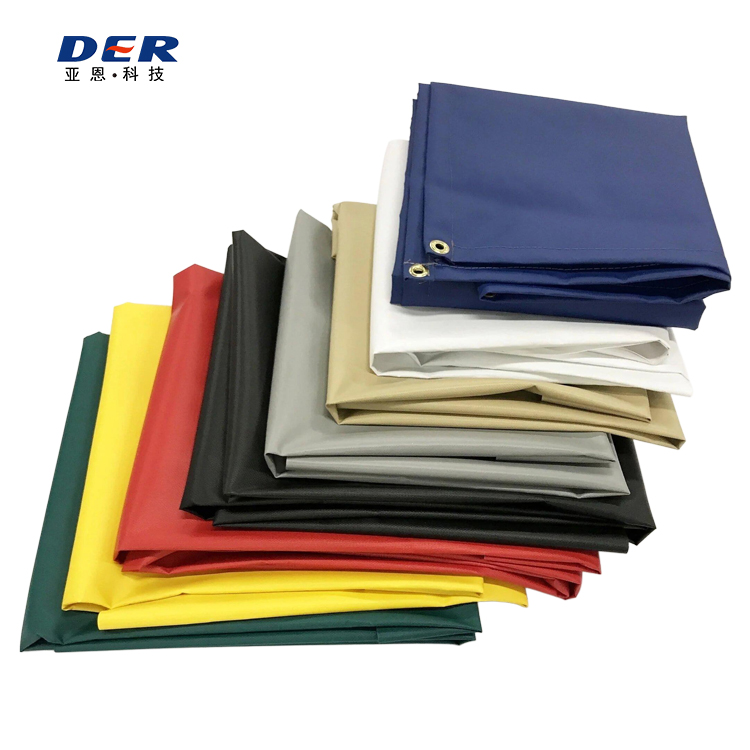
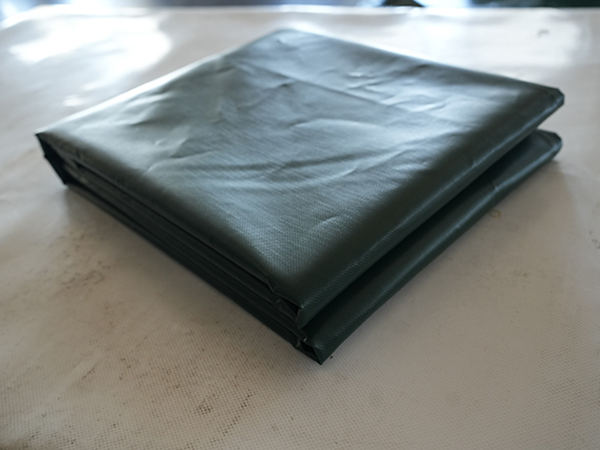
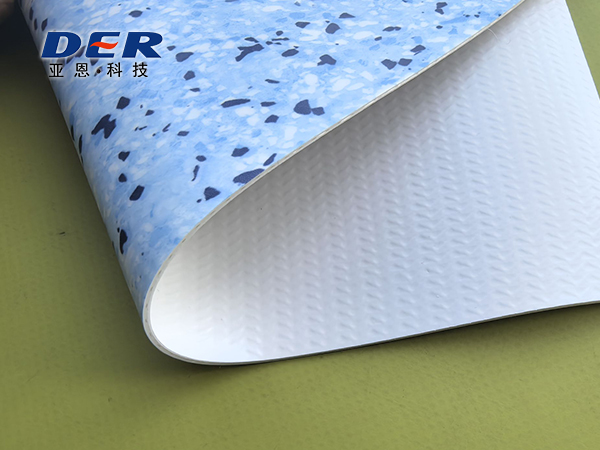
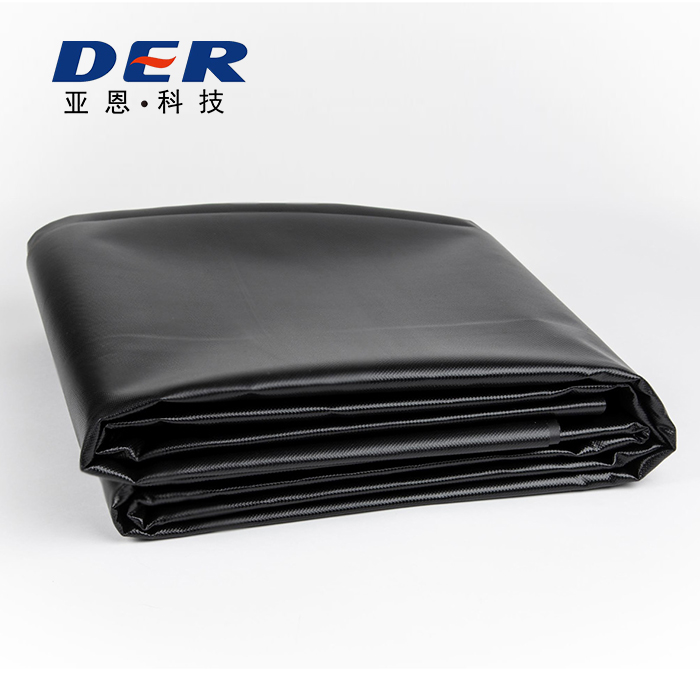
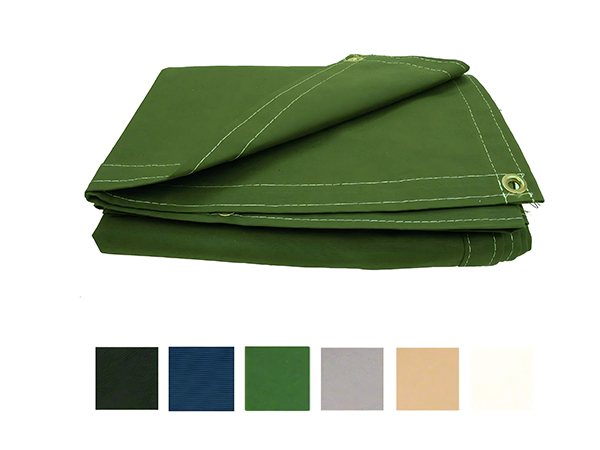
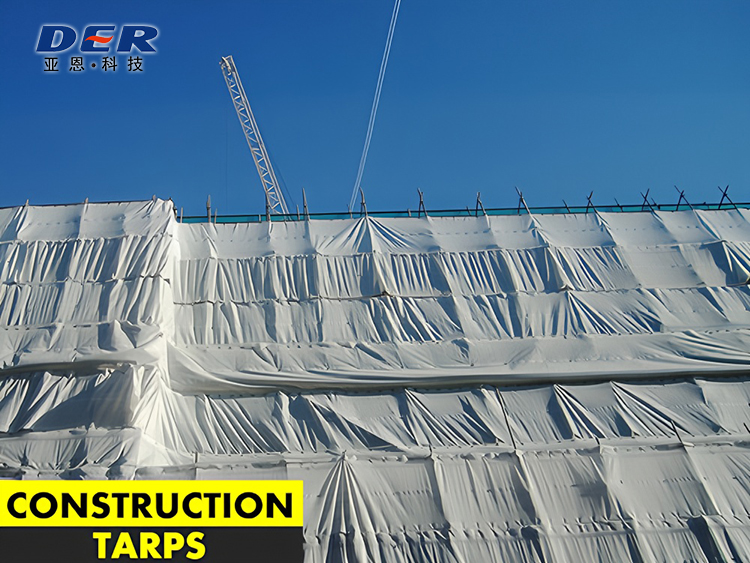
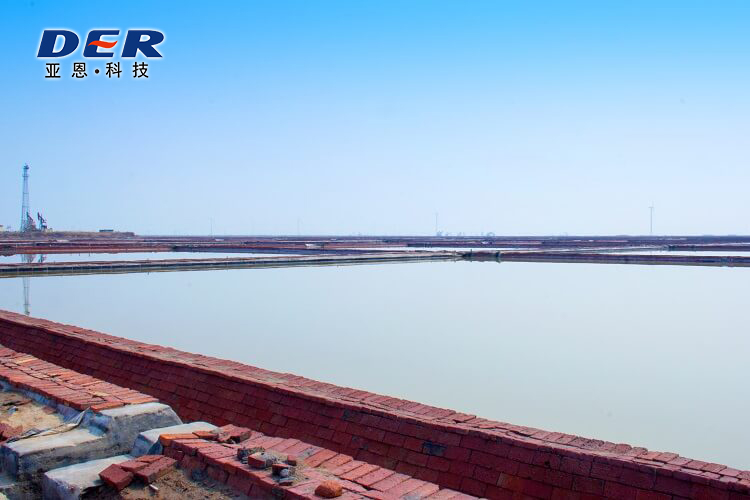
Real photographs from the DER factory website. The images show related PVC materials and fabricated-cover examples; they are not claims that a particular pictured roll has passed laminate adhesion or welding tests.

Material selection
The difference is manufacturing method—not a universal quality ranking. A suitable laminate may outperform an unsuitable coated fabric, and the reverse can also be true.
Pre-formed PVC film is bonded to the scrim. Useful when the required combination of appearance, handling, conversion and commercial cost is validated in a sample. Critical review areas: adhesion, fold performance and weld compatibility.
Applied PVC compound is cured on the textile. Selected constructions may suit sustained mechanical duty, frequent folding or harsher surface use. Evaluate the actual coating formulation and test data; coating is not automatically superior.
Compare like-for-like weight, base-cloth yarn, finish and service exposure. If your project requires a coated construction, review PVC coated fabric manufacturing options before committing to a laminate.
Specification release gate
For OEM roll supply, the useful document is a grade-specific approval sheet with test conditions, tolerances and rejection criteria—rather than a generic “waterproof, strong, durable” promise.
| Inspection focus | Risk it addresses | Buyer acceptance question |
|---|---|---|
| Film-to-scrim bond | Delamination after folding, rolling, heat or use | Which peel method and minimum result will be used? |
| Surface appearance | Wrinkles, pinholes, exposed scrim, inconsistent finish | What defect level is acceptable under agreed inspection light? |
| Weight & usable width | Yield loss and variable converting patterns | How are measurements sampled across rolls and lots? |
| Warp / weft strength | Unexpected tearing under directional loads | Are tensile and tear criteria recorded separately by direction? |
| Trial seams | Weak welding, seam leakage or film damage | Will seam coupons be tested with the buyer's equipment settings? |
| Aging or exposure | Embrittlement, discoloration, bond degradation | Which climate and service exposure are being simulated? |
For a specified flame-retardant product, identify the country and named test method first; see the flame-retardant tarpaulin procurement guide. A sample labeled FR should not be treated as proof of compliance without grade-specific evidence.
Roll-to-cover production
Custom development begins with the finished application's stresses and conversion route. Options are evaluated for feasibility, then aligned to a reproducible order specification.
For project-specific panel dimensions, reinforced hems or cover hardware, explore custom tarps and made-to-measure fabrication.
Answers for sourcing teams
Short, practical answers for buyers comparing a PVC laminated fabric manufacturer, a bulk supplier and a finished-cover converter.
It usually combines woven polyester reinforcement with one or two PVC film layers bonded through a controlled lamination process. The polyester provides mechanical reinforcement while the PVC forms the protective face.
Lamination bonds pre-formed PVC films to a textile, while coating applies PVC compound directly to the textile before curing. Compare adhesion, strength, flexibility, seam behavior and total cost for the intended application.
An intact continuous PVC laminate can form a waterproof barrier. Finished-cover performance also depends on seams, punctures, accessories, cut edges and installation; these details need separate evaluation.
There is no single correct GSM. Choose finished weight together with base-cloth yarn, weave density, tensile and tear requirements, handling cycle and fabrication method. Evaluate representative samples before confirming an order.
Many grades can be joined by hot-air or high-frequency welding, but suitability depends on the laminate formulation, surface finish and equipment. Trial seams and peel or strength checks are recommended for the selected grade.
UV and flame-retardant formulations may be considered for suitable projects. State the target exposure and exact test standard before sampling; do not assume a grade passes a standard without a test report.
MOQ and lead time depend on construction, film color, width, finish, production planning and order quantity. Request a project-specific confirmation during quotation.
Send your intended use, target construction, dimensions and quantity. DER factory can review sample requirements, roll supply, custom cutting and OEM fabrication options before confirming feasibility.
Next step: technical quotation
Send the application, target GSM or sample, roll width, finishing needs, quantity and any mandatory performance tests. DER factory can review the construction and quote against an agreed specification.



Our products are widely used in our residential and industrial area, which can be used for producing tents, outdoor covering, flexible ventilation tube, water bladders, inflatable castles, architecture membrane structures, etc. Our main products: PVC coated fabrics, PU/TPU coated fabrics, Oxford fabric, PVC ceiling film, flexible banner material. Welcome to our site and order online.